How AI & Edge Computing Are Shaping the Future Backend Stack

Written by
Keshav Saini
Front End Developer

Palvi Tiwari
Front End Developer

Table of contents
Build with Radial Code
Share this


The backend of modern applications has evolved significantly, transitioning from monolithic systems and traditional servers to cloud-native and microservice architectures. Now, we are witnessing another revolution in backend engineering, driven by two transformative forces: Artificial Intelligence (AI) and Edge Computing. Together, they are redefining data processing, application responsiveness, and system learning and adaptation — all in real time.
The Evolution of the Backend Stack
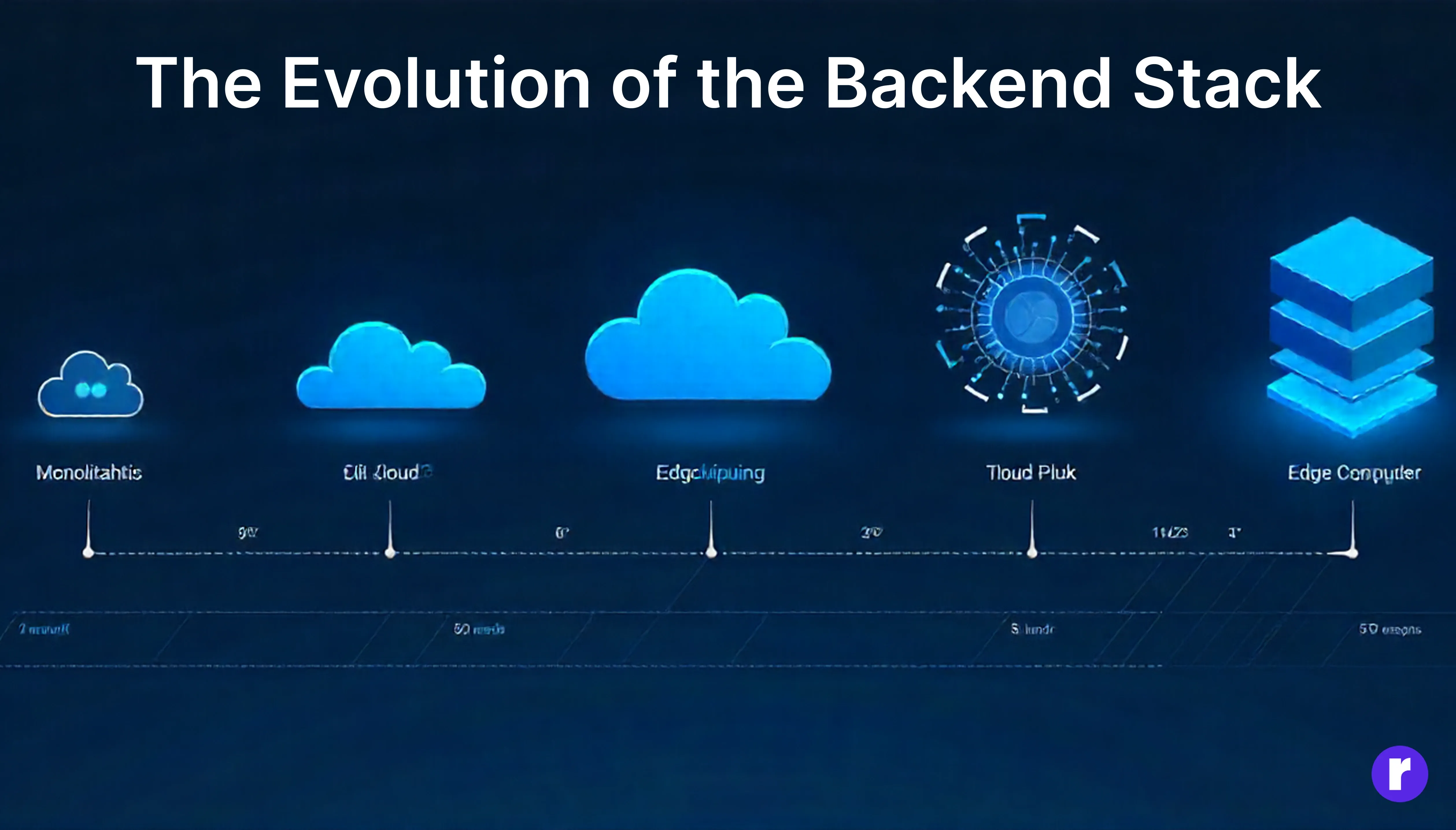
In the early days of web development, backend systems relied on centralized servers to handle all the heavy lifting — storing data, managing logic, and responding to client requests. The advent of cloud computing distributed computation and storage, making backend systems more scalable and resilient. However, as the world became more connected through IoT devices, autonomous systems, and real-time analytics, this centralized model began to show its limits. The demand for speed, low latency, and intelligence at scale called for a new evolution — and that’s where AI and Edge Computing entered the picture.
What Is Edge Computing and Why It Matters
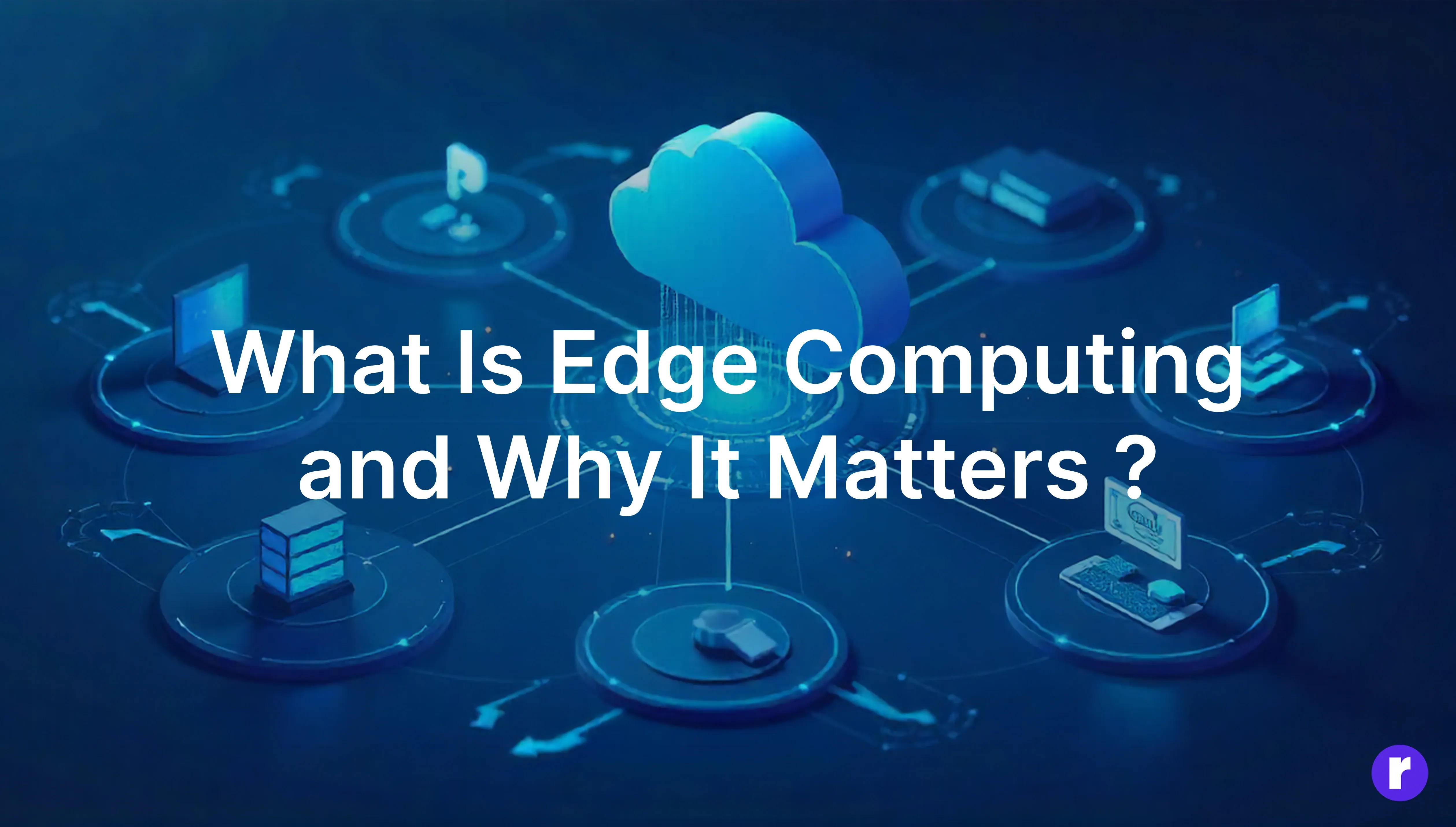
Edge Computing involves processing data closer to where it’s generated — on local devices, routers, or edge servers — rather than relying solely on distant cloud servers.
For example:-
- In a smart factory, sensors analyze machine performance in real time.
- In autonomous vehicles, decisions like braking or steering cannot wait for cloud responses.
- In healthcare, wearable devices can instantly detect irregular heartbeats and alert patients or doctors.
By handling computations locally, Edge Computing drastically reduces latency, minimizes bandwidth usage, and ensures that critical operations can continue even when network connectivity is weak. For backend developers, this means shifting part of the traditional server logic to the edge — creating a decentralized, high-performance backend architecture.
Enjoying reading? Here’s more to explore. Click Here.
AI’s Role in the Modern Backend
Artificial Intelligence is revolutionizing backend systems beyond chatbots and recommendation engines. AI-driven backends can:
- Predict workloads and automatically scale resources before traffic spikes.
- Optimize performance by learning from request patterns and caching behavior.
- Detect anomalies and threats in real time, enhancing system security.
- Automate decision-making, from routing data to balancing loads intelligently.
Essentially, AI makes backends self-learning and self-optimizing, transforming them from static data handlers into adaptive, intelligent systems that evolve continuously.
When AI Meets Edge: A New Backend Paradigm
The real magic happens when AI and Edge Computing converge. Together, they create a backend ecosystem that’s intelligent, distributed, and lightning-fast. Here’s how this synergy works:
- AI at the edge enables instant, localized decision-making without sending data back to the cloud.
- Latency drops dramatically, improving user experiences in real-time applications like gaming, AR/VR, and autonomous systems.
- Bandwidth is saved because only essential data is transmitted to the cloud for storage or long-term analysis.
- User privacy is protected since sensitive information can stay on local devices.
- Resilience increases, as systems can continue operating independently even if the central cloud fails.
This marks a fundamental shift in backend architecture — from centralized intelligence to distributed intelligence.
The Technologies Powering This Shift
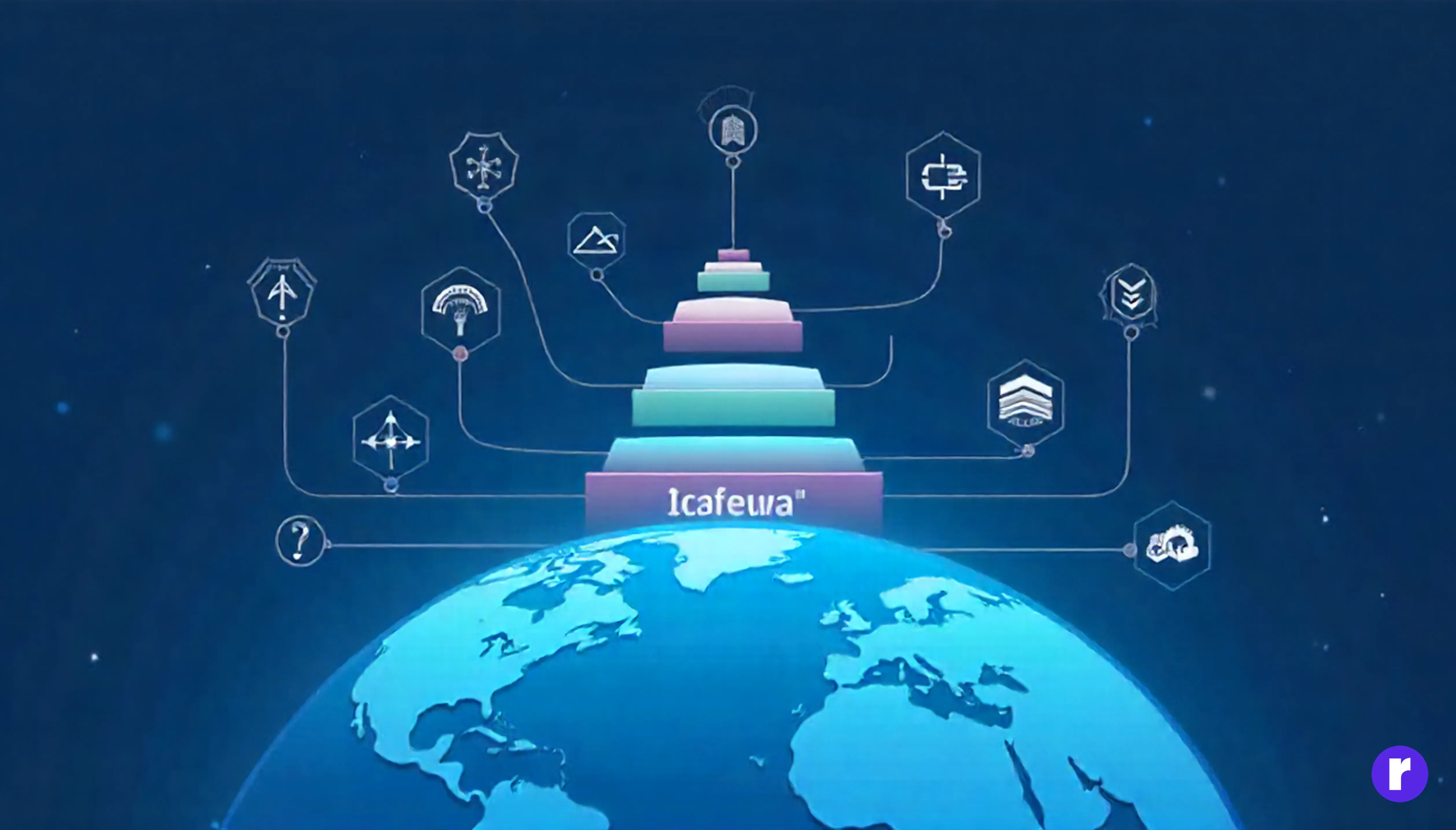
Several cutting-edge technologies are making this AI + Edge revolution possible:
- Edge Platforms like AWS IoT Greengrass, Azure IoT Edge, and Cloudflare Workers bring computing closer to users.
- AI Frameworks such as TensorFlow Lite, PyTorch Mobile, and ONNX Runtime make it possible to run lightweight AI models on local devices.
- Serverless architectures simplify deployment, allowing developers to run functions closer to users without managing infrastructure.
- Containerization tools like Docker and Kubernetes at the edge ensure scalability and consistency across distributed environments.
- Data streaming tools like Kafka and MQTT enable real-time communication between devices, edge nodes, and the cloud.
Together, these technologies form the foundation of the intelligent, distributed backend of the future.
Benefits of Combining AI and Edge Computing
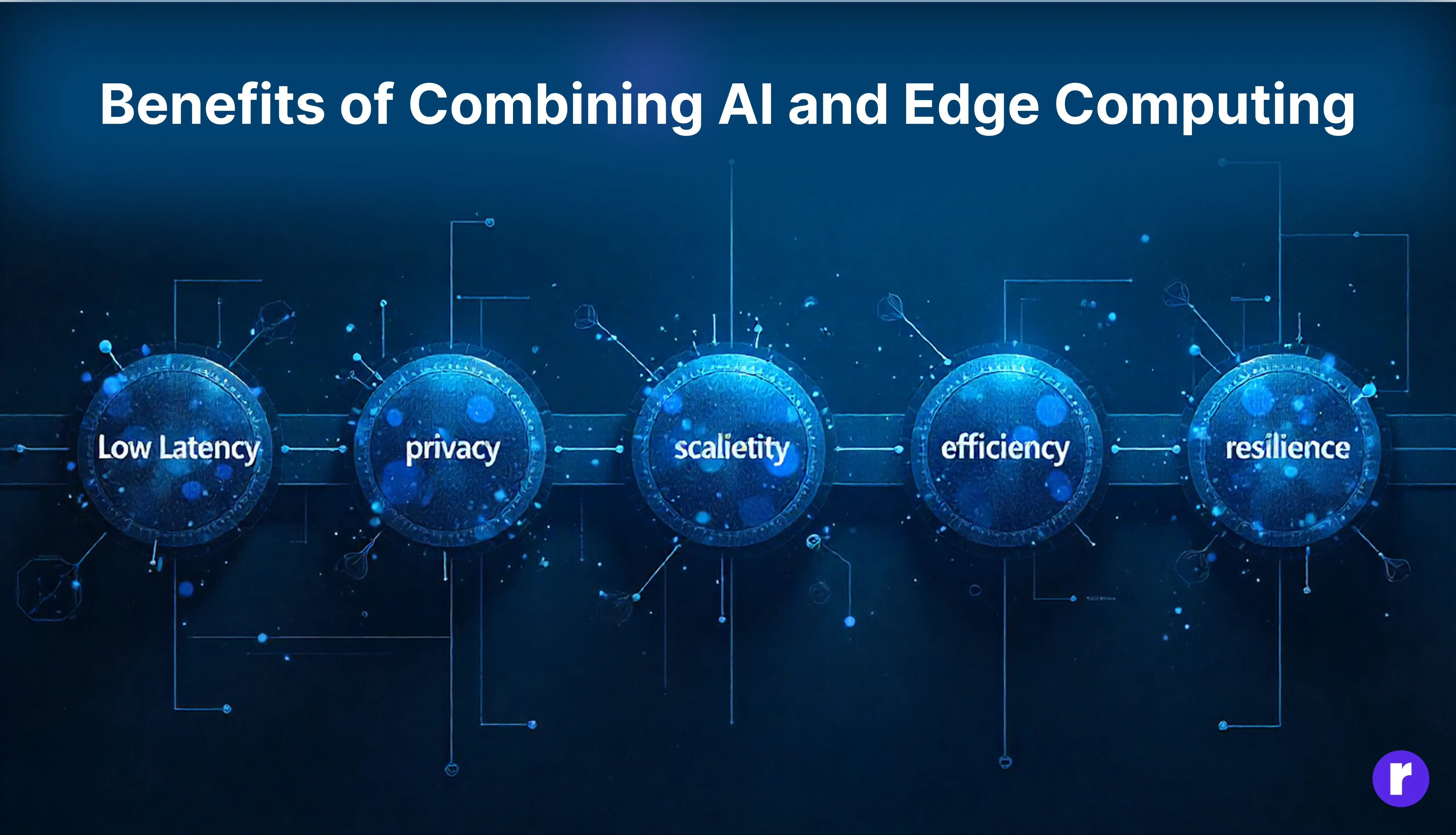
The integration of AI and Edge Computing unlocks several advantages for backend systems:
- Ultra-Low Latency: Data is processed near the source, ensuring faster responses for time-critical applications.
- Enhanced Privacy: Local processing reduces the need to send sensitive data to the cloud.
- Greater Scalability: Offloading computation from centralized servers allows systems to scale efficiently.
- Energy and Cost Efficiency: Only necessary data is transmitted, optimizing bandwidth and reducing cloud expenses.
- Operational Resilience: Even during network disruptions, edge nodes can continue processing data independently.
In short, it creates backends that are faster, smarter, and more reliable than ever before.
Want to learn more and grow faster? Start your learning journey Here.
Challenges Ahead
While the combination of AI and Edge Computing is promising, it also introduces new challenges:
- Complex Deployment: Managing AI models and updates across hundreds or thousands of devices can be difficult.
- Data Synchronization: Ensuring that local and cloud data remain consistent requires sophisticated coordination.
- Security Risks: A larger number of endpoints means more potential vulnerabilities.
- Hardware Costs: Edge devices with AI capabilities may require more powerful — and expensive — hardware.
To fully realize the benefits, developers need advanced tools for edge orchestration, model versioning, and distributed security management.
The Road Ahead
We are stepping into an era where backend systems are no longer confined to a single location or a centralized cloud. Instead, they’re distributed, adaptive, and intelligent — powered by the fusion of AI and Edge Computing. The future backend will
- Think intelligently through AI-driven insights and automation.
- React instantly by processing data at the edge.
- Scale seamlessly across cloud and edge environments.
- Adapt continuously through self-learning and MLOps-driven updates.
For developers, this means a new mindset: designing systems that learn, predict, and operate in real time — everywhere.
Conclusion
The combination of AI and Edge Computing is not just an incremental upgrade — it’s a complete reimagining of backend architecture. By moving computation closer to users and infusing it with intelligence, we’re building systems that are faster, more secure, and infinitely scalable. The future of backend development lies in this synergy — where data is not just processed, but understood; where systems are not just responsive, but predictive. In this intelligent, decentralized era, the backend becomes not only the brain of digital applications — but also their nervous system, sensing, analyzing, and acting across the entire network.