What is an MCP Server and Why Developers Should Care

Written by
Ankit Godara
Front End Developer

Vishal Chanda
Front End Developer

Table of contents
Build with Radial Code
Share this


Artificial Intelligence is becoming a core part of modern software development. AI assistants can write code, answer questions, automate workflows, and interact with business systems. However, AI models need a secure and reliable way to access external data and tools. This is where MCP (Model Context Protocol) and MCP Servers come in.
The Model Context Protocol (MCP) was introduced by Anthropic and open-sourced on November 25, 2024. It provides a standardized way for AI applications to securely connect with external tools, data sources, and services. Learn more
What is an MCP Server?
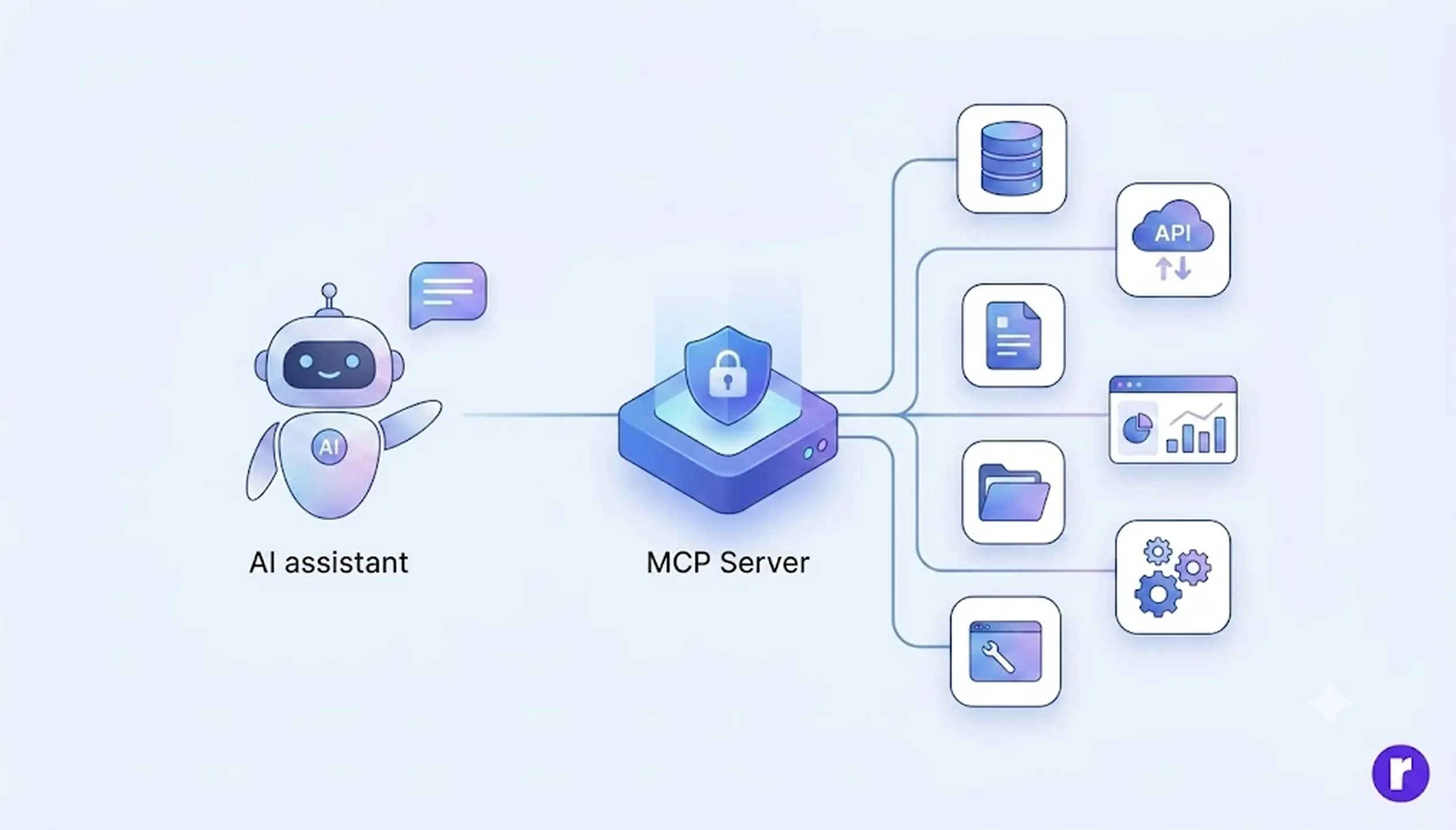
An MCP Server is a server that allows AI applications to connect with external resources through the Model Context Protocol (MCP).
Think of it as a bridge between AI applications and the systems they need to access.
The MCP architecture has three main components:
- Host: The host is the AI application where users interact with the AI model.
- Client: The client manages communication between the AI application and MCP servers.
- Server: The MCP server provides access to external tools, resources, and data.
For example, an MCP Server can help an AI application connect to:
- Databases
- APIs
- File systems
- Documentation
- CRM platforms
- Internal business tools
Without MCP, developers often need to build separate integrations for every AI platform. MCP provides a common standard that makes these connections easier to manage.
Why do we need MCP?
Many AI applications need access to real-time information.
For example:
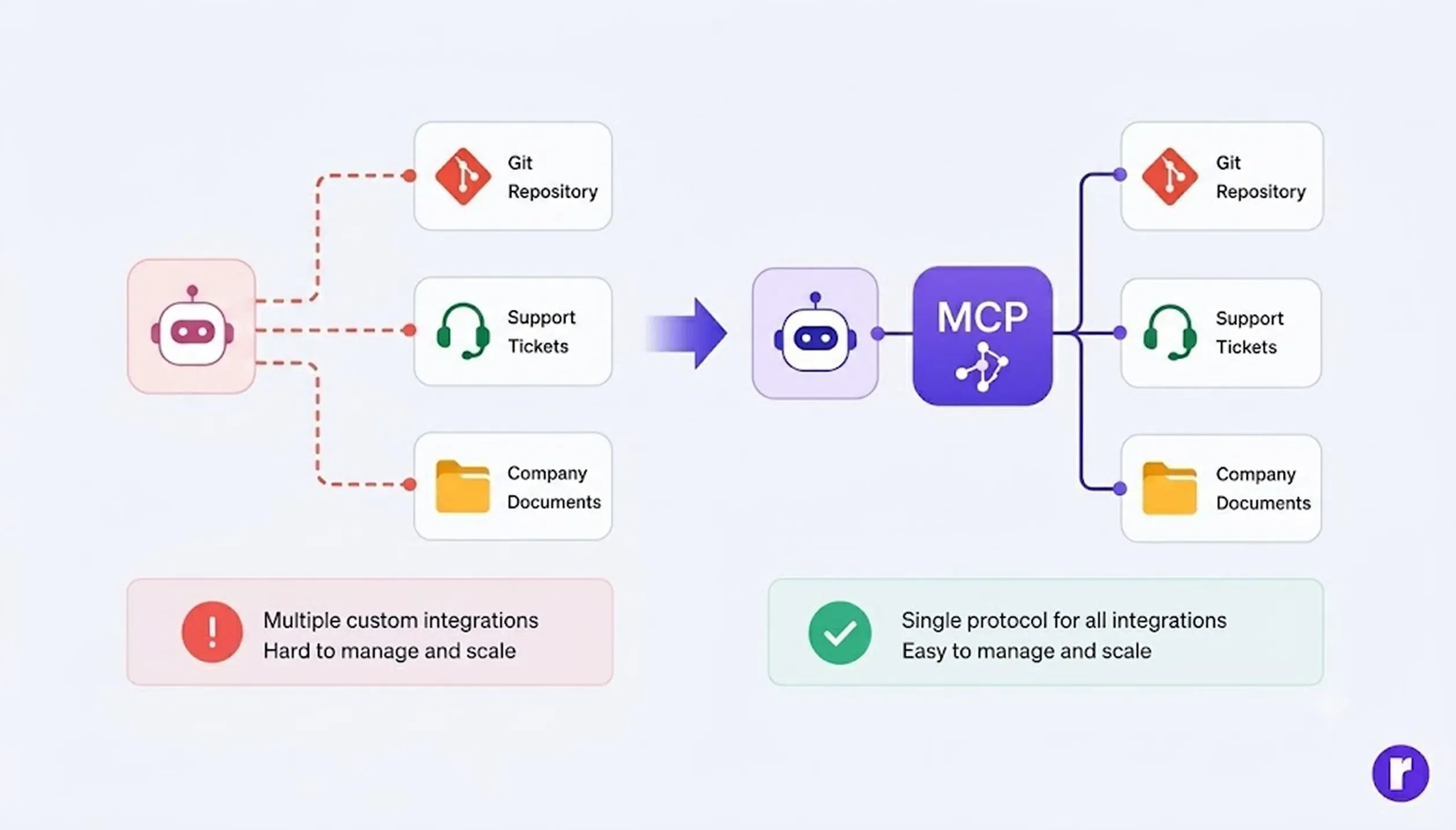
- A coding assistant may need access to a Git repository.
- A customer support bot may need access to support tickets.
- A business AI assistant may need access to company documents.
Traditionally, each connection requires a custom integration. As the number of tools grows, managing these integrations becomes difficult.
MCP solves this problem by providing a single protocol that AI applications can use to communicate with different systems. Continue your learning journey at Radial code
How does an MCP Server work?
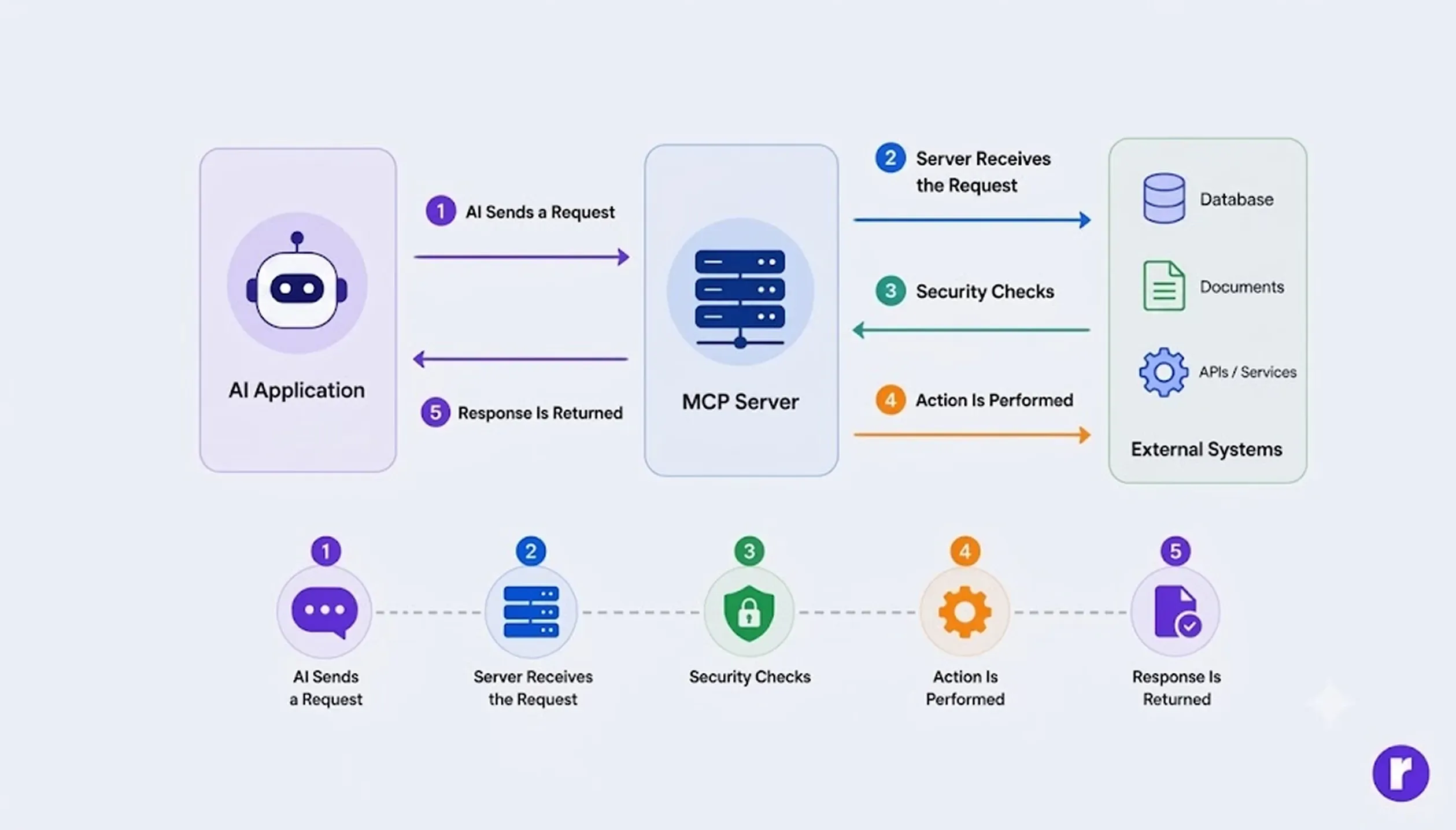
The workflow works through the MCP architecture:
- AI Host Sends a Request: The AI application sends a request through the MCP client.
- Example: "Get the latest customer details."
- MCP Client Communicates With Server: The client sends the request to the required MCP server.
- MCP Server Processes the Request: The server identifies the required tool or resource.
- Security Checks: The server verifies authentication, permissions, and access rules before accessing data.
- Action is Performed: The server retrieves data or executes the requested task.
- Response is Returned: The result is sent back to the AI application in a structured format.
MCP uses JSON-RPC 2.0 as its communication format, allowing clients and servers to exchange structured messages reliably.
MCP transport methods
MCP supports different ways for clients and servers to communicate:
- Stdio: Used for local communication between applications running on the same machine.
- Streamable HTTP: Used for remote MCP server communication over HTTP.
- SSE Transport: An older transport method that has been deprecated.
Key benefits of MCP servers
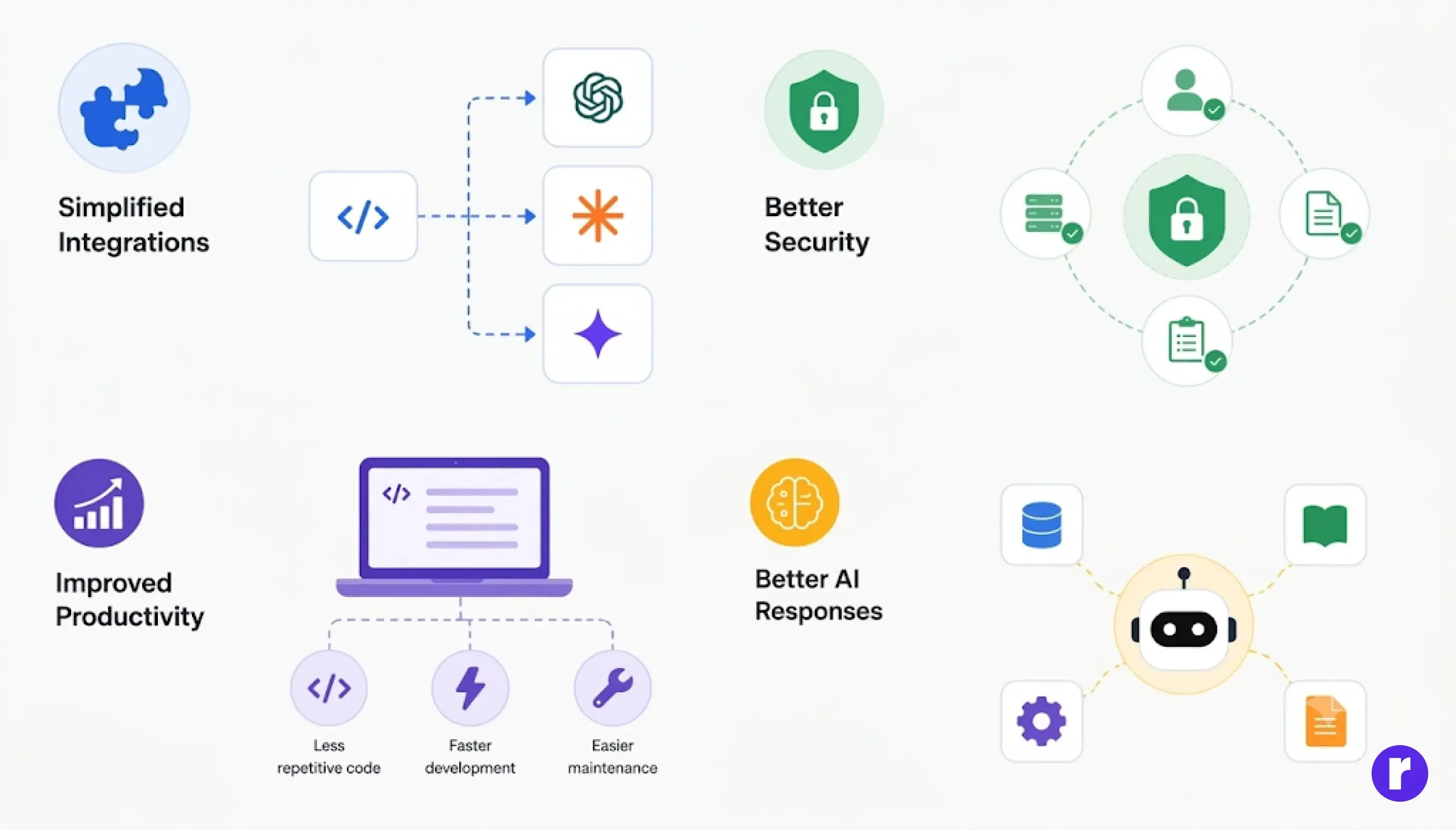
Simplified Integrations
Developers don't need to create separate integrations for every AI platform. Build once and connect across multiple AI tools.
Better Security
MCP Servers allow developers to implement:
- Authentication
- Authorization
- Access permissions
- Audit logs
This helps protect sensitive data.
Improved Productivity
Instead of spending time maintaining multiple connectors, developers can focus on building useful features.
Benefits include:
- Less repetitive code
- Faster development
- Easier maintenance
Better AI Responses
AI performs better when it has access to accurate and real-time information.
MCP allows AI systems to access:
- Company knowledge bases
- Databases
- APIs
- Internal documents
This results in more useful and context-aware responses.
Common MCP use cases
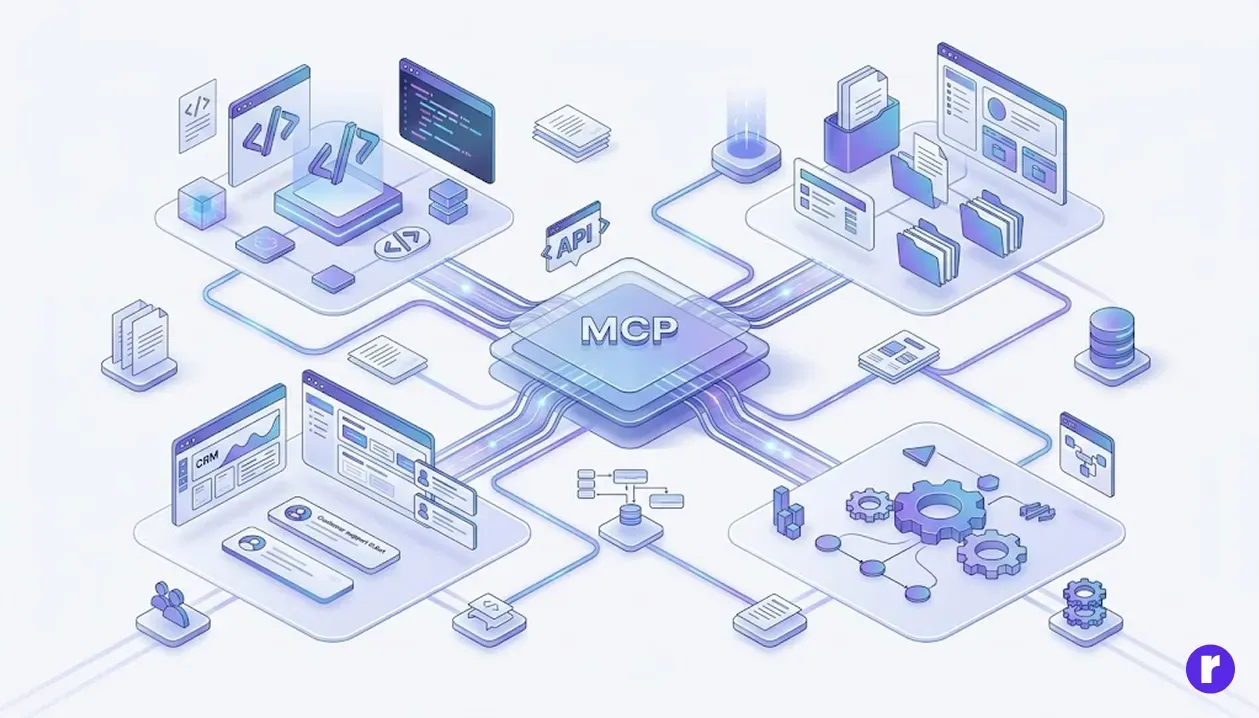
AI Coding Assistants
Connect AI tools to:
- Source code
- Documentation
- Development environments
This helps developers write and debug code more efficiently.
Popular MCP servers are available for services like:
- GitHub
- Filesystem
- PostgreSQL
allowing AI applications to securely interact with these systems.
Enterprise AI Assistants
Organizations can connect AI assistants to:
- Internal documents
- HR systems
- CRM platforms
- Knowledge bases
Employees can quickly find information using natural language.
Customer Support
Support bots can access:
- Customer data
- Help center articles
- Ticket systems
This improves response quality and reduces support workload.
Workflow Automation
AI can automate tasks such as:
- Creating tickets
- Updating records
- Triggering workflows
- Generating reports
Why developers should care
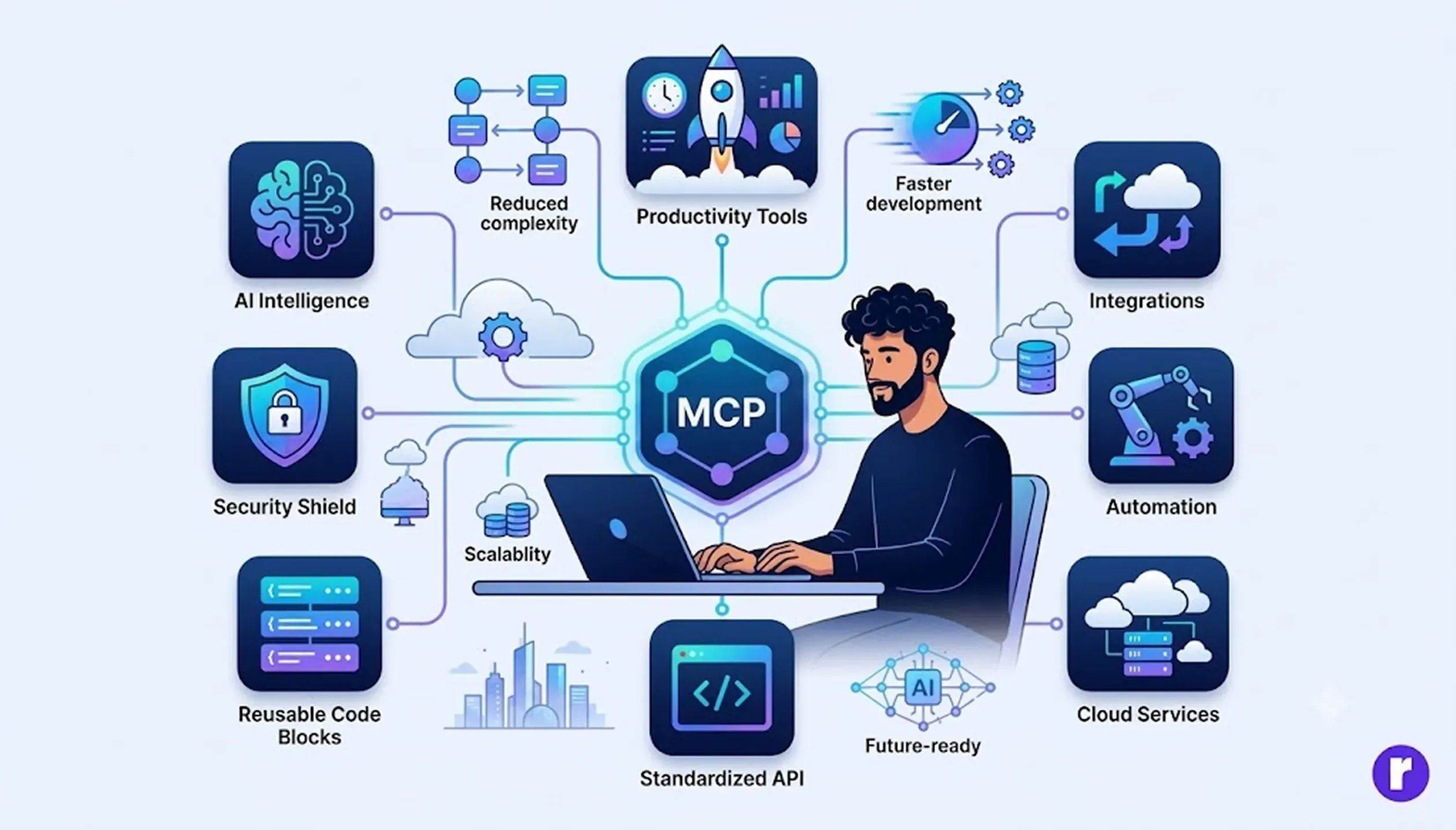
MCP is becoming an important part of the AI ecosystem because it standardizes how AI applications interact with external systems.
Learning MCP can help developers:
- Build AI-ready applications
- Create reusable integrations
- Improve security
- Reduce development complexity
- Work efficiently with AI tools
As AI adoption continues to grow, understanding MCP will become a valuable skill for software developers. Read more
Conclusion
An MCP Server acts as a bridge between AI applications and external tools, data sources, and services.
With its standardized architecture, JSON-RPC communication format, and secure connection methods, MCP makes it easier to build scalable AI-powered applications.
For developers building AI solutions, MCP provides a cleaner and more reliable approach to connecting AI with real-world systems. As AI continues to evolve, MCP is likely to become an important standard in modern software development workflows.