When AI Dreams: Unlocking Machine's Creativity

Written by

Vishal Chanda
Front End Developer
Table of contents
Build with Radial Code
Share this


What if machines could dream—not like humans, but through patterns, data, and algorithms?
In 2018, Portrait of Edmond de Belamy, created by the Paris-based art collective Obvious using a GAN sold at Christie’s for $432,500, marking a major shift in how people viewed machine-generated creativity. The sale sparked debate about whether AI is simply analyzing patterns or creating something new. This raises a fascinating question—are machines simply calculating, or are they beginning to imagine?
Today, AI is no longer limited to solving problems—it is creating music, art, stories, and new ideas, entering a space once believed to belong only to humans: creativity.
Understanding AI Creativity
- AI Creativity Meaning: AI creativity does not come from emotions or consciousness. Instead, it involves analyzing patterns, learning from data, and generating new outputs. By combining patterns learned from data, AI can generate music, art, designs, and stories that may appear original to humans.
- Generating realistic human faces using GANs
- Writing poems and stories using ChatGPT
- Composing music and symphonies
- Human Creativity vs AI Creativity: Human creativity emerges from cognitive processes shaped by imagination, emotional depth, and lived experiences. AI creativity, on the other hand, is based on data and algorithms. It studies large datasets, identifies patterns, and generates outputs based on learned information.
- Humans imagine and feel
- AI analyzes and generates
Examples of AI creativity:
In simple terms:
Technologies Behind AI Creativity
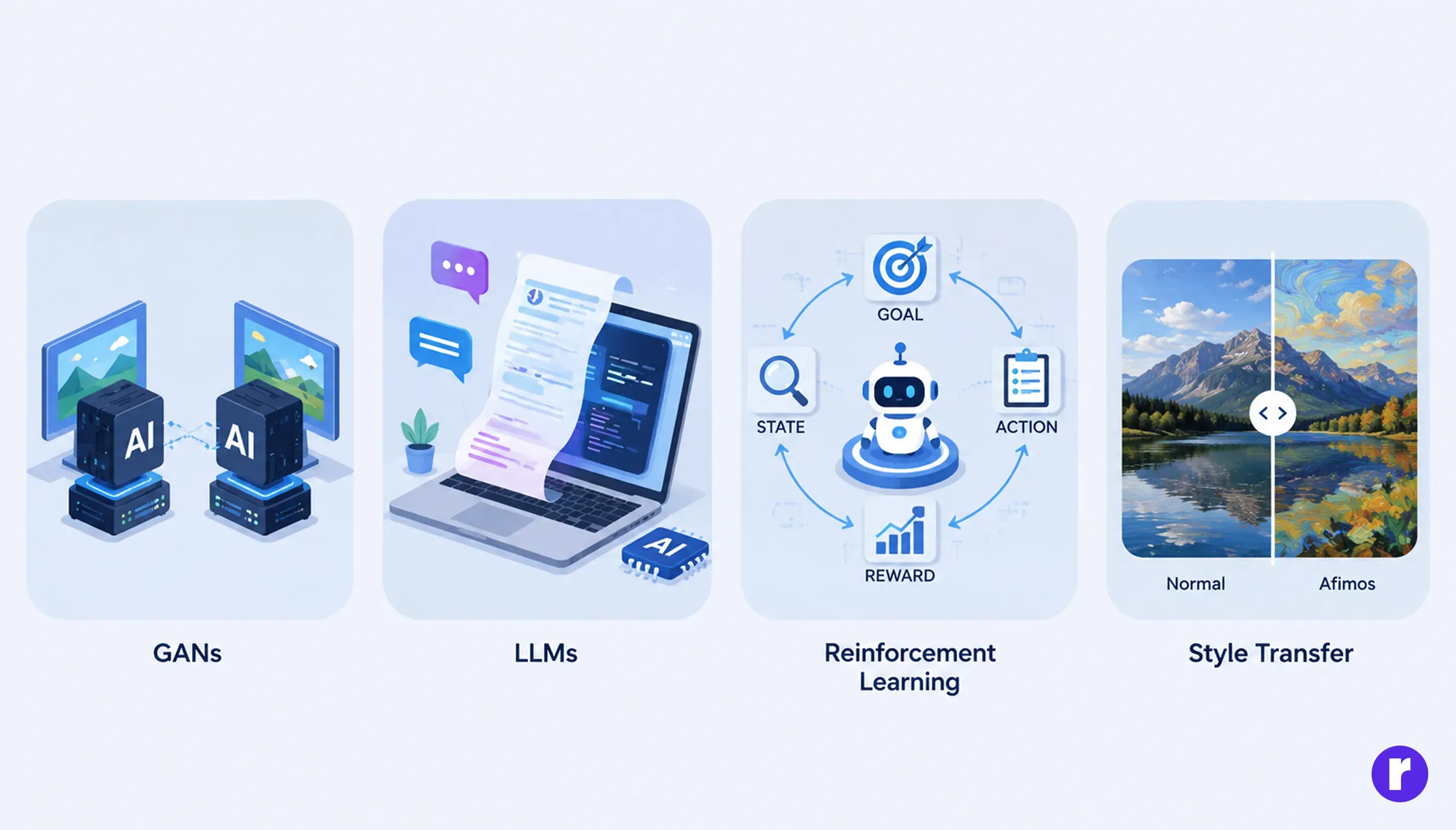
AI creativity is powered by several advanced technologies that allow machines to generate new and realistic outputs.
- Generative Adversarial Networks (GANs): GANs work like a creative competition between two AI systems: one generates content, while the other evaluates it for realism. This continuous feedback helps produce highly realistic results.
- AI-generated images
- Deepfake videos
- Design prototypes
- Diffusion Models: Diffusion models are a core technology behind many modern image generators. They create images by gradually transforming random noise into detailed and coherent visual content based on learned patterns and, in many cases, text prompts.
- Text-to-image generation
- Image editing and inpainting
- Image enhancement and variation generation
- Transformers and Large Language Models (LLMs): Models like GPT are built on transformer architecture, allowing them to understand context and generate human-like text at scale.
- Write stories and articles
- Generate code
- Create poems and music-like text patterns
- Reinforcement Learning: Reinforcement learning supports AI systems through optimization and feedback. It helps models improve their responses based on preferences, rewards, or desired outcomes, rather than serving as the primary technology for generating creative content.
- Game strategy development
- Robotics
- AI-assisted design and architecture
- Neural Style Transfer: Neural Style Transfer allows AI to merge content and artistic style, transforming ordinary images into artistic creations.
For example, a normal photo can be turned into a painting in the style of Van Gogh.
Applications:
Applications:
They can:
Applications:
Real-World Applications of AI Creativity
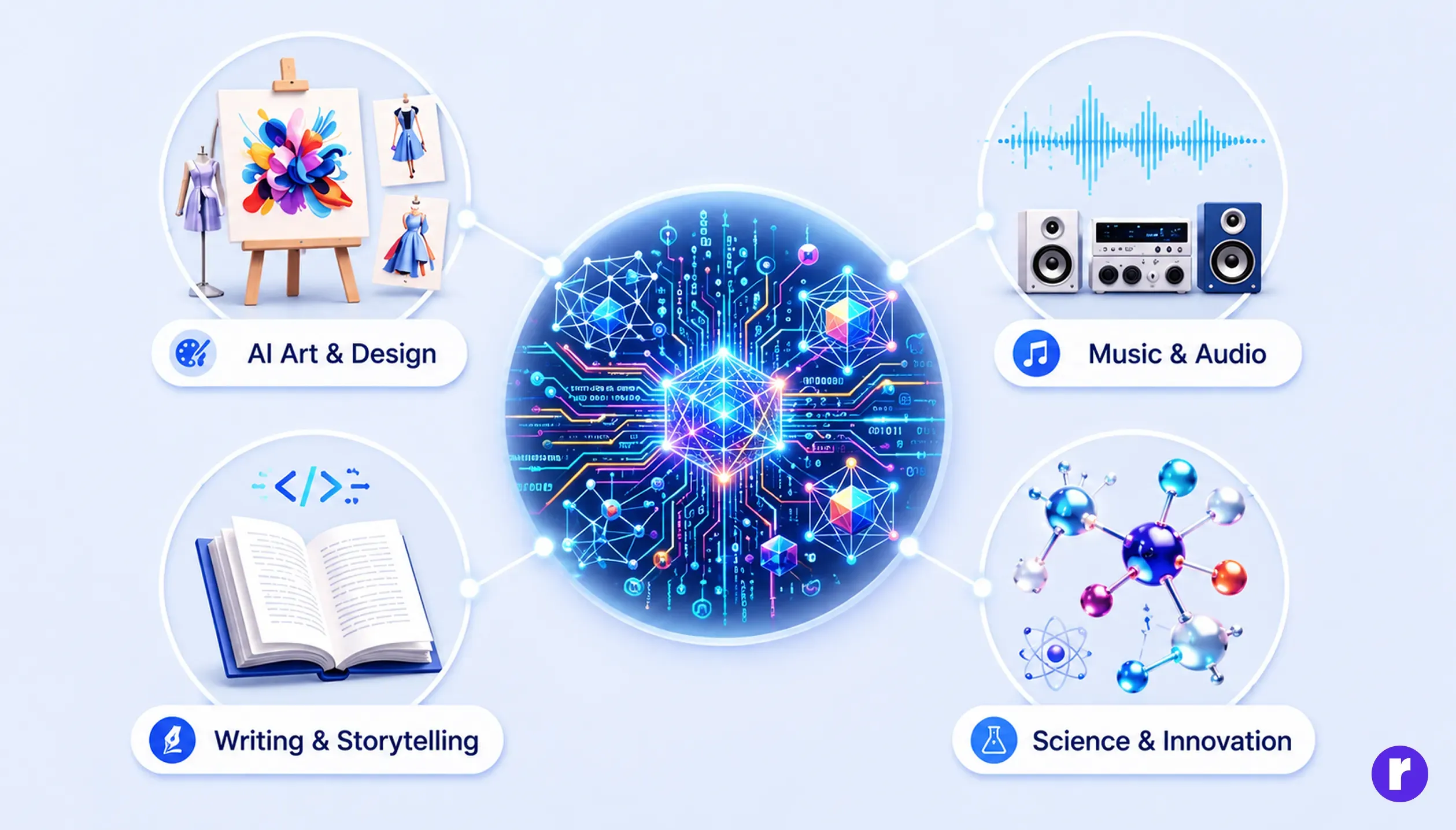
AI creativity is no longer just a concept—it is actively shaping industries across art, music, writing, and science.
- AI in Art and Design: AI-generated art is now being showcased in galleries and sold on digital platforms. Tools like DALL·E and Midjourney help artists and designers quickly transform ideas into visual concepts. From fashion design to virtual environments in games and the metaverse, AI is helping creators explore ideas faster than ever before.
- AI in Music and Audio: AI systems like AIVA and OpenAI's Jukebox can compose original music tracks in different styles and moods. These technologies are being explored for creative applications such as music composition, experimentation, and assisting artists in the creative process.
- AI in Writing and Storytelling: Large language models can generate drafts, stories, and scripts, and assist human writers with brainstorming ideas, developing outlines, and overcoming creative blocks. Human writers remain important for shaping, refining, and giving meaning to the final work.
- AI in Science and Innovation: AI is also driving innovation in science by generating new ideas that humans may not easily imagine.
For example, DeepMind's AlphaFold is an AI system that predicts the 3D structures of proteins. While it is not a creative AI tool like art or music generators, it demonstrates how AI can accelerate scientific discovery and help researchers in areas such as medicine and drug development.
How AI Dreams
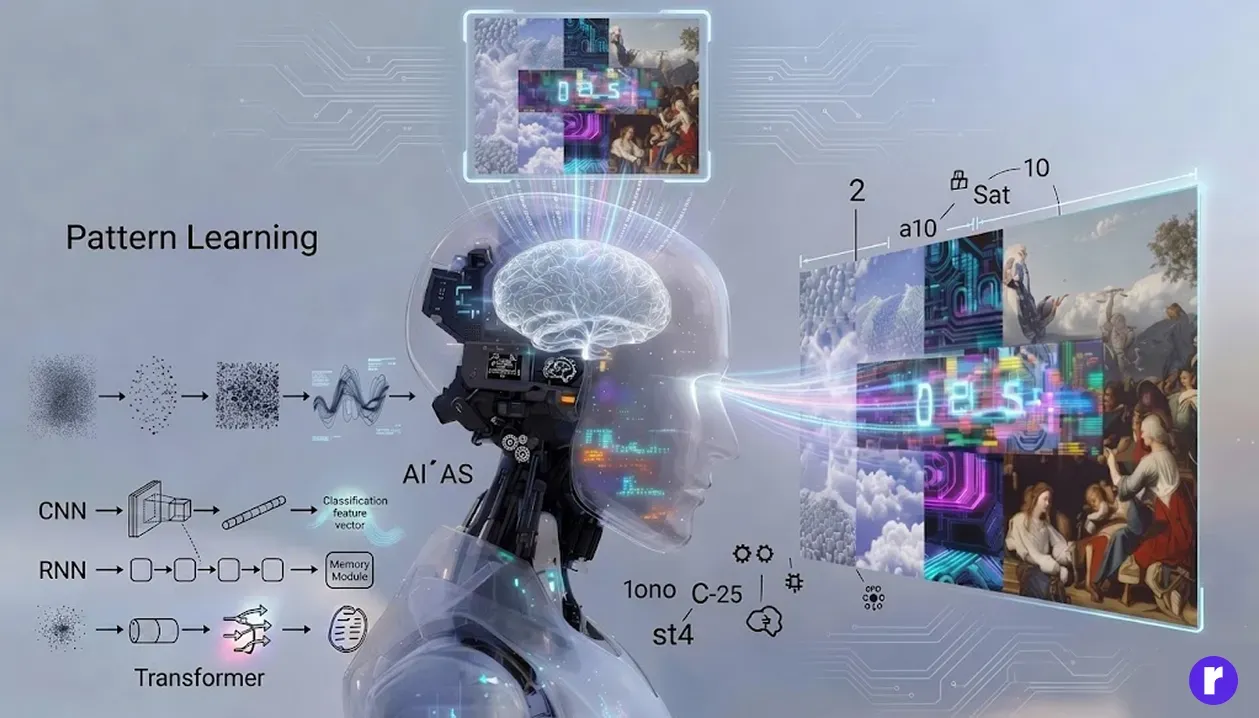
The terms "AI dreaming" and "AI imagination" are used as metaphors throughout this article. AI does not literally dream, imagine, or possess consciousness. Instead, these terms describe how AI analyzes patterns, learns from data, and generates outputs by recombining what it has learned.
- Understanding AI Dreams: AI does not dream like humans. It processes learned patterns and recombines or amplifies them to generate outputs that may appear imaginative or surreal.
- How DeepDream Works: Google's DeepDream is a computer vision program that strengthens patterns already found in images. It repeatedly enhances features detected by a neural network, making those patterns more prominent and producing surreal, dream-like visuals. Rather than generating entirely new images, DeepDream exaggerates existing visual patterns within the original image.
- AI Imagination in Generative Models: Although "AI imagination" is used as a metaphor, generative AI systems generate content by combining patterns and concepts learned from their training data.
If you're interested in exploring how AI is transforming technology beyond creative applications, read our blog, "The Future of Technology: How AI Tools Are Changing the Game."
Ethical Considerations
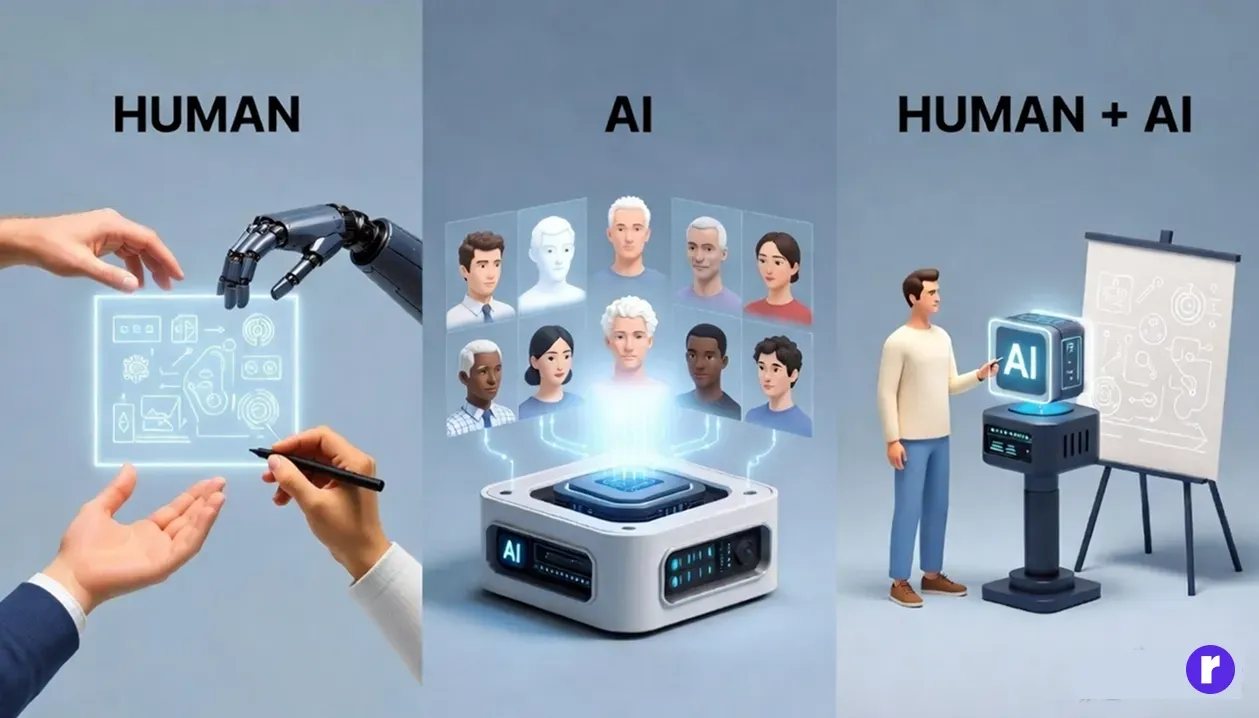
As AI creativity grows, it also raises important ethical questions about ownership, fairness, and human responsibility.
- AI-generated work ownership: When AI creates art or music, copyright can depend on the level of human involvement and the laws of the relevant jurisdiction. AI-assisted work generally requires sufficient human authorship to qualify for copyright protection, and simply providing prompts may not be enough. AI itself cannot own copyright, and legal frameworks for AI-generated content continue to evolve.
- Bias and representation: AI systems learn from data, and if that data contains bias, the output can also reflect stereotypes or unfair representations. This makes dataset quality and diversity extremely important in AI development.
- Human oversight matters: AI should not replace human creativity—it should enhance it. The best results come when humans guide AI, refine its output, and ensure ethical use. This collaboration ensures creativity remains meaningful and responsible.
The Future of AI Creativity
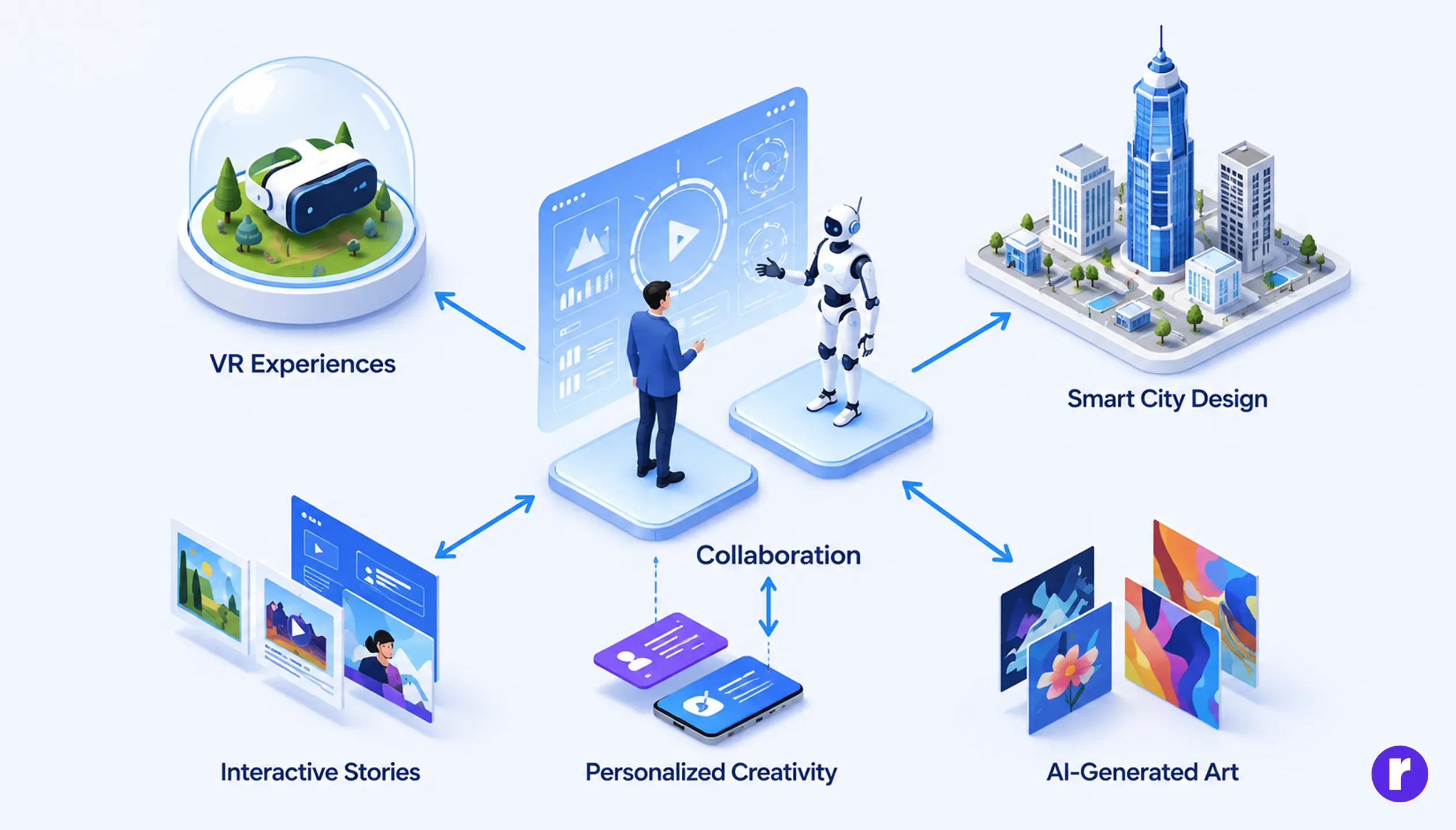
In the future, AI will go beyond being just a tool—it will become a creative assistant or collaborator working alongside humans.
Future possibilities include:
- Real-time VR experiences where entire worlds are generated instantly based on user interaction
- AI-assisted architecture and city planning that helps design smarter and more efficient cities
- Interactive storytelling, where stories change based on the reader's choices and emotions
AI will also become more personal and responsive. With advancements in smart devices, it will be able to generate creative experiences in real time, tailored specifically to each user.
Want to learn more about AI? Start learning today with Radial code
Conclusion
AI's hidden creativity is reshaping how we think about imagination and innovation. It is no longer just a system that follows instructions—it is becoming a source of ideas, inspiration, and new possibilities across art, music, science, and design.
As AI continues to evolve, the future will not be about machines replacing human creativity, but about humans and AI working together to expand the limits of what is possible. The way we guide and use this creativity today will define the future of technology, culture, and human imagination. The future of creativity is not human vs machine—it is human + machine.