Building Modern Web Apps with Headless CMS & Serverless Front-End

Written by
Rinkle Poonia
Front End Developer

Keshav Saini
Front End Developer

Table of contents
Build with Radial Code
Share this


Modern web development is evolving fast. Traditional monolithic architectures — where the front-end, back-end, and database are tightly coupled — no longer provide the flexibility and scalability developers need.
Enter Headless CMS and Serverless Front-End , a combination that enables a decoupled architecture designed for performance, maintainability, and scalability. If you're building modern web projects with frameworks like Next.js , Nuxt.js , or SvelteKit , understanding this approach is essential. Click For More Info
What Is a Headless CMS?
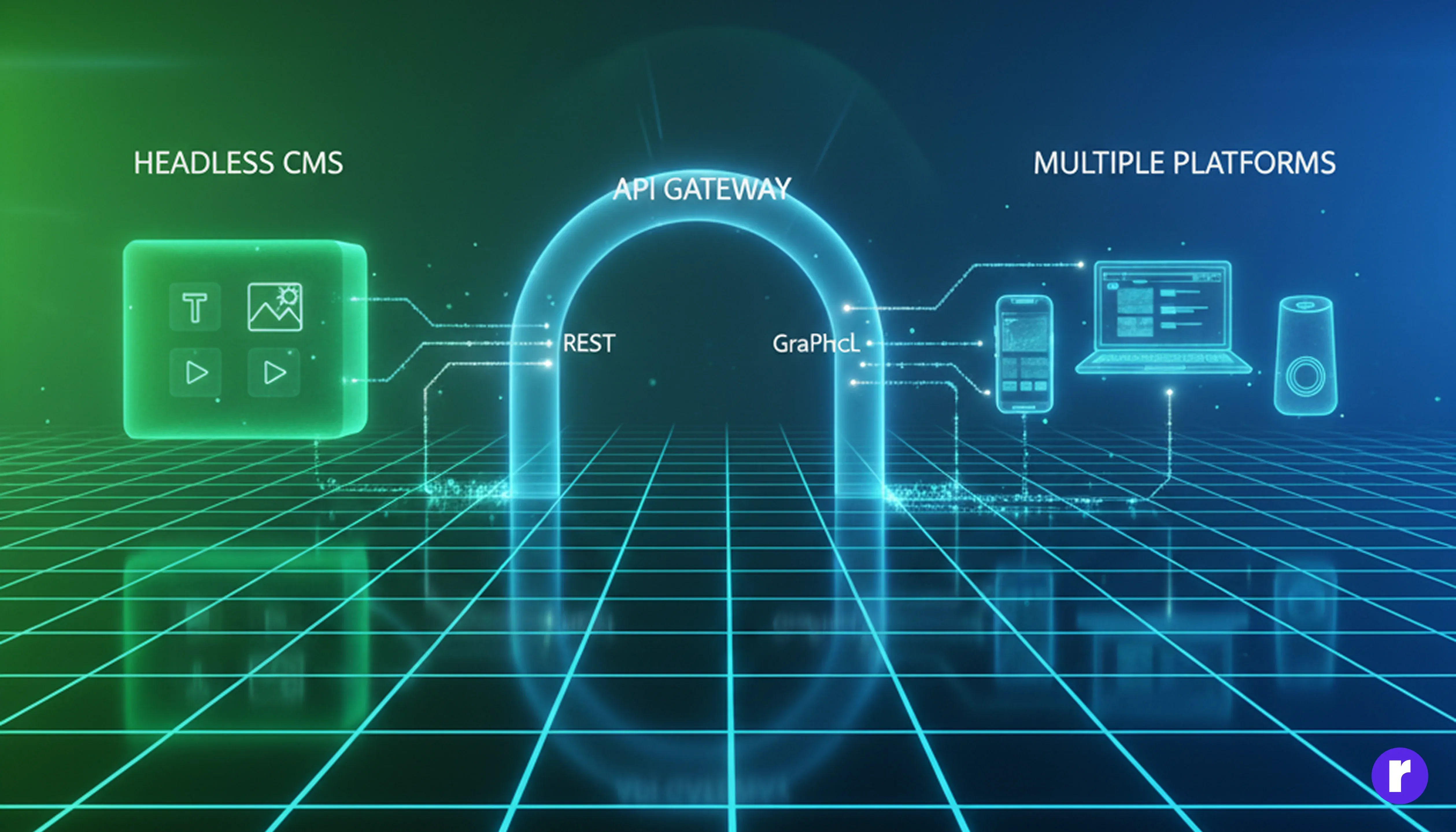
A Headless CMS is a content management system that provides content through an API rather than rendering it directly on the front-end.
Unlike traditional CMSs (e.g., WordPress, Joomla) that handle both content and presentation, a headless CMS focuses purely on managing and delivering content.
How it works:
- You create and manage content (Text, Images, Videos) in the CMS.
- The CMS exposes your data via REST or GraphQL APIs .
- Your front-end (React, Vue, Angular, etc.) consumes that data dynamically.
Popular Headless CMS options:
- Strapi (open-source, Node.js-based)
- Contentful (SaaS, API-first).
- Sanity (real-time content editing).
- Directus , Ghost, DatoCMS.
Example:
// Fetching blog posts from a Headless CMS (e.g., Contentful)
const response = await fetch("https://cdn.contentful.com/spaces/abc123/entries", {
  headers: { Authorization: "Bearer YOUR_API_KEY" },
});
const data = await response.json();
console.log(data.items);
This clean separation of content and presentation allows you to reuse the same data across multiple platforms — websites, mobile apps, or even IoT devices.
What Is a Serverless Front-End?
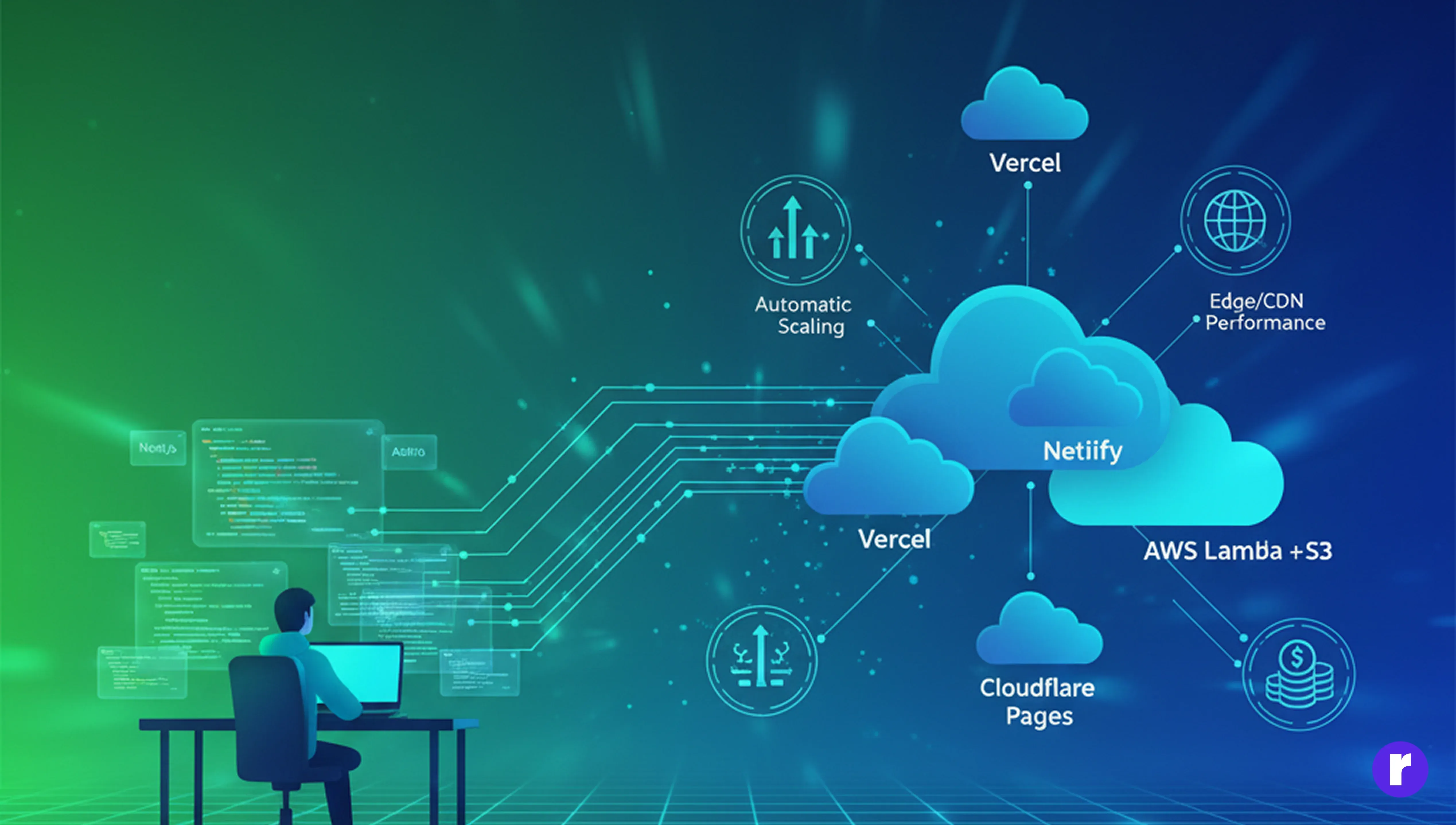
A serverless front-end is a modern web development approach where developers do not need to manage or maintain traditional web servers. Instead of running on a fixed server, the front-end is deployed on cloud-based, distributed infrastructure that automatically handles scaling, performance, and availability.
In this model, your application responds to user requests through cloud services that scale on demand—allowing your site to remain fast and reliable, even during traffic spikes.
Popular Frameworks Used for Serverless Front-End
- Next.js (React-based)
- Nuxt.js (Vue-based)
- Astro, SvelteKit, or Remix
Common Deployment Platforms such as:
- Vercel
- Netlify
- Cloudflare Pages
- AWS Lambda + S3
Benefits of a Serverless Front-End for Developers
- No server management:- Developers don’t need to configure, monitor, or maintain servers.
- Automatic scalability:- Applications scale instantly based on traffic demand.
- High performance:- Edge rendering and CDN delivery ensure faster load times.
- Cost efficiency:- You pay only for the resources you use—no idle server costs..
What Is a Decoupled Architecture?
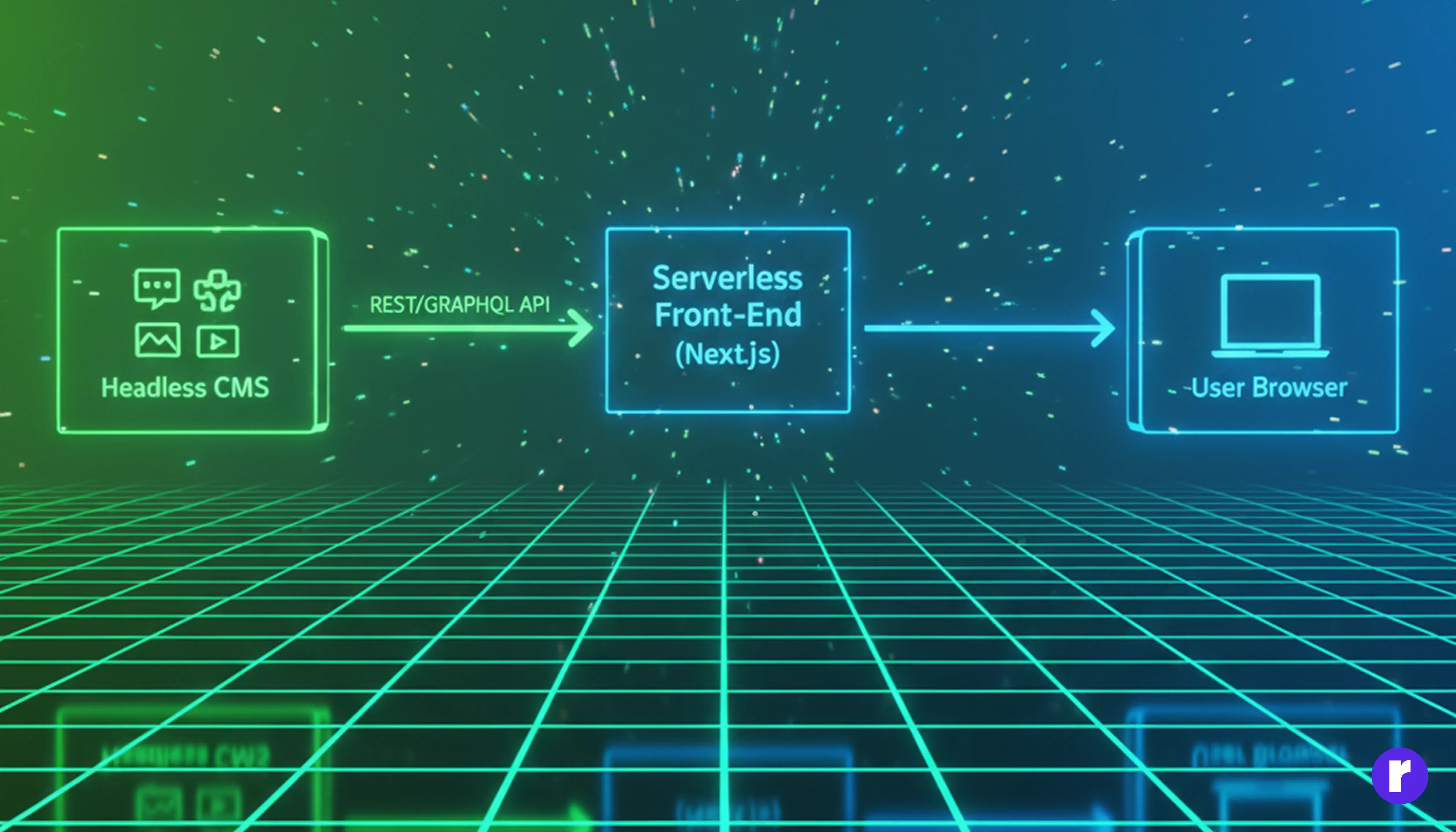
A decoupled architecture separates the front-end and back-end completely.
The CMS manages data and serves it through APIs, while the front-end fetches and renders that data.
Architecture Flow:
[Headless CMS] → (REST/GraphQL API) → [Serverless Front-End (Next.js)] → [User Browser]This architecture provides flexibility in how you deliver, scale, and maintain both sides independently.
Why Go Decoupled? (Developer Advantages)
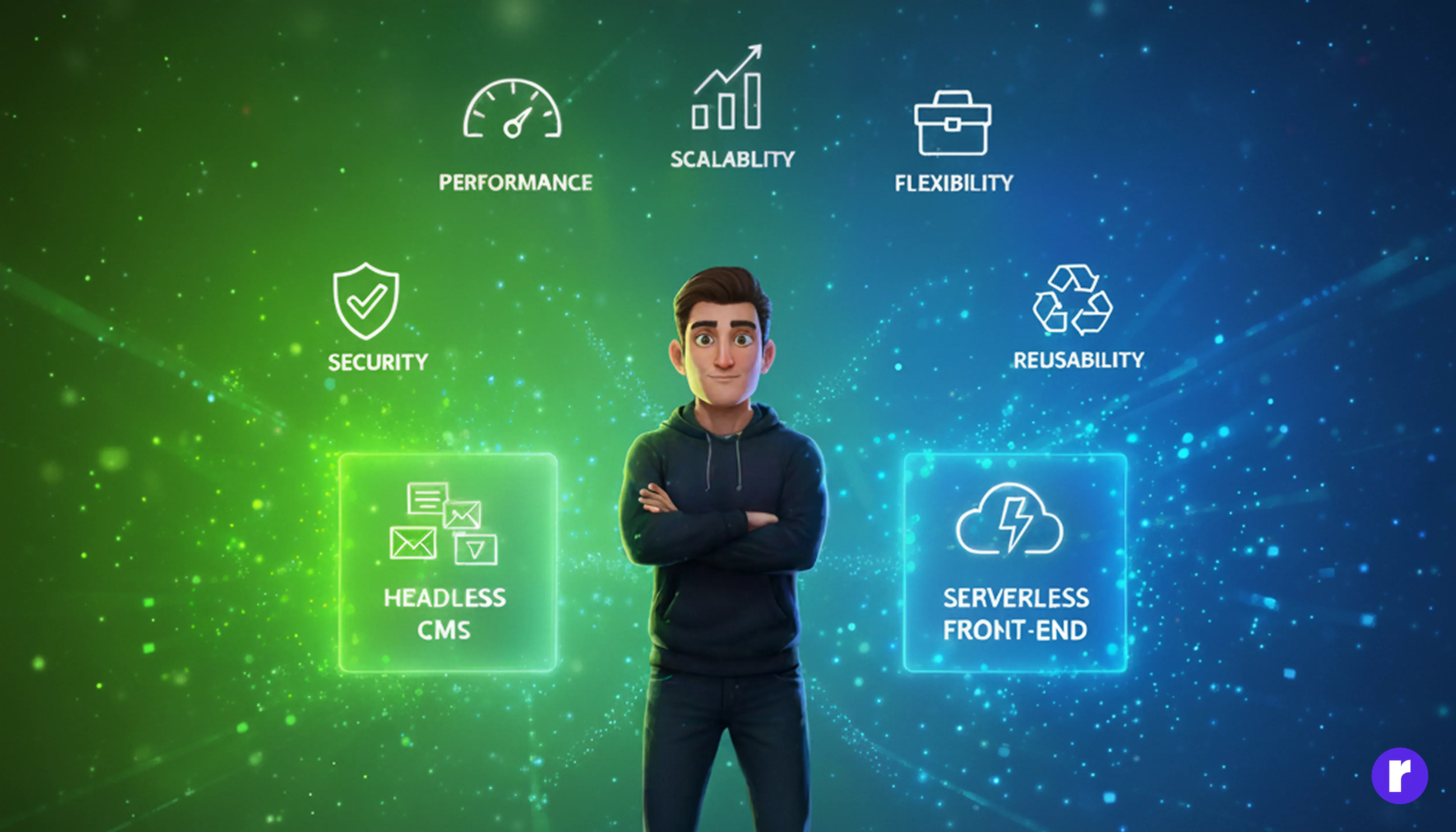
A decoupled architecture separates your content management from the user-facing experience, giving developers more control, speed, and scalability. By combining a headless CMS with a serverless front-end, teams can build modern applications that are faster to develop, easier to scale, and ready for future growth.
- Performance and Scalability: With serverless hosting and pre-rendered pages, your front-end loads faster and scales automatically. Static pages served from edge networks mean global performance consistency.
- Flexibility in Tech Stack: You're free to use any front-end framework (React, Vue, Svelte) while your CMS can be based on Node.js, PHP, or even Python — connected only through APIs.
- Improved Developer Experience: Modern frameworks like Next.js integrate seamlessly with APIs, allowing SSR (Server-Side Rendering), ISR (Incremental Static Regeneration), or CSR (Client-Side Rendering) — giving full control over rendering strategies.
- Security: Since the CMS and front-end are isolated, your content backend isn't directly exposed to the public. Attack surfaces are reduced, and vulnerabilities are limited.
- Reusable Content: Content stored in a Headless CMS can power multiple channels: websites, mobile apps, or even smart displays — all without duplicating data.
Continue your learning journey at Radial code.
Example Setup: Next.js + Strapi (Decoupled Stack)
- Headless CMS: Strapi (manages blog posts, media, users)
- Front-End: Next.js (serverless, deployed on Vercel)
- API Connection: Fetch Strapi's REST or GraphQL API
- Deployment: Automatic builds on content changes via Webhooks
Example:
// // pages/index.js
export async function getStaticProps() {
  const res = await fetch("https://my-strapi-api.com/api/posts");
  const posts = await res.json();
  return { props: { posts } };
}
This setup allows automatic redeploys when content updates occur — no manual rebuilds, no server downtime
Real-World Use Cases
- E-commerce: Use Shopify (headless) + Next.js for lightning-fast storefronts.
- Blogs & Portfolios: Sanity or Contentful for content + Vercel for deployment.
- Enterprise Apps: Decoupled APIs with AWS Lambda for scalability and cost-efficiency.
Get more details in our upgrade guide — Learn More.
Conclusion
As web applications continue to demand speed, scalability, and flexibility, decoupled architecture powered by Headless CMS and Serverless Front-End is becoming the new standard. It empowers developers to:
- Ship faster with modern frameworks
- Scale automatically without managing servers
- Keep content flexible and API-driven
If you're still using a traditional CMS like WordPress for both front-end and back-end, it might be time to go headless and serverless — your next project will thank you.