Speed Over Size: Why Modern Frameworks Use Less JavaScript

Written by
Keshav Saini
Front End Developer

Rinkle Poonia
Front End Developer

Table of contents
Build with Radial Code
Share this


In today's fast-paced digital world, Speed matters more than ever. Users expect websites to load instantly, and even delay of a few seconds can lead to higher bounce rates and lost engagement. This is why modern web frameworks are shifting their focus from shipping more JavaScript to Shipping smarter and less JavaScript. But why is this happening? And how are modern frameworks achieving it? Let's break it down.
The Problem with Too Much JavaScript
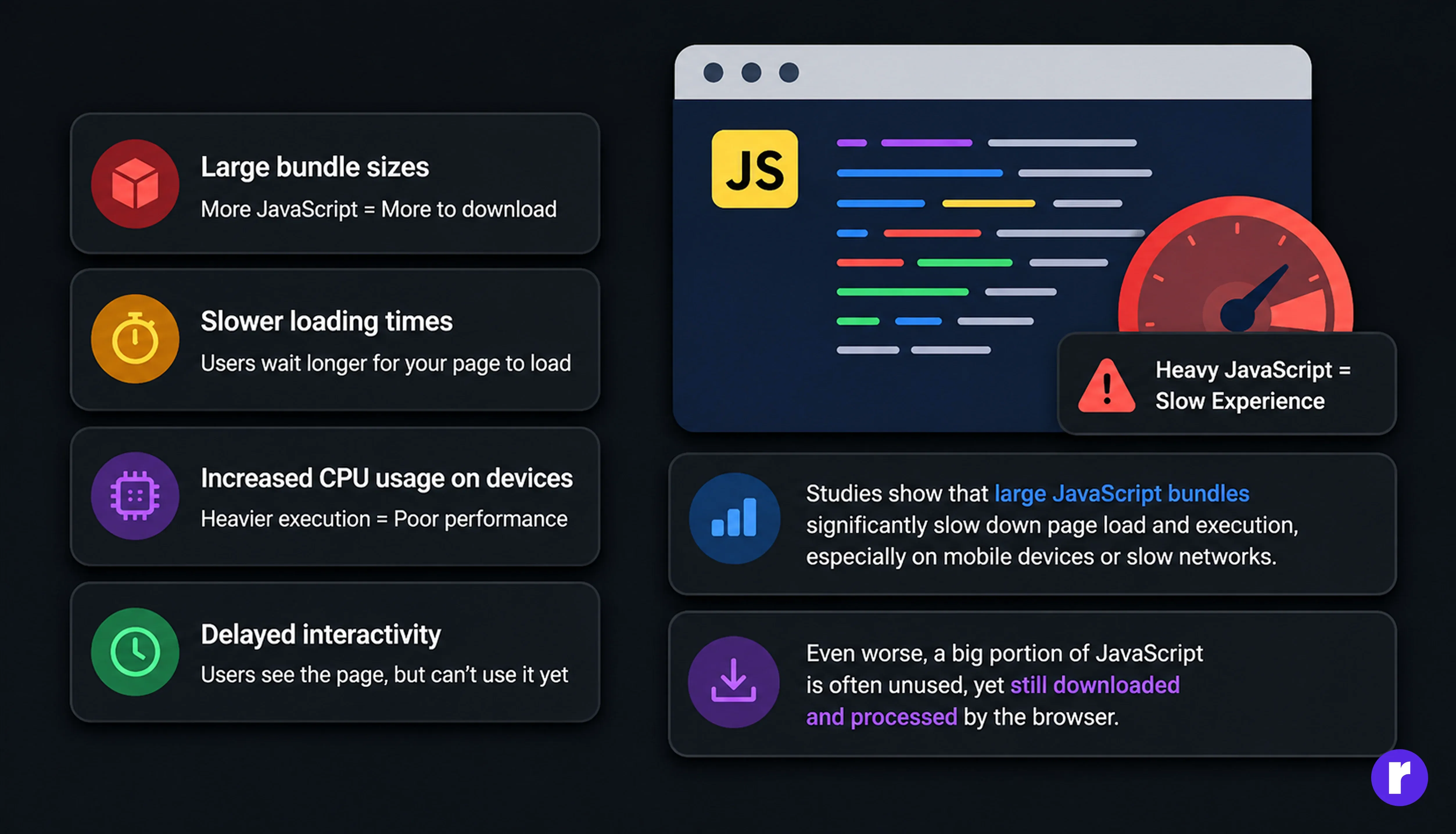
Traditional web applications, especially Single Page Applications (SPAs), realy heavily on JavaScript. While this enables dynamic and interactive experiences, it also comes with a cost:
- Large bundle sizes
- Slower loading times
- Increased CPU usage on devices
- Delayed interactivity
Studies show that Large JavaScript bundles significantly slow down page load and execution , especially on mobile devices or slow networks.
Even worse, a big portion of JavaScript is often unused, yet still downloaded and processed by the browser.
Want to Explore other Blogs ? Radial code blog
Key Techniques Used by Modern Frameworks
- Code Splitting (Load Only What You Need)
- Users only download JavaScript required for the current page
- Other code loads later when needed
- Server-Side Rendering (SSR)
- Faster first load
- Content visible immediately
- Less JavaScript needed on the client
- Static Generation (SSG)
- No heavy JavaScript needed initially
- Ultra-fast performance
- Ideal for blogs, landing pages
- Tree Shaking (Removing Unused Code)
- Dead functions
- Unused libraries
- Server Components & Partial Hydration
- Logic runs on the server
- Only interactive parts get JavaScript
- Less hydration work on the client
- Compiler-Based Frameworks
- Compile code at build time
- Send minimal JavaScript to the browser

Frameworks such as Next.js break up the application's code so that each page has its own JavaScript bundle. As a result, users only receive the scripts necessary for the specific page they're visiting, which speeds up loading times and improves performance.
This can reduce initial JavaScript load by up to 70%

Instead of relying on the browser to build the page using JavaScript, server-side rendering (SSR) creates the complete HTML on the server first and then delivers a ready-to-view page directly to the user's browser.
SSR improves metrics like Time to First Byte and user experience significantly.
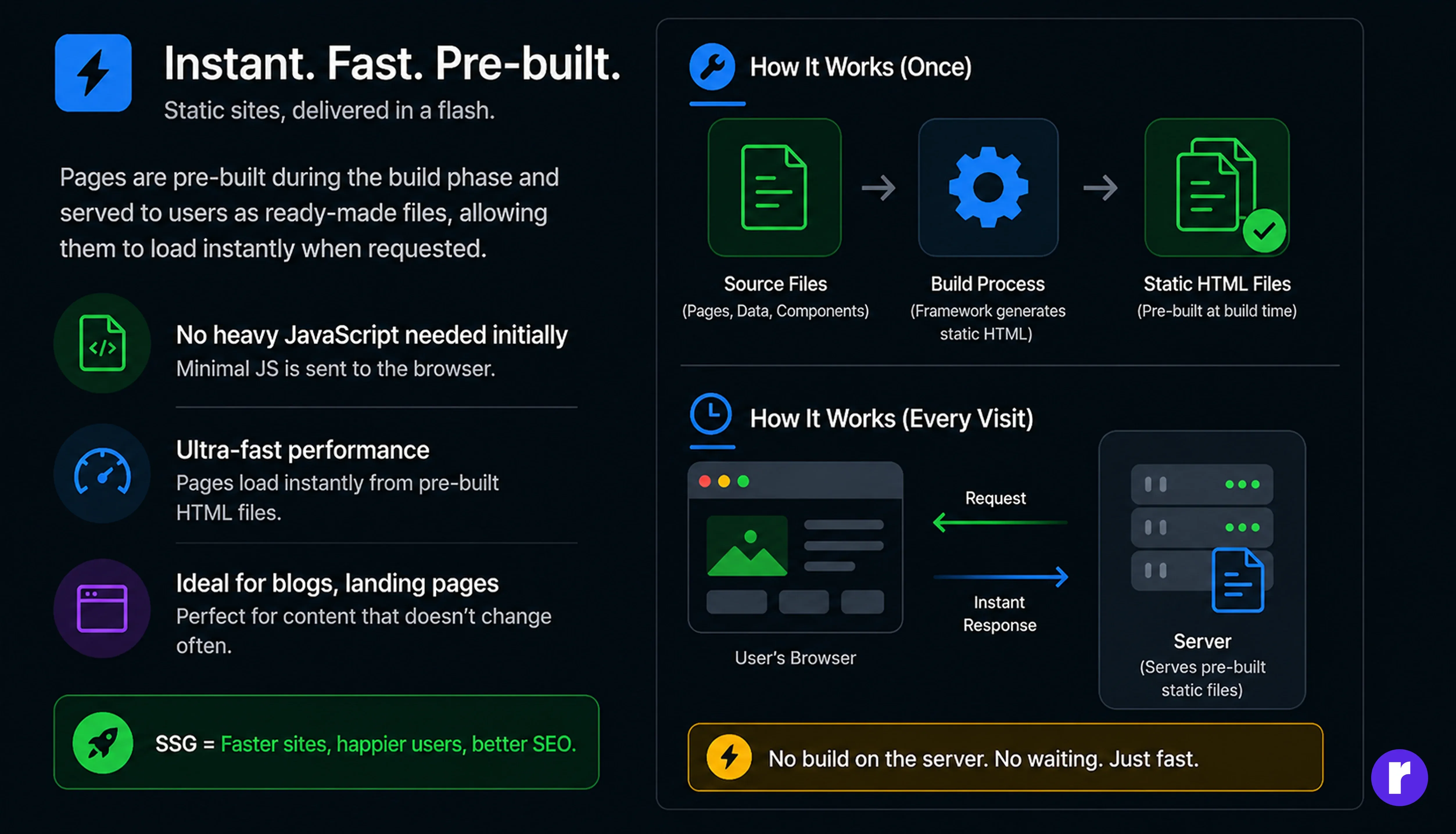
Pages are pre-built during the build phase and served to users as ready-made files, allowing them to load instantly when requested.
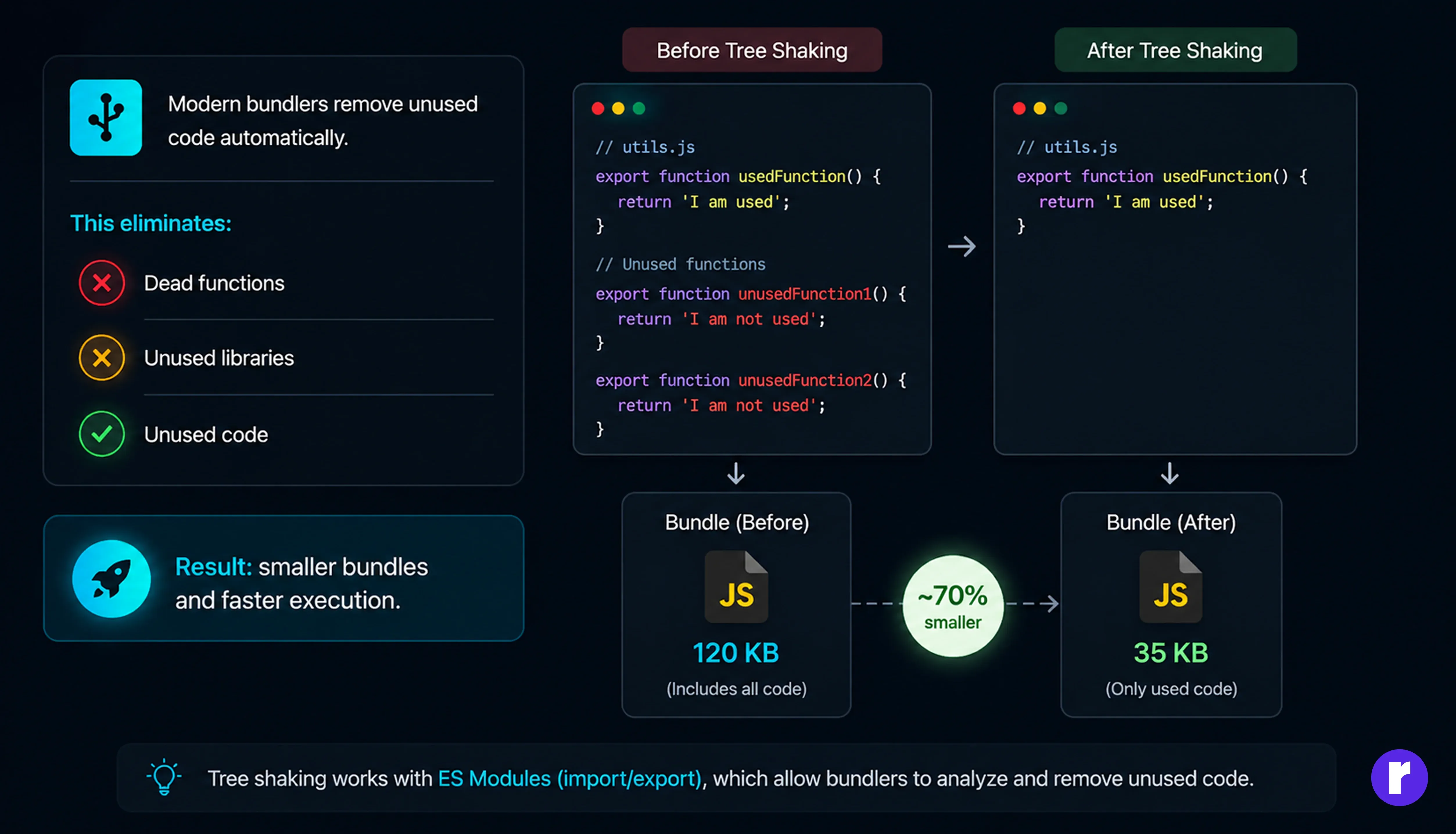
Modern bundlers remove unused code automatically.
This eliminates:
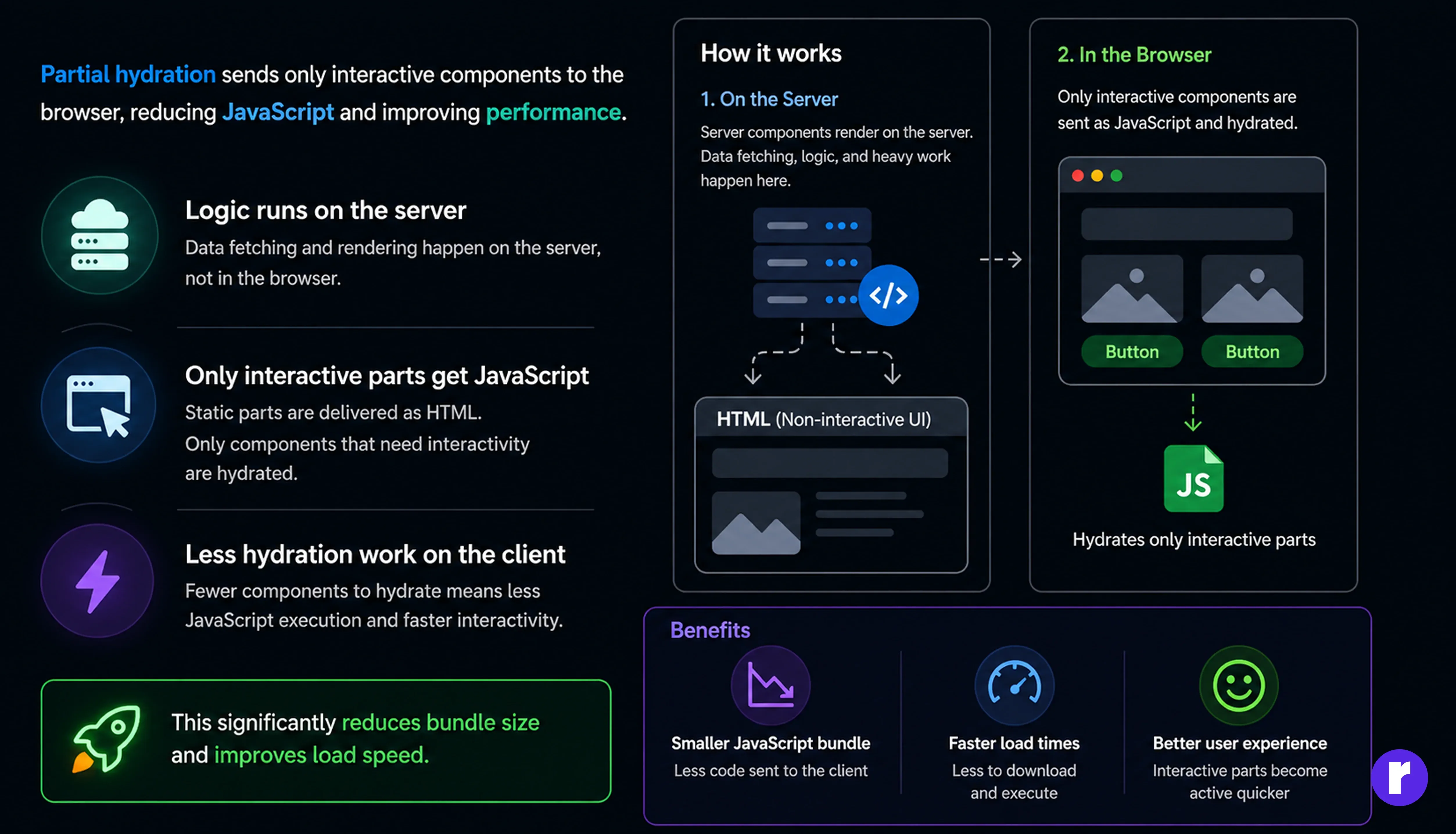
Modern approaches such as React Server Components move a larger share of the application logic to the server, which helps minimize how much JavaScript needs to run in the browser.
This significantly reduces bundle size and improves load speed.

Frameworks like Svelte take a different approach.
Instead of shipping a runtime, they:
This can drastically reduce bundle sizes and improve performance.
Real Impact on Performance
Reducing JavaScript leads to:
- Faster page load
- Better SEO rankings
- Lower bounce rates
- Improved user experience
In real-world cases, reducing JavaScript bundle size has led to:
- Faster interactivity
- Higher engagement
- Better conversion rates
Want to Learn More about websites? Radial code
Why This Matters More Today
Modern users:
- Use mobile devices
- Have limited bandwidth
- Expect instant responses
Heavy JavaScript doesn't just slow down apps—it hurts accessibility and usability.
That's why modern frameworks prioritize performance-first architecture.
Conclusion
Modern frameworks are not just about features—they are about efficiency.
By reducing JavaScript, they
- Improve performance
- Enhance user experience
- Make apps accessible to everyone
In the end, it's clear:
Speed is no longer optional—it's the standard.
That's why modern frameworks prioritize performance-first architecture.
And using less JavaScript is one of the smartest ways to achieve it.