Designers See Things Differently — Here’s How You Can Too

Written by

Vishal Baloda
UI/UX Designer
Table of contents
Build with Radial Code
Share this


Design is more than aesthetics, it is a way of perceiving and interpreting the world. Designers possess a distinct perspective that allows them to see patterns, balance, and meaning in places others might overlook.
This heightened awareness is not exclusive to creative professionals; anyone can cultivate a designer’s eye through observation, curiosity, and intentional practice. Here’s how you can start seeing the world the way designers do. Notice the shapes of things — the curve of a chair, the rhythm of a street, the symmetry of a windowpane. Pay attention to contrast — light and shadow, loud and soft, textured and smooth. Design lives in these opposites.
Because once you start seeing like a designer, you don’t just notice the world you redesign the way you live in it.
The Lens of Observation
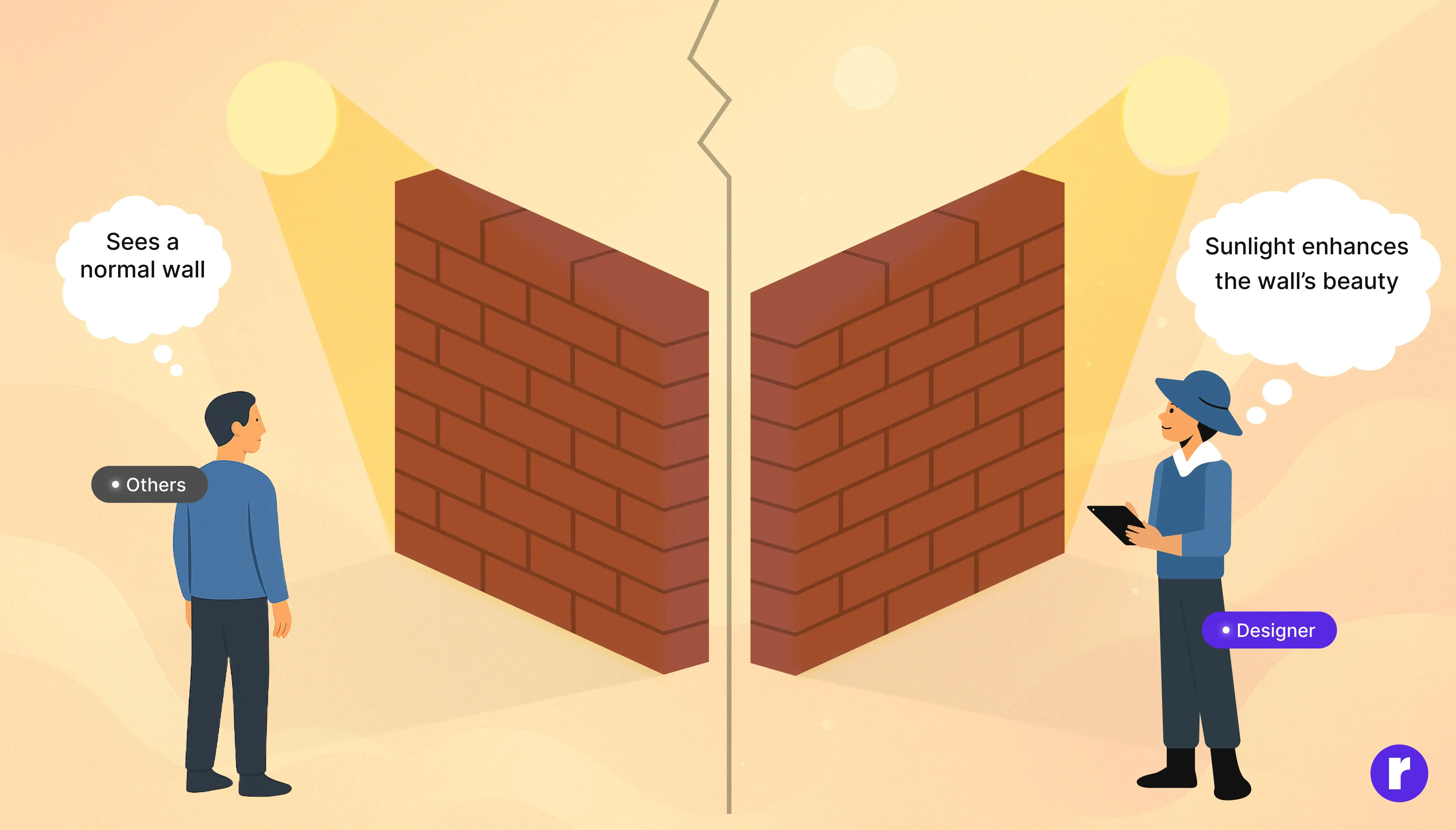
Designers notice what others overlook — the way shadows fall, shapes align, or colors contrast. Observation trains their eye to see invisible design principles in the everyday world.
They find rhythm in chaos, harmony in clutter, and purpose in the tiniest of details. A chipped wall, a messy desk, or a sunset reflected in glass, to them, it’s all visual poetry waiting to be understood.
Example: What others see as a wall, a designer sees as a study in light and texture — balance, proportion, and rhythm in motion.
The Lens of Curiosity
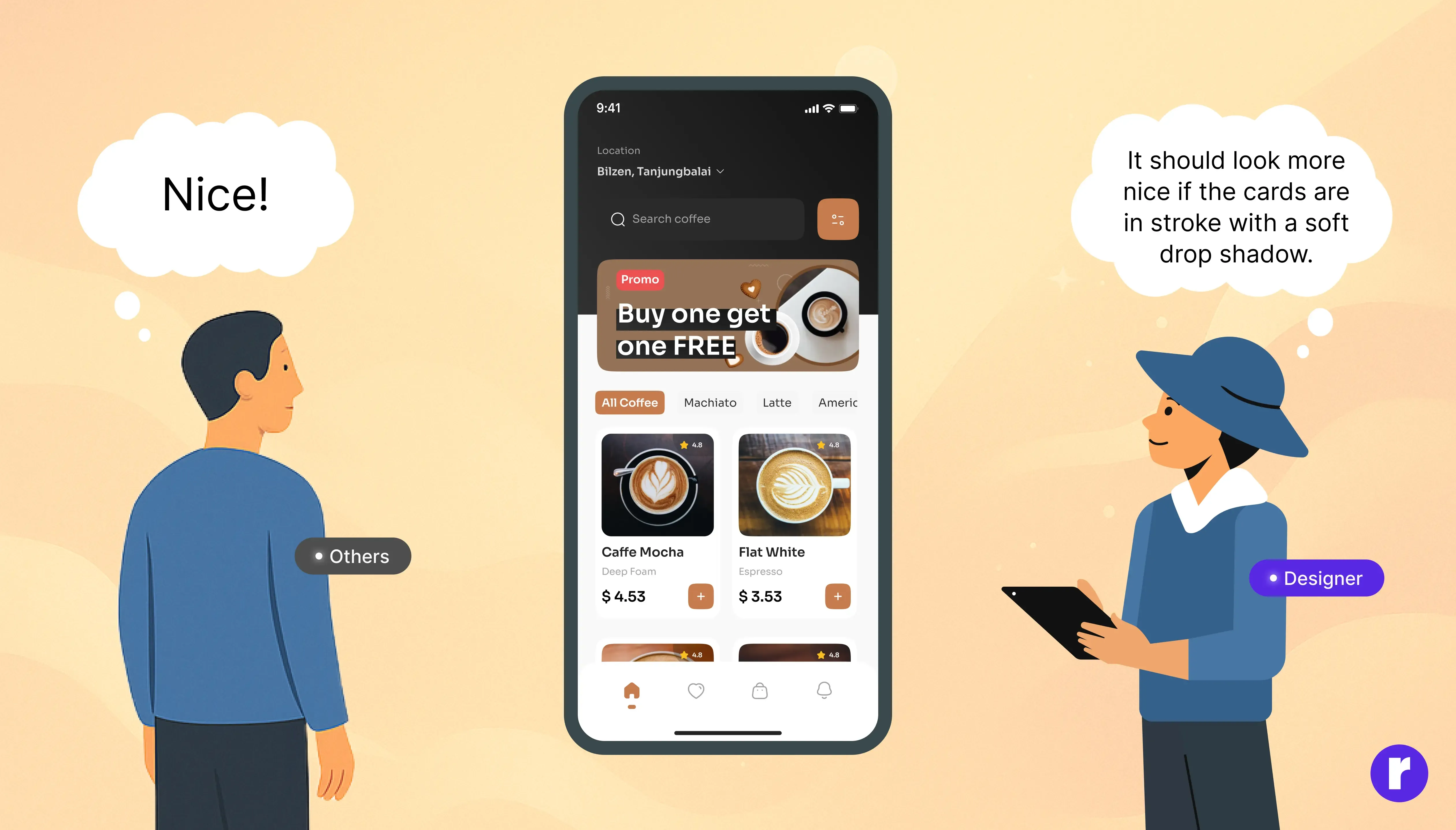
Designers question everything: Why is it like this? Could it work better? Curiosity turns every flaw into an opportunity for innovation. This mindset doesn’t stop at design — it spills into life itself.
Because for a designer, nothing is ever “just fine.” Everything can be improved, streamlined, or made more meaningful. And that restless curiosity? That’s not a flaw — it’s the spark that keeps the world evolving.
Example: Where most people accept a clunky app as “normal,” a designer sees a challenge to make it simpler, clearer, and more human.
The Lens of Systems Thinking

Design isn’t decoration — it’s connection. Designers see how type, color, and spacing form a unified system that communicates meaning.
Every font choice whispers a mood, every color evokes emotion, and every inch of space speaks louder than words. Together, they shape not just how something looks — but how it feels.
Designers don’t simply arrange visuals; they choreograph experiences. They build bridges between intention and perception, message and emotion, creator and audience.
Example: Give a designer three colors and one font, and they’ll create something cohesive and intentional — not despite the limit, but because of it.
Discover how typography shapes powerful design. Learn More
The Lens of Constraint
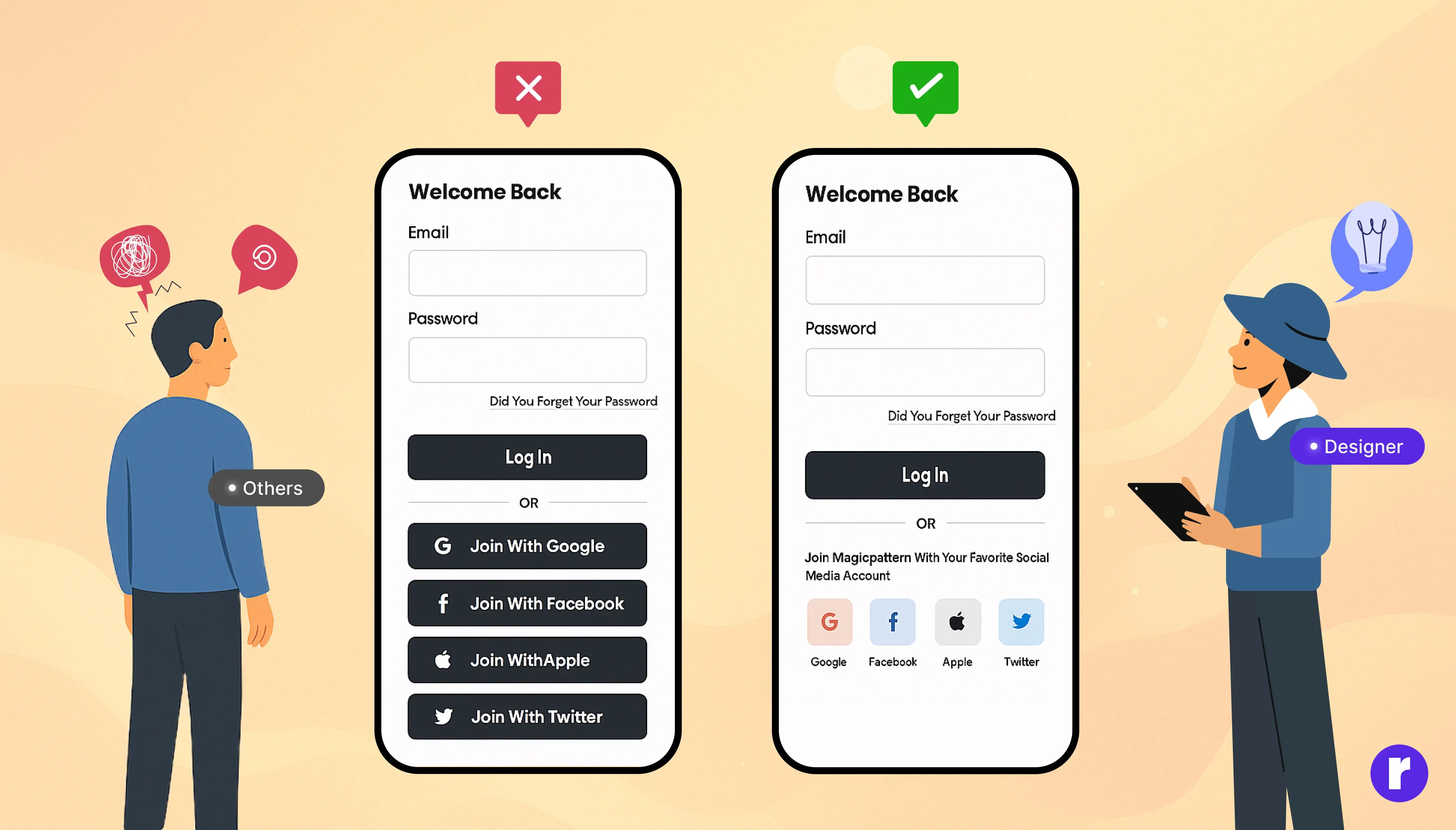
Limits don’t restrict creativity, they refine it. Designers use boundaries as a framework for innovation and clarity. Constraints force focus. With fewer choices, ideas get sharper, solutions get smarter, and creativity learns to breathe within structure.
The box doesn’t cage imagination, it gives it shape. Designers know that perfection doesn’t come from endless freedom, but from disciplined exploration. Too many options blur vision; boundaries bring it into focus.
Example: By using What looks like a simple layout is, to a designer, a network of relationships — hierarchy, alignment, and rhythm working in harmony.
The Lens of Emotion

Design is about feeling before function. Every visual choice aims to evoke comfort, excitement, or trust. Before users think, they feel — and that first emotion shapes everything that follows.
The warmth of a color palette, the rhythm of spacing, the softness of typography — each element quietly speaks to the heart before the mind catches up.
Example: Where others see a “nice color,” a designer sees a mood — calm blues for reliability, warm reds for energy, and contrast for attention.
Want to explore more color ideas and design insights? Learn More
Conclusion
Design isn’t just what we create — it’s how we see, feel, and connect with the world. It’s in the questions we ask, the details we notice, and the emotions we aim to evoke.
To think like a designer is to stay curious, to observe deeply, and to never stop refining. Because design isn’t a skill — it’s a lens. Once you start seeing through it, the world around you transforms from ordinary to intentional.
Remember: Good design doesn’t just catch the eye, it changes how you see the world — turning the ordinary into something worth noticing.
Ready to explore more insights? Visit our blog for expert tips and strategies. Visit Here