Will AI Replace the UI/UX Designer? An Honest Look at Our Evolving Role

Written by

Priyanka Jangra
UI/UX Designer
Table of contents
Build with Radial Code
Share this


Every designer I know has quietly asked themselves this lately: “Will AI replace me?”
It’s a fair question. With tools that can generate entire landing pages, write UX copy, and build prototypes in minutes — it’s easy to feel like the robots are circling the Figma file. But before you spiral, let’s look at what’s really going on — without hype, without fear, and with a little honesty about where we’re headed.
AI might be fast at creating, but only humans know why something should be created in the first place. Designers aren’t being replaced; they’re being redefined. Learn More
AI Is a Tool — Not a Thinker
AI is great at execution — it can whip up moodboards, suggest layouts, and even predict user flows. But it still follows patterns, not purpose. It doesn’t feel a user’s frustration, the delight of a smooth interaction, or see the story hidden in the whitespace.
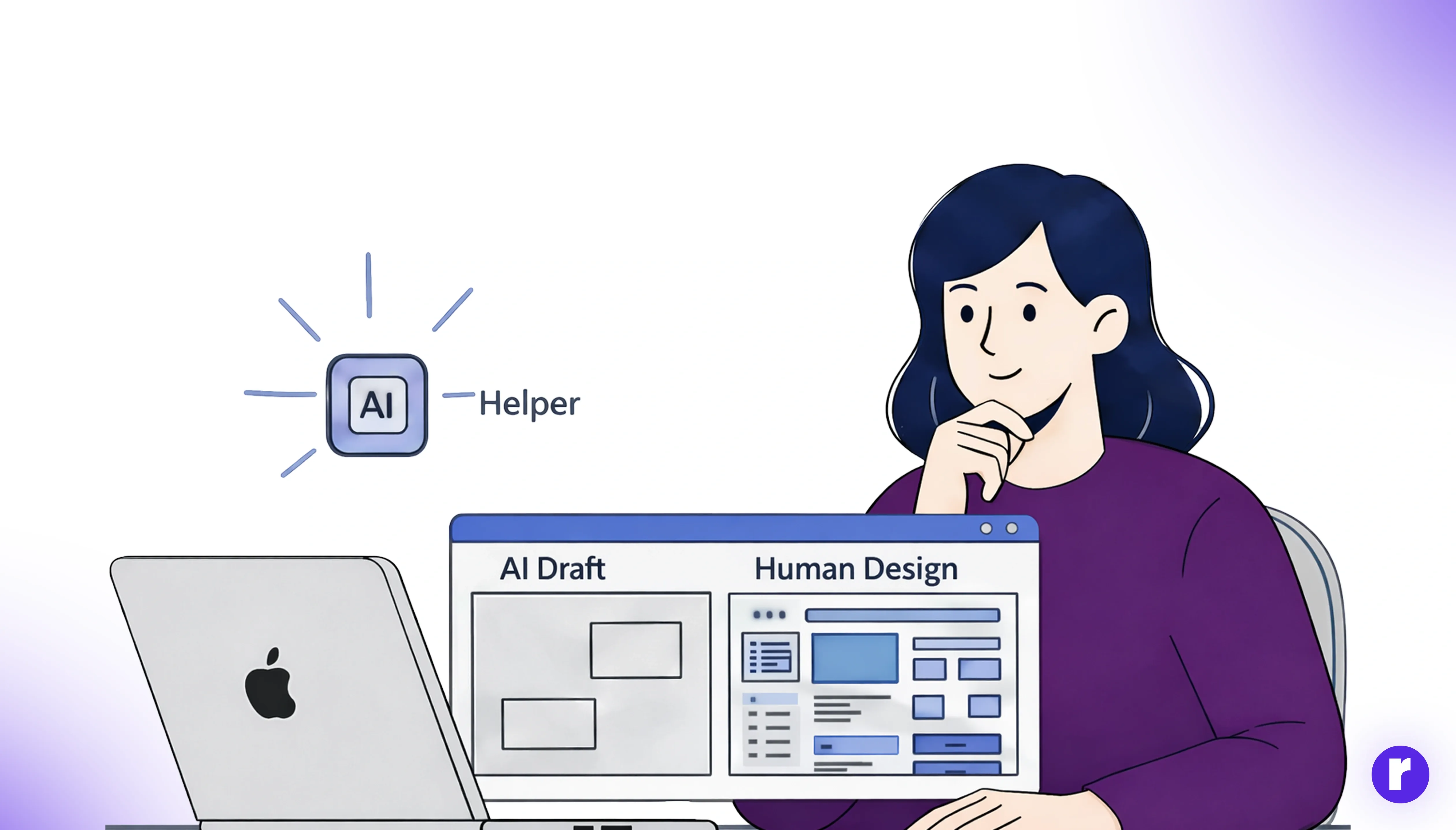
Design, at its core, is emotional intelligence applied visually. It’s empathy turned into interaction. That’s something no algorithm can replicate — at least, not authentically. So while AI can speed up the craft, it can’t replace the creator. The designers who thrive will be those who know how to guide AI — using it like an extension of their own mind, not a replacement for it.
The Designer’s Role is Evolving, Not Erasing
The old idea of a designer was someone who “makes things look good.” That era is gone. Today’s UI/UX designer is part strategist, part psychologist, part systems thinker. AI is freeing us from repetitive tasks — resizing, basic layouts, accessibility checks — so we can focus on higher-level thinking. The new designer will spend more time defining why something should exist and how it should make people feel, not just what it looks like.
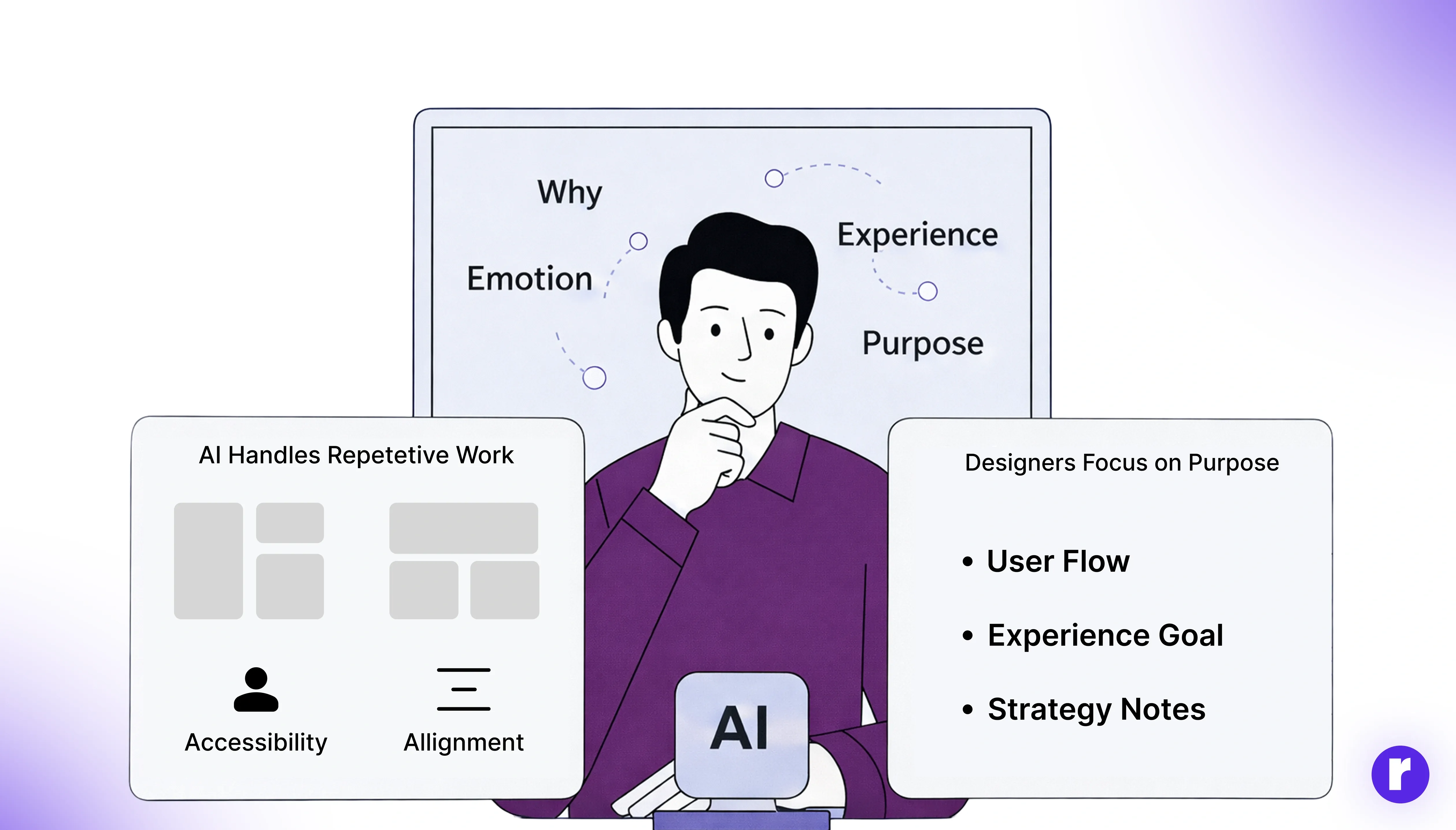
The shift isn’t from creativity to code — it’s from crafting pixels to crafting intelligence. We’re moving closer to being design directors of experiences rather than decorators of screens. Design is evolving — from pixels to purpose. Learn More
New Skills Designers Need to Thrive in the AI Era
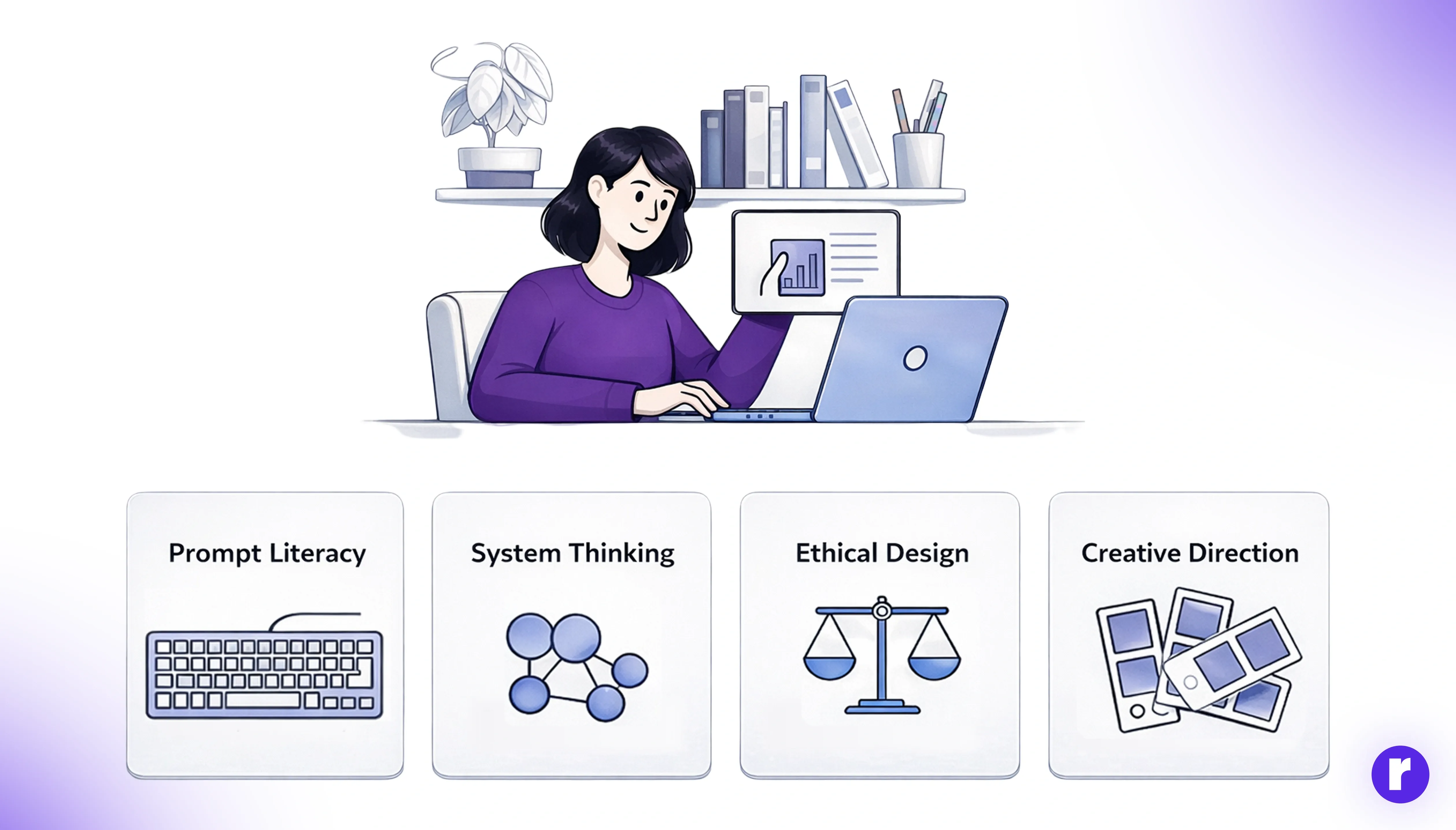
The best designers won’t resist AI; they’ll learn to dance with it.
Key Skills for Designers in the AI Era:
- Prompt Literacy — Knowing how to talk to AI tools clearly and creatively.
- System Thinking — Seeing the product not just as screens, but as interconnected experiences.
- Ethical Design Sense — Ensuring AI-driven interfaces stay fair, transparent, and human-centered.
- Creative Direction — Guiding AI output with taste, brand consistency, and storytelling flair.
Collaboration Will Replace Competition
The smartest designers aren’t fighting AI — they’re collaborating with it.
Imagine:
- Ideating with an assistant that never gets tired.
- Prototyping with a system that instantly tests accessibility.
- Analyzing user data that translates directly into design improvements.
This is not the death of design. It’s the beginning of design with superpowers. Our job won’t be to outsmart the machine — it’ll be to give it direction, soul, and boundaries.
The value of human creativity isn’t going down; it’s simply shifting toward more strategic creativity.
The Future Belongs to Adaptive Designers
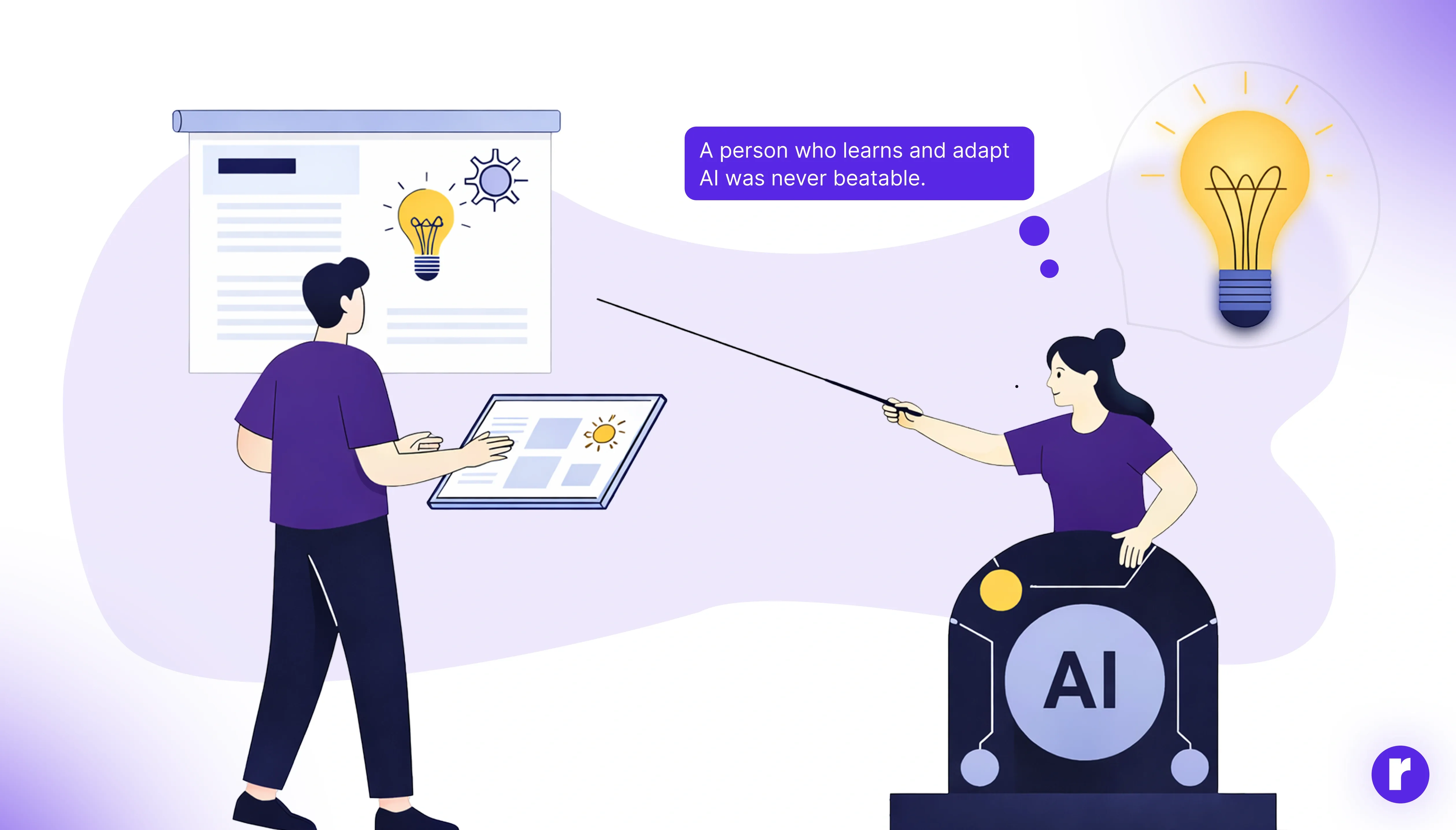
In every creative revolution, there are two types of people:
- Those who resist change and fade.
- Those who learn, adapt, and lead.
The rise of AI isn’t the end of design careers; it’s the filtering moment that separates button makers from experience shapers.
The designers who thrive will be the ones who evolve their mindset — from being craftsmen to being conductors of creative intelligence. AI might learn the logic of design, but only humans understand its poetry.
AI learns form. Humans give it feeling. Learn More
Conclusion
AI may be learning the rules of design, but only humans understand why they exist. So no, AI won’t replace UI/UX designers — it’ll replace the ones who stop evolving. The rest of us? We’re about to enter the most exciting, creative era design has ever seen.
Start learning UI/UX with industry-ready insights. Visit Here