Designing for Delight: UI Trends Users Will Love in 2026

Written by

Poonam Singh
UI/UX Designer
Table of contents
Build with Radial Code
Share this


User expectations for digital experiences are evolving faster than ever. In 2026, users want interfaces that feel intuitive, personalized, and emotionally engaging — not just functional. The next wave of UI trends isn’t about flashy visuals alone. It’s about blending intelligence, empathy, performance, and delight into every interaction. In this post, we’ll walk through the UI design patterns and technologies shaping delightful digital experiences this year and beyond. Learn More
Adaptive Personalization Powered by AI

Personalization has matured from “greeting a user by name” to dynamic UI adaptation. Interfaces analyze behavior and context to deliver tailored layouts, content, and suggestions.
Key possibilities:
- Custom navigation paths based on usage history
- Content recommendations tuned to user intent
- Intelligent defaults that save users time
Why it matters:
Personalized interfaces feel more efficient and intuitive, reducing cognitive load and increasing engagement.
Privacy & User Control:
AI-driven personalization must respect user privacy, consent, and autonomy. Interfaces should never change unexpectedly based on hidden tracking. Users should have clear visibility into how their data is used, the ability to opt out, and full control over what is personalized. Transparent, ethical personalization builds trust and ensures accessibility for all users.
Keep It Simple, Keep It Smart

Clean design isn’t new — but in 2026, minimalism means every element earns its place. It’s less about empty screens and more about intentional simplicity. Designers are moving away from “blank space for the sake of aesthetics” and toward layouts where each color, icon, animation, and interaction has a clear purpose. This new-age minimalism focuses on clarity, usability, and emotional comfort. Interfaces are designed to reduce cognitive load, helping users instantly understand what to do without feeling overwhelmed. Instead of cluttered dashboards and endless options, products now prioritize smart defaults, progressive disclosure, and context-aware features.
Emotion-Driven Micro-Interactions

Micro-interactions — small animated responses to user actions — are becoming more expressive and meaningful.
Key possibilities:
- Progress feedback that feels alive
- Button animations tied to user intent
- Context-aware hover states
They make products feel responsive, thoughtful, and human. Every interaction is designed to acknowledge the user’s actions, creating a sense of dialogue between the person and the interface. Instead of feeling mechanical or distant, digital products now respond with subtle animations, gentle sounds, and smooth transitions that mirror real-world behavior.
Explore more insights and continue learning from industry experts. Visit Radial Code and continue learning from industry experts.
Smart Themes & Dark Mode
Dark mode has become a widely adopted preference for many users. While it's not essential for every product, offering theme flexibility is increasingly expected. Users who work in low-light environments or prefer reduced brightness find dark interfaces more comfortable, though individual preferences vary.
But in 2026, it goes further:
- Automatic switching based on time
- Ambient-light-based themes
- Seasonal or mood-based color palettes
- Custom brand skins
Dynamic theming systems allow users to personalize visual environments while maintaining brand consistency. The challenge for designers is creating scalable design tokens and flexible systems that adapt without breaking usability.
Performance as a Design Feature

- Instant Response & Rapid Loading: Performance starts the moment a user opens a product, fast loading and immediate interaction ensure a smooth, engaging experience from the very first second. Screens should appear immediately, actions should register without lag, and transitions should flow naturally. When products meet strong Core Web Vitals benchmarks (fast LCP, low INP, minimal CLS), they feel refined, reliable, and high-end.
- Fluid Motion & Efficient Animation: Animation should support speed, not compromise it. Optimized Motion & Rendering: Carefully tuned animations, hardware acceleration, and efficient rendering ensure smooth, seamless interactions across all devices. Consistent and responsive movement subtly reinforces a sense of quality and professionalism.
- Smart Loading States & Perceived Speed: Even when systems take time to process data, well-designed loading states keep users engaged. Thoughtful motion and clear feedback minimize frustration, making the experience feel faster, smoother, and more responsive. Skeleton screens, progressive content loading, and subtle progress indicators reduce frustration and create a sense of momentum. Designing for perceived speed is just as important as actual speed.
- Performance Across Devices & Networks: A truly delightful interface strives for strong performance across a range of environments, from high-end desktops to mid-range smartphones and varying network conditions. Optimized assets, compressed images, adaptive content delivery, and efficient code help maximize accessibility and consistency for users, though real-world conditions will always vary.
Because in 2026, speed isn’t just technical — it’s emotional. Fast experiences build trust, reduce friction, and turn usability into delight. Learn More
Accessibility as a Core Direction
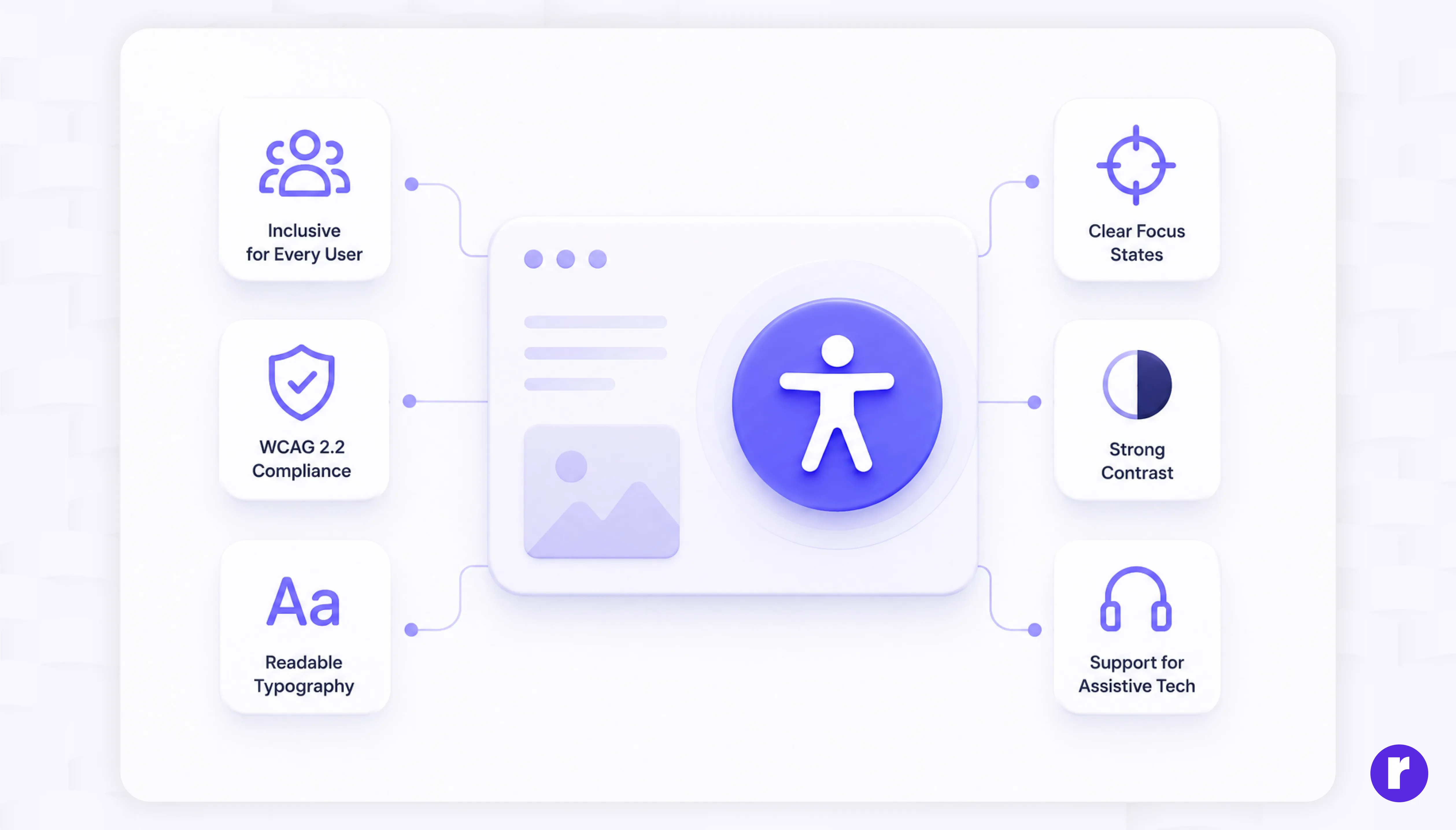
In 2026, accessibility is not an afterthought or a compliance checkbox. It is a fundamental design direction alongside personalization and visual delight. Inclusive interfaces, WCAG 2.2 compliance, clear focus states, readable typography, and support for assistive technologies ensure that every user can participate fully. Designing for accessibility improves usability for everyone and reflects a mature, empathetic approach to digital product design.
Conclusion
The UI trends defining 2026 share a common thread: they put people first. From AI-powered personalization (with transparency and consent) to intentional minimalism, expressive micro-interactions, flexible theming, accessible design, and performance that meets real-world benchmarks, every trend is about building digital experiences that respect users' time, attention, and autonomy. The products that thrive this year won't just look good. They'll feel intelligent, inclusive, and genuinely delightful to use.