Is the UX designer job title dying?

Written by

Sumit Verma
UI/UX Designer
Table of contents
Build with Radial Code
Share this


Scroll through LinkedIn for five minutes and you will find someone announcing a new job title. Not a new company. Not a promotion. Just a new name for work they were already doing. "UX Designer" becomes "Product Designer." Then it becomes something else. It is easy to start wondering if your own title is next.
The truth is not a simple yes or no. The work of user experience design is not going away. What is changing is the name companies give to the people who do it, and the shape of the job around it. This blog looks at why the title feels shaky, where it might be heading, and what actually matters if you work in this field.
From "UX designer" to "product designer"
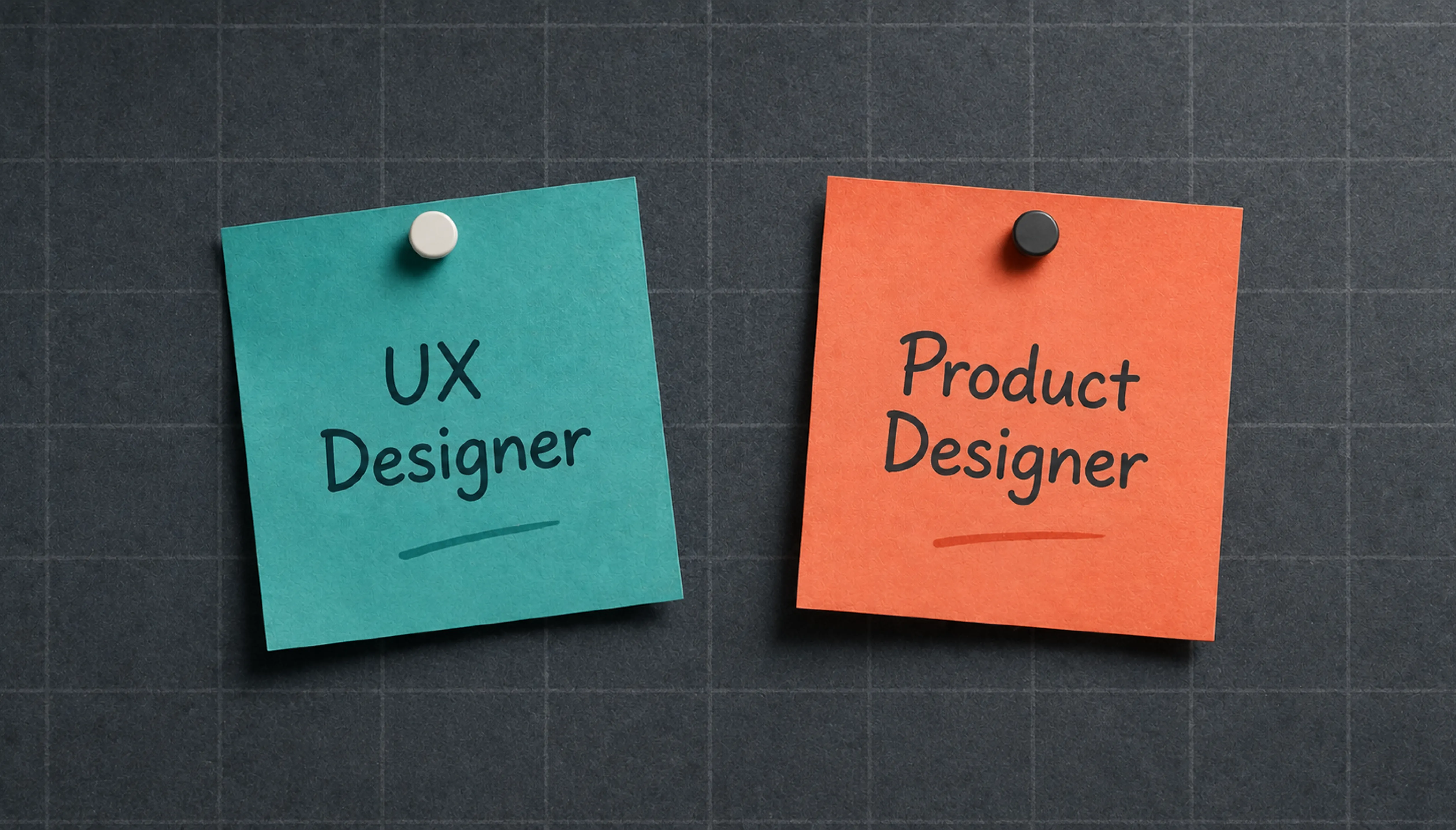
Over the last few years, many companies started using "Product Designer" as their main title. Instead of hiring separate people for research, UI, and UX, they wanted one person who could handle most of it. That one title covered a lot more ground than "UX Designer" used to.
This did not happen by accident. Small teams cannot afford to hire three or four specialists for one product. So they look for one person who can research a problem, sketch a solution, and also think about how it fits the bigger business goal. Recent hiring reports back this up: "Product Designer" has become the default title on most job postings, with companies only adding a separate, dedicated UX title once their design team grows past about 20 people.
Not everyone sees this the same way, though. Some designers like the wider role. It gives them more say in decisions and more variety in their day. Others feel like they simply got a new title stitched onto the same job, without any extra pay or support to match the extra work.
Is AI actually replacing the role?
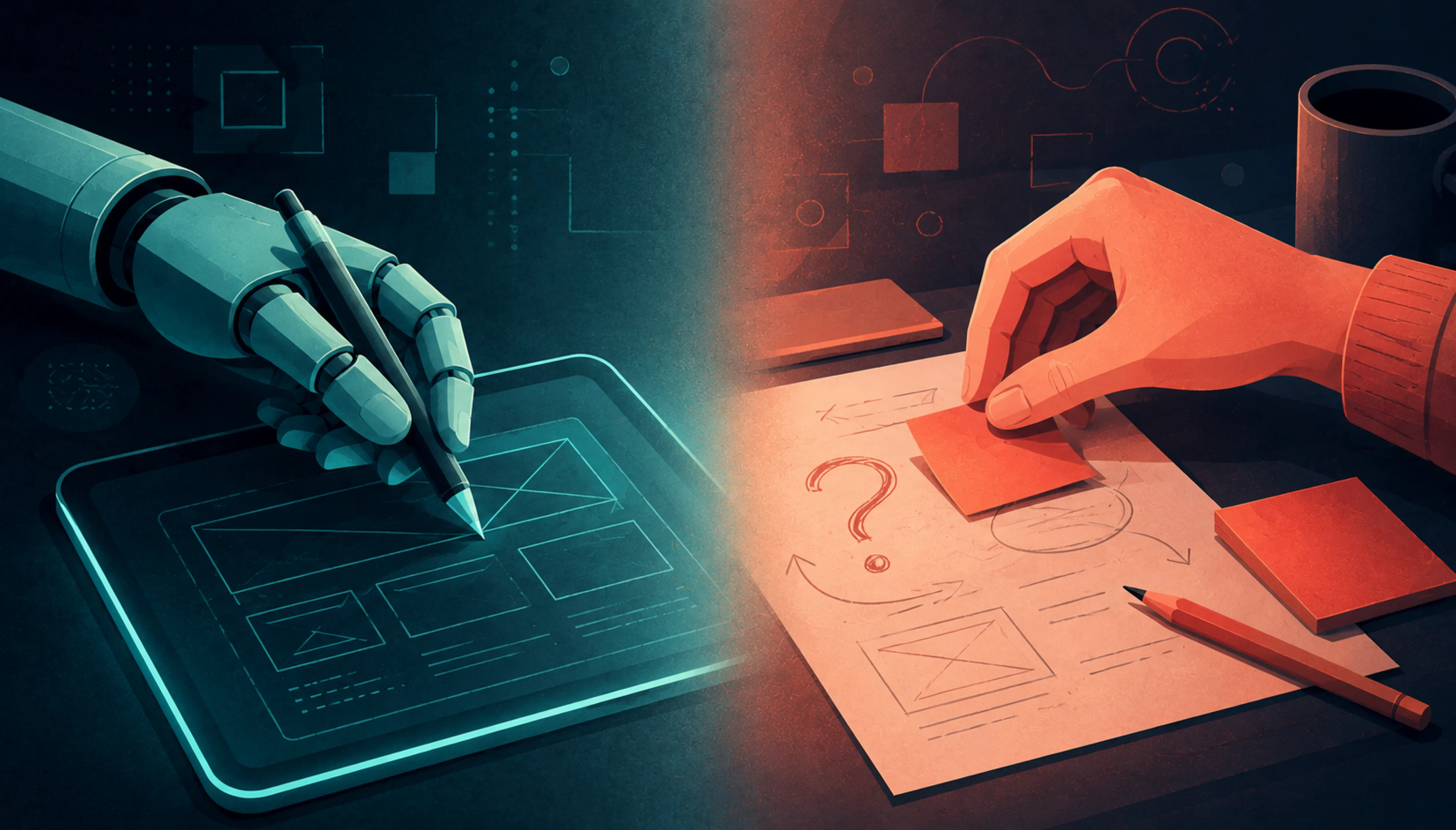
AI tools can now build wireframes, write basic user flows, and turn interview notes into summaries in seconds. It is easy to see why people worry. If a tool can do in a minute what used to take a day, what is left for a human?
Quite a lot, actually. AI is mostly speeding up the repetitive parts of the job. That leaves more time for the parts that are hard to automate:
- Figuring out the real problem before drawing any screens
- Making sense of confusing or mixed feedback from users
- Deciding what matters most when goals and user needs do not match
- Speaking up for the user in meetings where no one else will
- Building enough trust with the team that your ideas actually get used
It is worth being precise about one thing here: AI can summarize what happened in a user interview. It cannot run the interview. Real user research still depends on a person asking the right follow-up question, reading body language, and noticing the thing a user didn't say out loud. AI helps you process research faster. It does not replace doing the research.
If you want to read more on this, the UX Design Institute has a good breakdown of what AI can and cannot do in this job.
Job titles are also splitting apart
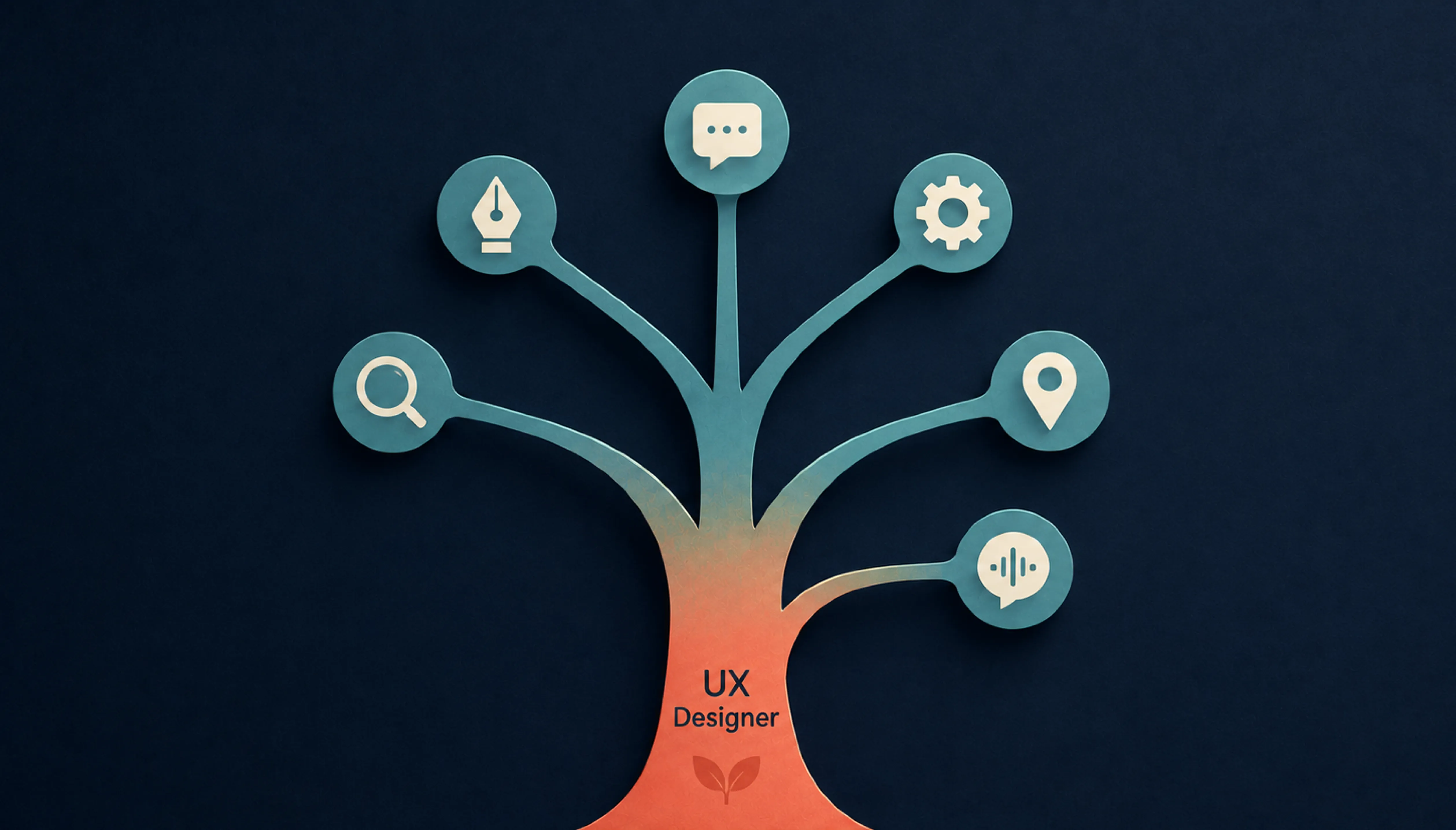
At the same time some companies are merging roles, others are doing the opposite. Bigger companies often want someone with one narrow skill, instead of one person who does everything.
Titles you now see alongside "UX Designer" include:
- UX Researcher: mainly handles interviews and testing
- UX Writer: writes the words inside the product
- Service Designer: looks at the full experience, not just the screen
- Design Technologist: works between design and code
- Design Ops Lead: runs the tools and process behind a design team
- Conversation Designer: builds chat and voice experiences
These are not strict, separate boxes, though. In real teams, the work overlaps constantly — a UX researcher might help write survey copy, and a service designer often ends up doing interaction work too. Think of the list above as each role's main focus, not a hard boundary around what they're allowed to touch.
So the title is not disappearing. It is being pulled in two directions at once. Some companies want one person who can do everything. Others want several people who each do one thing well.
Your title might change, but your skills are the real story. Talk to us
What job postings actually say

If you search job boards today, "UX Designer" is still one of the most common titles out there. It has not disappeared, and in plenty of companies it is still the exact title on the door.
But look closer at what each posting actually asks for, and you will notice the list has grown. A "UX Designer" role today often expects some UI skills, some research skills, comfort with AI tools, and enough understanding of the business to explain why a decision was made. Five years ago, that same list of requirements might have been split across two or three separate jobs.
This lines up with the bigger picture, too. The U.S. Bureau of Labor Statistics groups these jobs under "web and digital interface designers," a category it expects to grow by 23% by 2031 — much faster than the average job. So even as the title on the posting shifts, the actual hiring in this space keeps climbing. Companies keep the familiar "UX Designer" name because people search for it and understand what it means, even while the job sitting underneath that name keeps quietly growing.
The skills that still matter
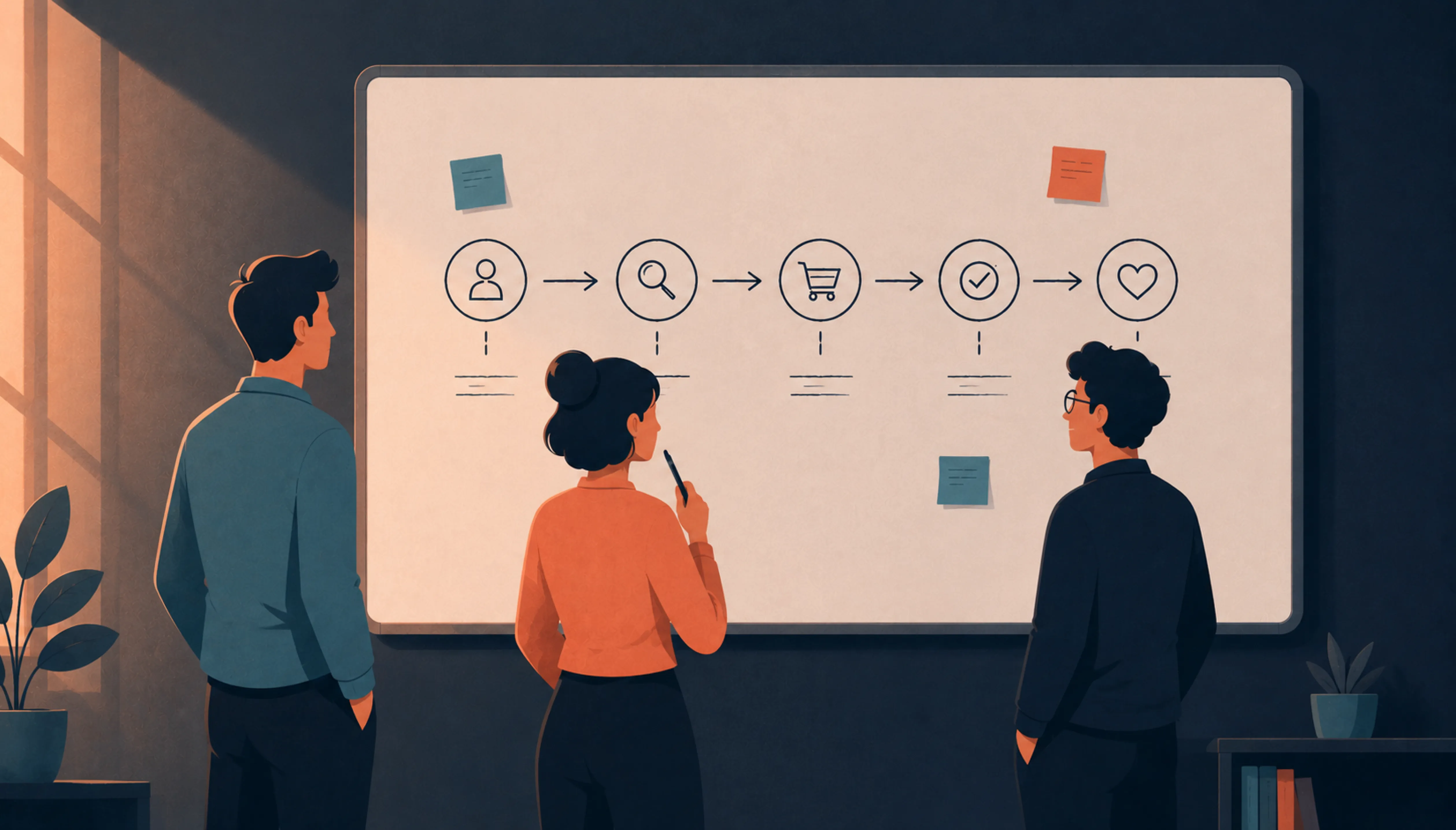
No matter what the title says, some skills keep showing up in every version of this job. That's because these are the parts of the work that actually make a product better, regardless of what the org chart calls the person doing it.
- Talking to real users and understanding what they actually mean
- Turning a messy problem into a clear direction
- Explaining your decisions with reasons, not just opinions
- Working well with engineers and product managers
- Learning new tools quickly, like Figma, without losing sight of the basics
These are the things that make you hard to replace. It does not matter if your title says UX Designer, Product Designer, or something that does not exist yet.
Conclusion
The title "UX Designer" is under real pressure. Some companies are folding it into "Product Designer." Others are splitting it into smaller, specific roles. AI is changing how the daily work gets done. But outlooks on the job market through 2030 still list UX and product design among the fastest-growing roles, so none of this points to the job itself disappearing. Here's the direct answer: the title is changing, but UX work is not going anywhere. So instead of worrying about what your title says, spend that energy getting better at the skills that matter. That is what keeps you useful, no matter what your title ends up being.