Why Great Products Feel Predictable

Written by

Vishal Baloda
UI/UX Designer
Table of contents
Build with Radial Code
Share this


Think about opening a door. You don't stop to figure out where to place your hand, how to use the handle, or what will happen when you turn it. You see a familiar handle, reach for it, and expect the door to open. You've probably never seen that exact door before, yet you already know what to do. That's not an accident. It's what good design looks like: something so familiar and consistent that you don't have to think about it. And that's the quiet secret behind almost every product you'd call “great.” It doesn't surprise you where it counts. It simply works the way you expected it to.
Our brains run on assumptions and mental models
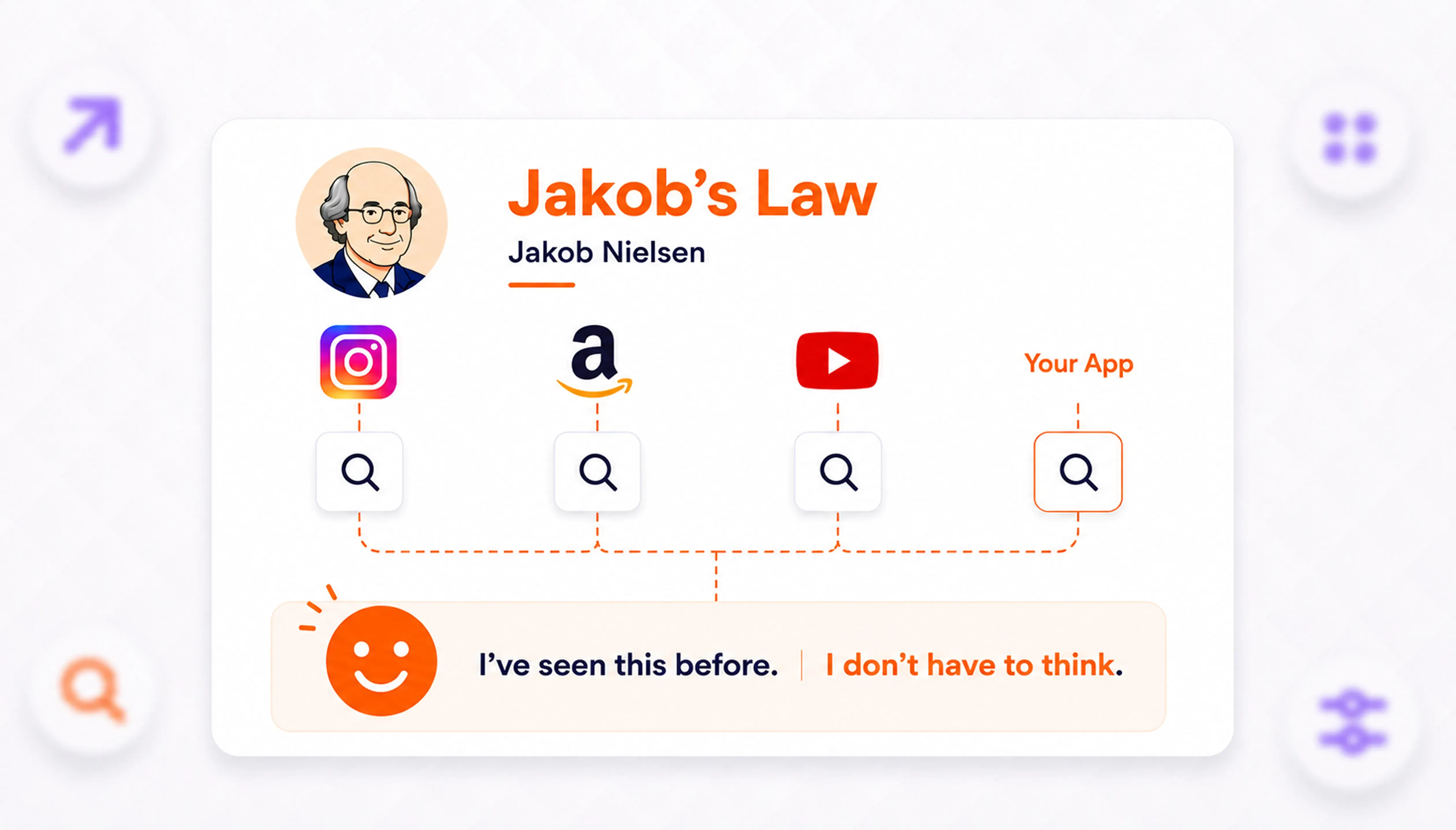
JJakob Nielsen and Rolf Molich published early work on heuristic evaluation in 1990. In 1994, Jakob Nielsen refined and formalized the heuristics into the 10 usability heuristics widely used in interface design today. The idea is simple: Users shouldn't have to wonder whether a button means the same thing it did on the last screen or whether a familiar interaction will suddenly behave differently.
He later described this idea through Jakob's Law:
People spend most of their time using other products, so they naturally bring those experiences and expectations to your product.
When your interface follows familiar patterns, users can rely on what they already know instead of learning everything from scratch. You're not just competing with your closest rival — you're competing with every app, website, and digital product your user has ever used.
Predictable things become automatic
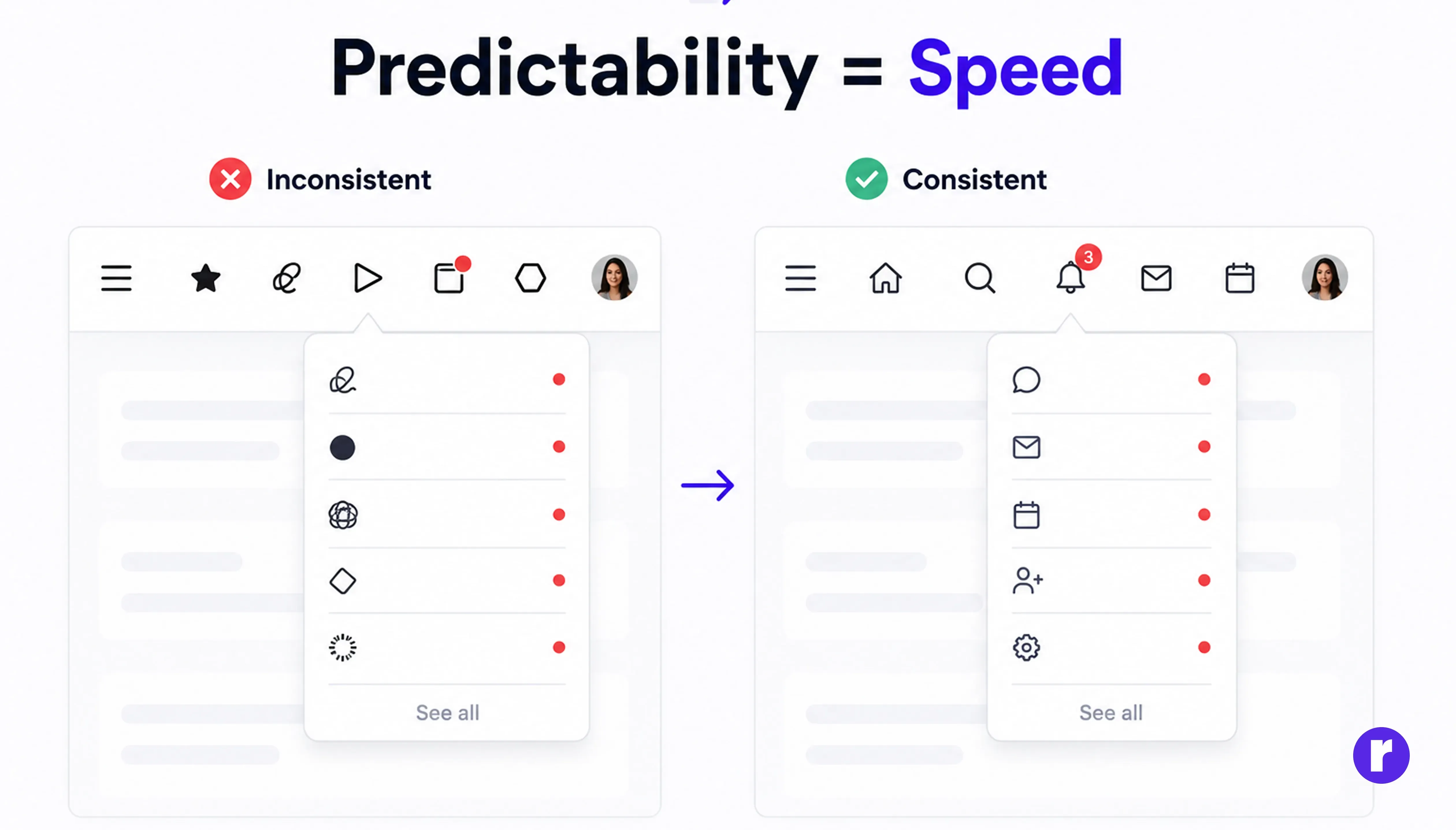
There's another payoff to predictability: speed. When something behaves the same way every time, you stop consciously thinking about it and start doing it on autopilot.
Think about driving a car. Many critical controls follow familiar conventions — from pedal placement to the basic layout of essential driving controls. That's not a coincidence or a lack of imagination from car makers; it's deliberate. Familiar conventions help drivers transfer what they already know when they get into a different vehicle. If every manufacturer completely reinvented where essential controls were placed, switching cars would demand much more conscious attention. Because these layouts are predictable, many actions become automatic rather than something you have to stop and think about.
That's what repeated, predictable design earns a product. It turns effortful thinking into learned behavior. And once an action becomes automatic, people do it faster, more often, and with less mental fatigue — which is exactly why predictable products tend to feel effortless to use, even when they're doing something complex behind the scenes.
The best products borrow familiar patterns instead of inventing new ones
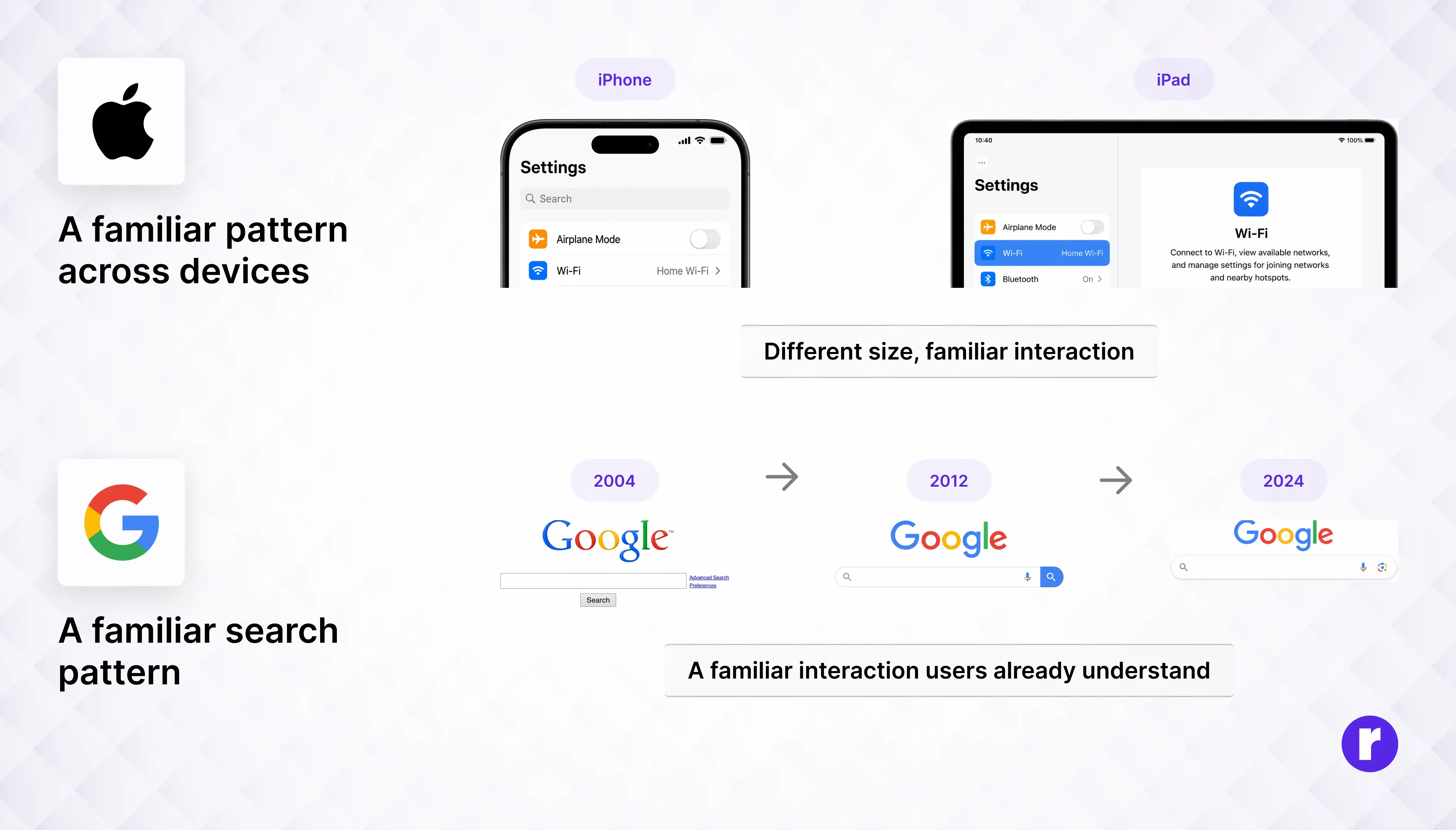
Users bring expectations from products they already know. When a new product follows familiar patterns, people can transfer those existing skills instead of learning everything from scratch.
- Apple: Familiar settings and navigation patterns across iPhone and iPad can help users carry their existing knowledge between devices.
- Google: The search box is a familiar interaction that users can recognize even as the surrounding interface changes.
Start Your UI/UX Journey with Radial Code Learn.
Predictable isn't the same as boring
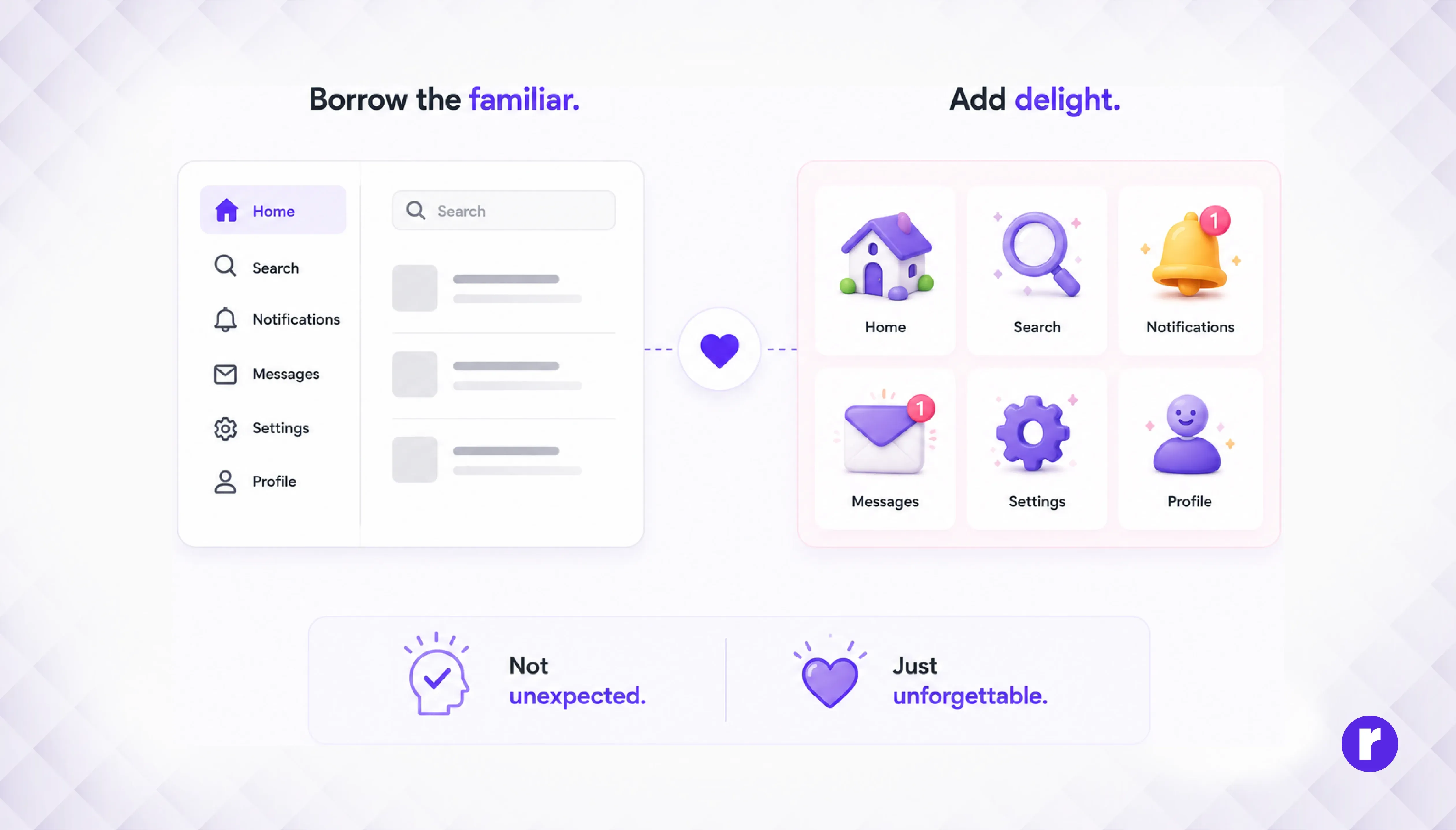
This doesn't mean novelty has no place. A witty error message or a small delightful animation can absolutely be part of what people love about a product. The trick is treating delight as icing, not cake: fine on top of something that already works, dangerous the moment it gets in the way of what the user is trying to do. Don't surprise people out of confusion — surprise them only when it costs them nothing. So if you're building something, save your creativity for what makes your product actually yours — the content, the value, the personality. For everything the user has to learn — navigation, icons, forms, gestures — borrow the familiar pattern. The highest compliment a product can get isn't "I didn't expect that." It's that people forget they used it at all, because it worked exactly like they thought it would.
Conclusion
Great products don't win by being unpredictable — they win by being invisible. Every light switch you've never seen before still works because someone, long ago, decided not to reinvent it. That's the real lesson for anyone building a product: predictability isn't the boring cousin of innovation, it's the foundation that lets people trust you enough to stick around. Save the surprises for where they count, and let everything else feel like something your user already knows. Discover more UX insights from Radial Code.