Why some designers stop growing after 2 years

Written by

Shweta Kumari
UI/UX Designer
Table of contents
Build with Radial Code
Share this


Design is one of the fastest-evolving industries in the world. New tools, technologies, user behaviors, and business expectations emerge every year. Yet many designers experience the same challenge: after their first two years of growth, progress begins to slow down.
The excitement of learning design fundamentals eventually fades, and many designers unknowingly fall into routines that limit their development. Growth doesn't stop because of a lack of talent—it stops because of habits, mindset, and missed opportunities.
Explore More Design Blogs Radial code
They stop learning new skills

The first two years of a design career are usually filled with rapid learning. Designers master tools, understand layouts, learn visual hierarchy, and become comfortable creating interfaces. But once they reach a certain level of competence, many stop exploring new skills.
Ask yourself:
- When was the last time you learned a completely new design skill?
- Have you invested time in understanding emerging technologies and workflows?
- Are you exploring areas beyond visual design, such as UX research or accessibility?
Designers who continue learning remain valuable. Those who rely only on what they learned two years ago often find themselves stuck while the industry moves forward.
They rely on tools instead of solving problems

Many designers believe mastering more tools automatically makes them better designers. While tools are important, clients and companies rarely hire designers simply because they know the latest software.
Great designers solve business and user problems. They understand why something should be designed—not just how to design it.
Practical ways to improve problem-solving skills:
- Spend more time understanding user needs before designing.
- Learn basic business principles behind design decisions.
- Ask questions about goals, challenges, and desired outcomes.
For example, redesigning a checkout page to reduce cart abandonment can create more business value than simply adding trendy animations or visual effects.
They ignore business and user research
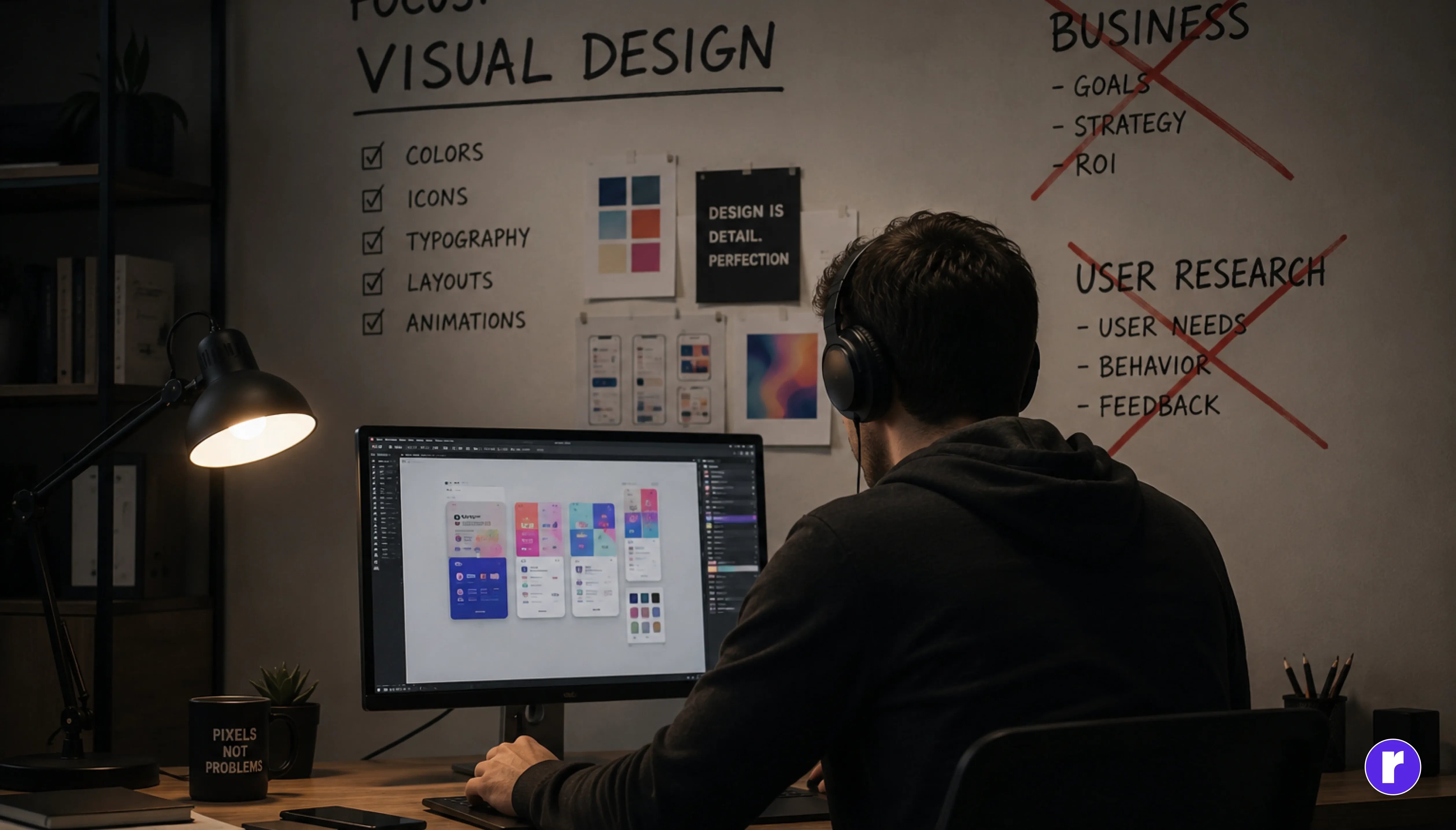
Many designers spend years improving visual skills while overlooking the importance of business goals and user behavior.
Modern design is not only about creating attractive screens. It is about helping users achieve goals while supporting business objectives.
Explore Design Challenges & Project Ideas Dribbble.com
Designers who understand both users and business become strategic contributors rather than just visual creators.
They lean on AI without leveling up
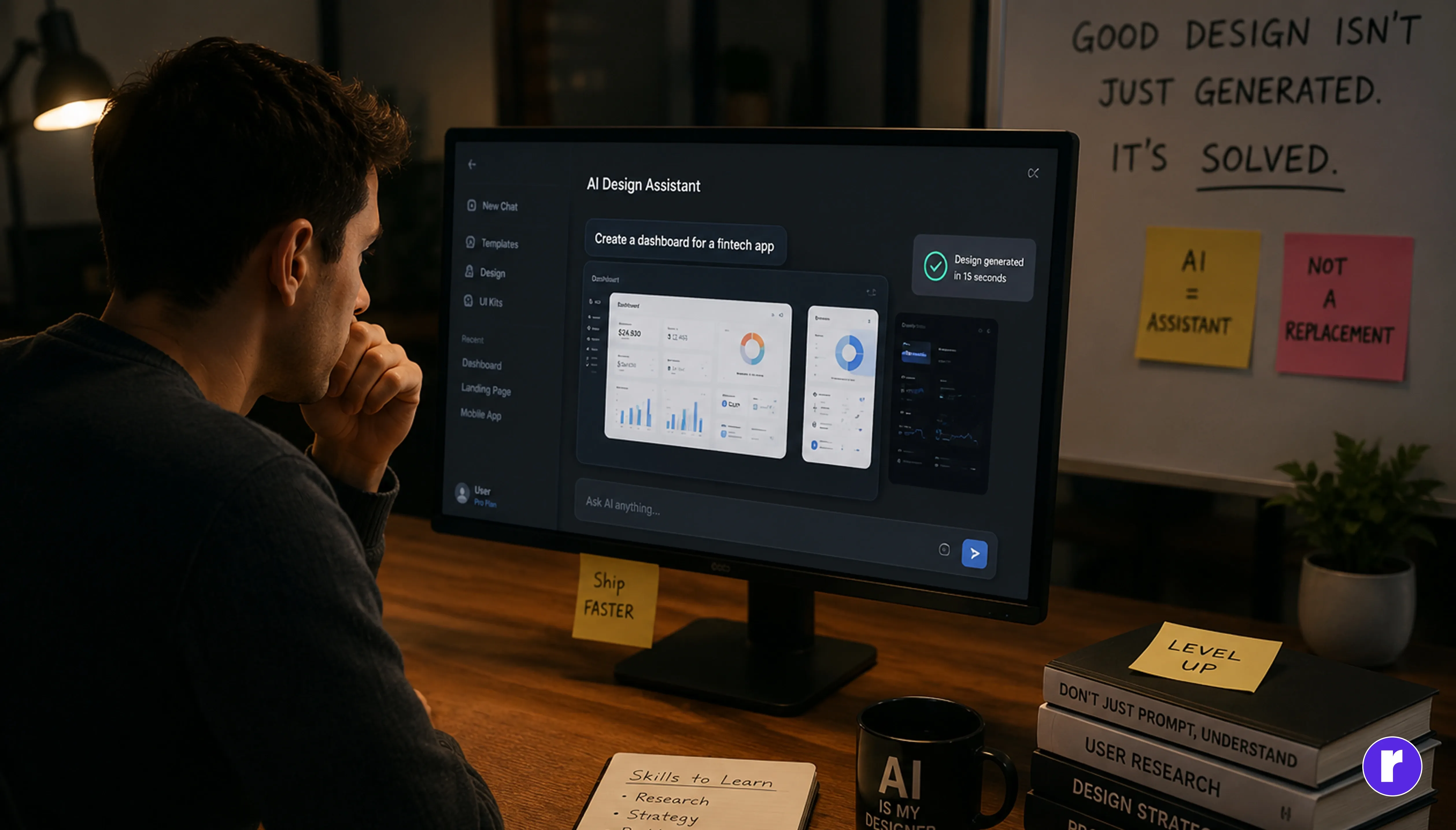
For the first time, a designer with two years of experience can produce work that looks like ten. AI generates the layouts, fills the copy, cleans up the visuals, and handles the mechanical craft that used to take years to master. That's a gift, but it's also a trap. When the tool does the easy 80%, the only thing separating you from everyone else with the same tool is the 20% it can't do: judgment, strategy, and knowing why a choice is right.
The designers who plateau treat AI as a finish line. The ones who keep growing treat it as a floor: they let it absorb the repetitive work, then pour the time they saved back into the skills AI can't fake, understanding users, framing problems, and defending decisions.
They get too comfortable

One of the biggest reasons designers stop growing isn't a lack of talent or opportunity, it's comfort. After a few years in the industry, many designers become confident in their skills and settle into familiar workflows. Projects start feeling routine, feedback becomes predictable, and learning no longer feels urgent.
The danger is that growth rarely happens when everything feels easy. Design is constantly evolving, and staying in the same place for too long can quickly turn today's strengths into tomorrow's limitations.
They stop building personal projects

Client work can teach valuable lessons, but it often comes with limitations, deadlines, and business requirements. Personal projects are where designers have the freedom to experiment, take risks, and explore new ideas without restrictions.
Many designers stop working on side projects after gaining professional experience. As a result, their creativity becomes tied only to client requirements, leaving little room for innovation and skill development.
Ask yourself:
- When was the last time I designed something purely for learning?
- Am I experimenting with new design styles or techniques?
- Do I have projects that showcase skills beyond my daily work?
Personal projects allow designers to stay creative, explore new trends, and build a portfolio that reflects their true potential. Some of the most impressive portfolios are built not from client work, but from ideas designers pursued on their own.
Conclusion
Design growth is driven by continuous learning, curiosity, and adaptability not years of experience. Many designers stop growing when they become comfortable, avoid feedback and challenges, focus too much on tools, or rely on AI without improving their problem-solving and strategic thinking skills. AI can improve efficiency, but it should support creativity and critical thinking, not replace them. The designers who keep growing are the ones who stay curious, embrace change, and continue learning throughout their careers. Visit Here