Shopify metafields vs metaobjects: What’s the difference?

Written by

Priyanka Singh
Front End Developer
Table of contents
Build with Radial Code
Share this


Shopify metafields and metaobjects both let you store custom data, but they serve different purposes. Metafields add custom information to an existing Shopify resource, such as a product, customer, or order. Metaobjects let you create reusable, structured content with multiple related fields.
For example, you can use a metafield to store a product's material or care instructions, while a metaobject can be used to create a reusable brand profile with details such as the brand name, logo, and description.
What are Shopify metafields?
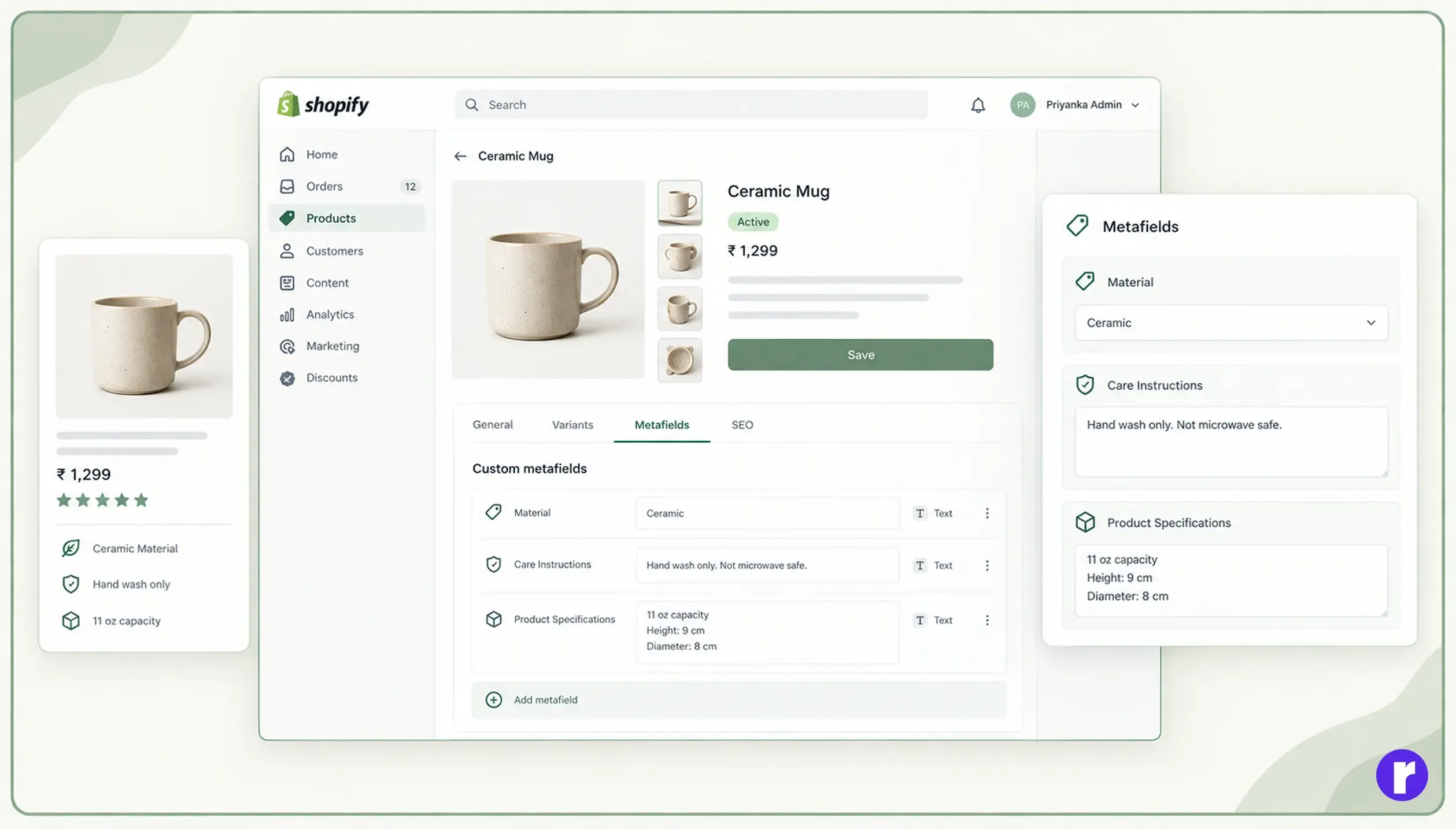
Metafields are useful when you need to store additional information that belongs directly to an existing Shopify resource.
- Material
- Fabric type
- Care instructions
- Product weight
- Country of origin
- Size information
- Additional product specifications
This information can then be displayed on the storefront wherever it is needed.
When should you use metafields?
Metafields are best when the information belongs directly to an existing Shopify resource.
For example, if every product needs a Material field, you can create a product metafield for it.
The same approach can be used for other custom product information.
Metafields can also be used with different Shopify resources, including products, variants, collections, customers, orders, and other supported resources.
What are Shopify metaobjects?
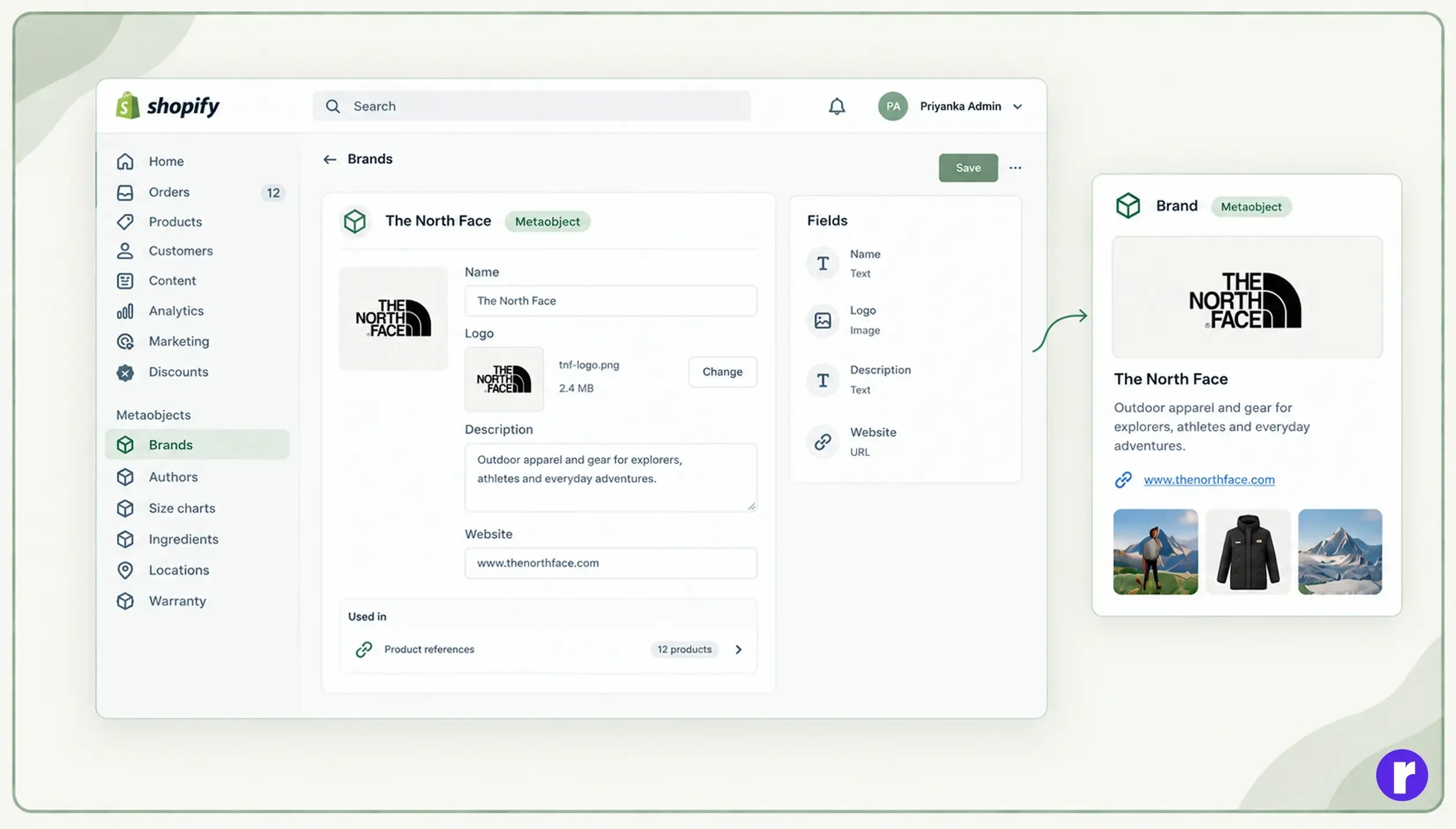
Metaobjects are useful when you need to create a separate, structured piece of content with multiple related fields. Metaobjects can be useful for many types of reusable content, including:
- Brand information
- Author profiles
- Size charts
- Store locations
- Ingredient information
- Warranty details
- Custom landing page content
Shopify also provides metaobjects for creating custom structured content that can be managed and reused across a store.
Shopify metafields vs metaobjects: The main difference
|
Metafields |
Metaobjects |
|
|---|---|---|
|
Main purpose |
Add custom information to existing Shopify resources |
Create reusable structured content |
|
Structure |
Custom fields attached to existing resources |
Standalone structured data with multiple related fields |
|
Example |
Product material or care instructions |
Brand profile |
|
Best for |
Resource-specific attributes |
Reusable structured content |
|
Can work together? |
Yes |
Yes |
A simple example
Imagine you are building a Shopify fashion store.
You want to add the fabric type to every product.
A product might have:
- Product name
- Price
- Images
- Description
- Fabric type
Since fabric type is simply additional information about the product, a metafield is a good choice.
Now imagine you want to create information about the designers behind your products.
Each designer could have:
- Name
- Profile image
- Biography
- Website
- Social media links
This is more than one simple product attribute. It represents a reusable content entity.
A metaobject would be a better fit for this type of information.
Can metafields and metaobjects work together?
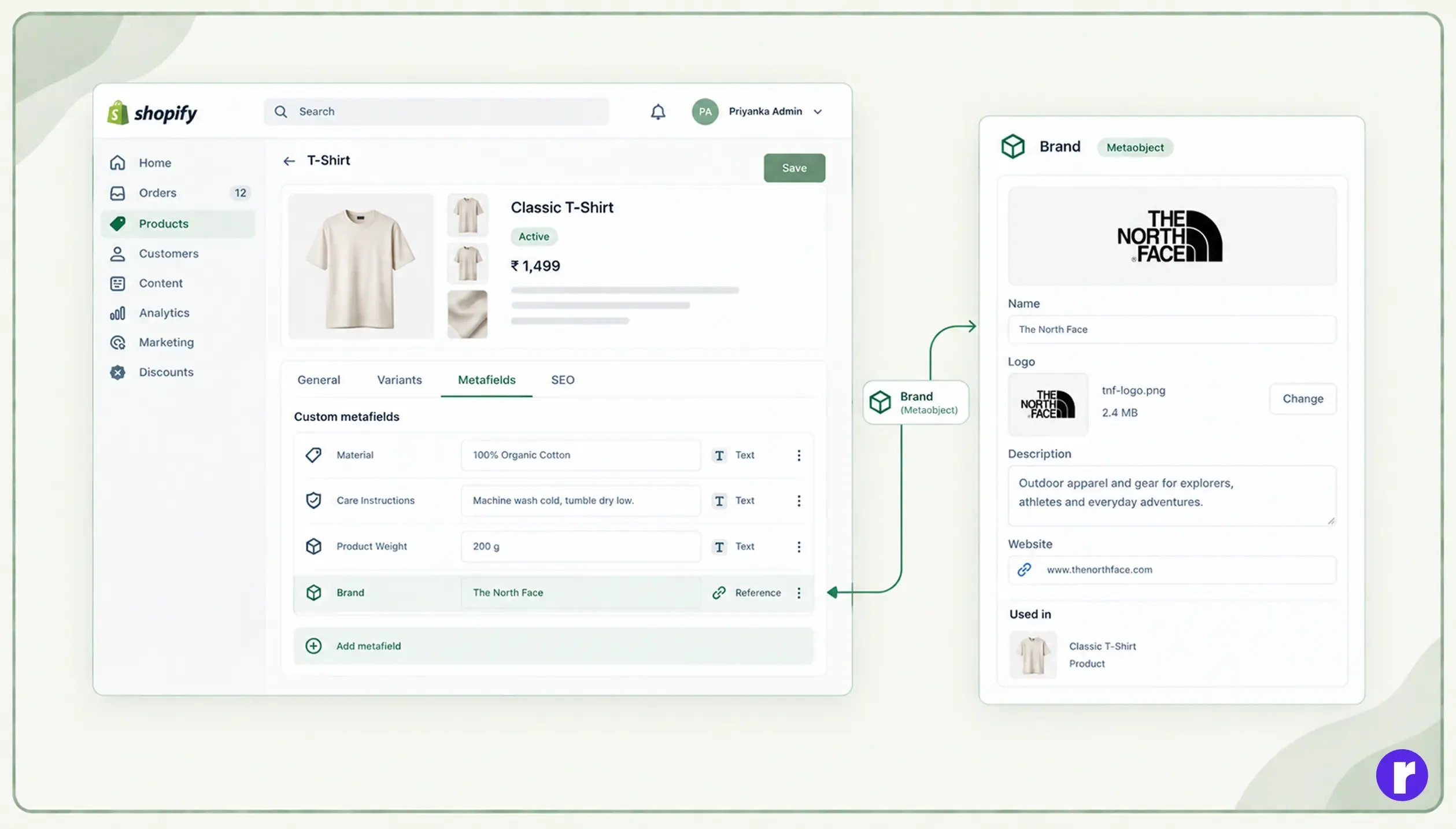
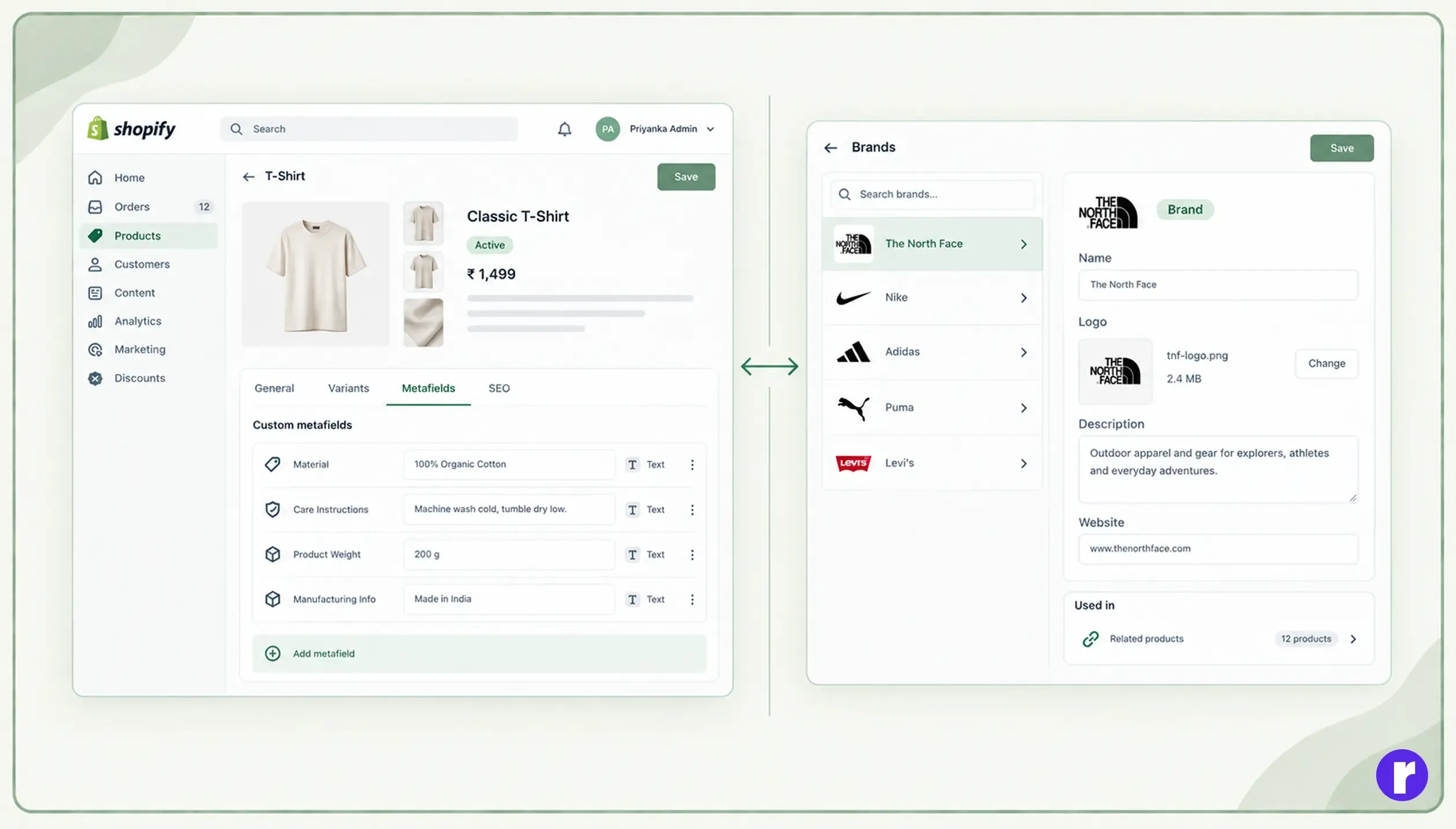
Metafields and metaobjects can also work together.
A metafield can reference a metaobject, allowing you to connect reusable structured content to an existing Shopify resource.
For example, a product can have a Brand metafield that references a Brand metaobject. The same Brand metaobject can then be reused across multiple products instead of entering the same brand information repeatedly.
Benefits of using metafields
Metafields are useful because they make custom product and store information more organized.
- Better product information: Instead of putting every detail into a product description, you can separate important information into structured fields.
- More flexible storefronts: Developers can use metafields to control where and how custom information appears on the storefront.
- Easier content management: Store owners can manage custom information through Shopify instead of relying on hard-coded content.
- Useful for custom Shopify designs: Metafields are especially useful when creating custom product pages where different products need to display different information.
Benefits of using metaobjects
Metaobjects are useful when your store has reusable or more complex content.
- Reusable content: You can create content once and reference it in multiple places.
- Better organization: Instead of storing related information in many separate fields, you can keep it together as one structured entity.
- More scalable data: Metaobjects can be useful as a Shopify store grows and needs to manage more types of custom content.
- Useful for custom sections: They can also be used to power custom storefront sections where content needs to be managed separately from products and collections.
How do you decide between metafields and metaobjects?
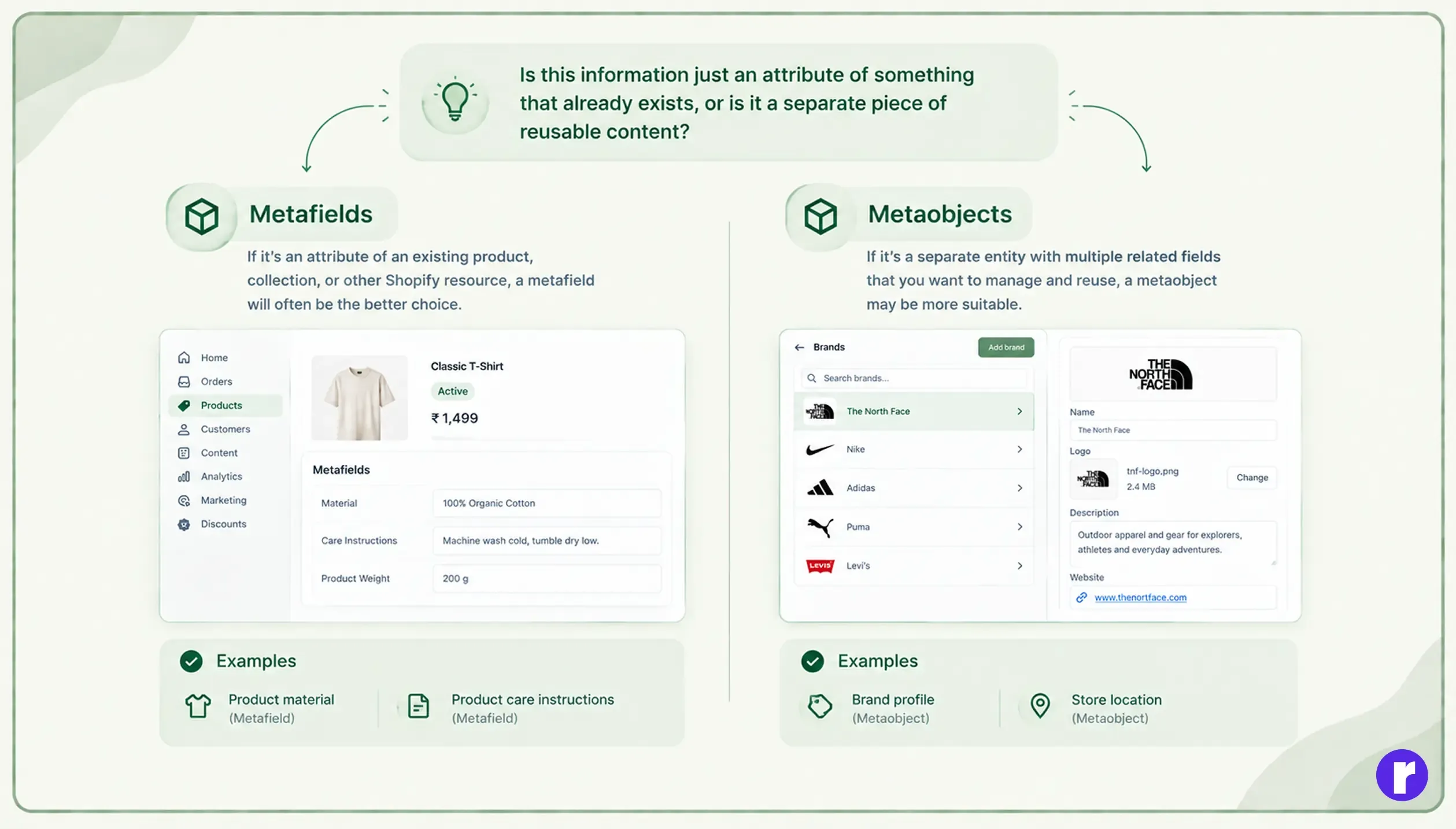
Before creating custom data, ask yourself one simple question:
Is this information just an attribute of something that already exists, or is it a separate piece of reusable content?
If it is an attribute of an existing product, collection, or other Shopify resource, a metafield will often be the better choice.
If it is a separate entity with multiple related fields that you want to manage and reuse, a metaobject may be more suitable.
For example:
- Product material → Metafield
- Brand profile → Metaobject
- Product care instructions → Metafield
- Store location → Metaobject
This simple approach can make it much easier to decide which feature to use.
If you want to learn more about Shopify development, explore our Shopify blog for more guides, tutorials, and practical tips.
Conclusion
Shopify metafields are best for adding extra information to existing products, collections, or other resources, while metaobjects are better for creating reusable structured content.
Choosing the right one depends on how you want to organize and reuse your store data. For simple custom fields attached to an existing resource, metafields are often the right choice. For reusable structured data with multiple related fields, metaobjects may be more suitable.
If you need help with Shopify development, custom features, metafields, or metaobjects, explore Radial Code for professional Shopify development solutions.