The Vue & Nuxt Libraries Shaping Modern Web Development

Written by
Ankush Dhull
Front End Developer

Vishal Chanda
Front End Developer

Table of contents
Build with Radial Code
Share this


Web development has changed significantly over the past decade, with users expecting faster load times, smoother interactions, scalability, and strong SEO performance. In this landscape, Vue 3 and Nuxt 4 have emerged as reliable choices for building modern, production-ready web applications.
Beyond the frameworks themselves, their extensive ecosystem of libraries adds flexibility and helps teams handle areas such as state management, UI consistency, performance optimization, SEO, and developer productivity. This allows developers to focus more on core functionality rather than repeatedly building common solutions from scratch.
Understanding the Vue & Nuxt Ecosystem

The Vue.js & Nuxt.js ecosystem is known for its simplicity, flexibility, and scalability. Vue is designed to be approachable, making it easy for developers to start building applications without a steep learning curve. Its component-based architecture encourages reusability, modularity, and clean separation of concerns, which are essential for long-term maintainability.
Nuxt extends Vue by adding production-ready features that address common challenges in real-world applications. These include server-side rendering (SSR), static site generation (SSG), automatic file-based routing, and built-in performance optimizations. These features can be particularly useful for applications that require SEO-friendly rendering, efficient initial page loading, and scalability when properly configured and optimized.
What truly sets the ecosystem apart is its active and supportive community. Developers continuously build, maintain, and improve libraries that integrate seamlessly with Vue and Nuxt. This community-driven approach ensures that solutions evolve alongside modern development needs. As a result, developers can confidently rely on the ecosystem to build applications that are both modern and maintainable
State Management for Scalable Applications
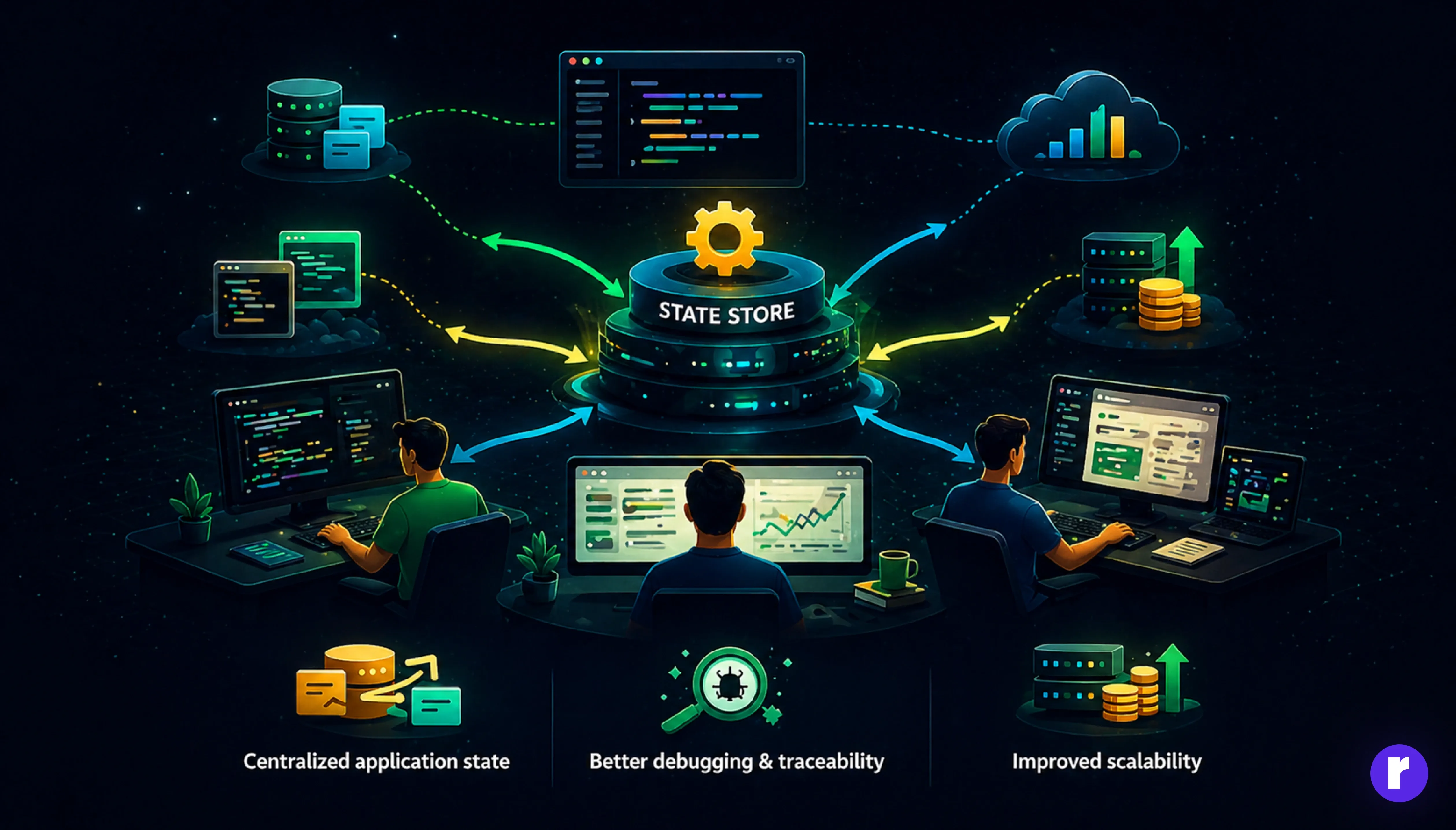
As applications grow in size and complexity, managing shared state becomes increasingly challenging. While local state may work for small projects, larger applications require a structured approach to handle shared data across multiple components.
Pinia is a popular state management library for Vue applications and is well suited for larger Nuxt projects that require structured stores, shared application state, actions, and getters. For simpler shared state, Nuxt's built-in useState composable can often be used without adding an external state management library.
Key benefits include:
- Centralized application state.
- Better debugging and traceability.
- Improved scalability for large applications.
In Nuxt applications, state management plays an even more critical role due to server-side rendering and client-side hydration. Proper state handling ensures that data fetched on the server is correctly synchronized with the client, preventing inconsistencies and unexpected behavior. This is especially important for applications such as dashboards, e-commerce platforms, and SaaS products, where data accuracy and reliability are essential.
UI Component & Design System Libraries
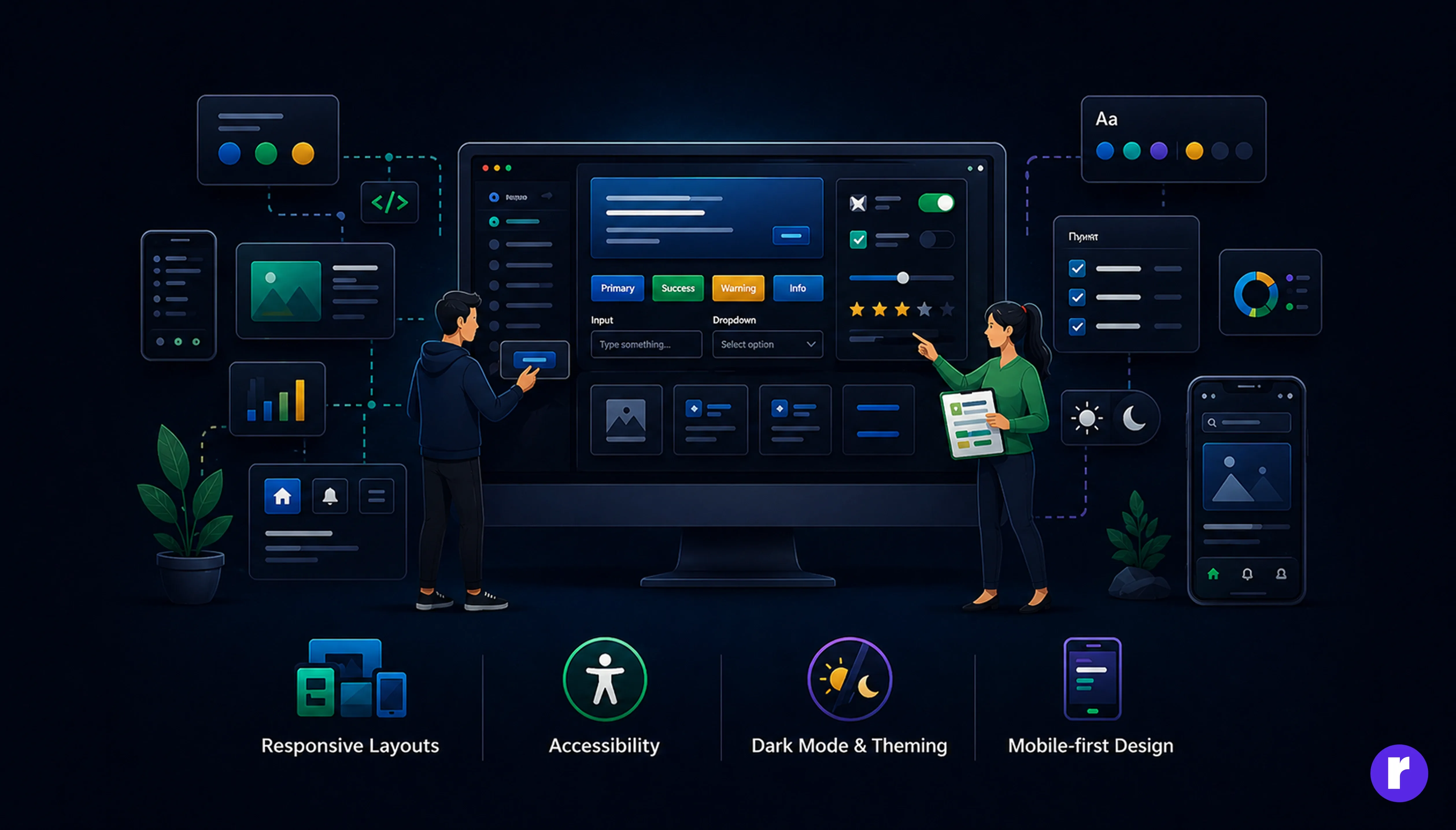
Building consistent and responsive user interfaces from scratch can be both time-consuming and error-prone. UI component and design system libraries solve this problem by providing pre-built, reusable components that follow modern design principles.
Nuxt Ui is a component library designed for Nuxt applications that provides reusable interface components and styling utilities. It can be useful when developers want to build consistent, accessible, and responsive interfaces without creating every common UI component from scratch.
They commonly support:
- Responsive layouts.
- Accessibility best practices.
- Dark mode and theming.
- Mobile-first design.
Using UI libraries allows teams to focus more on functionality and user experience rather than repetitive UI development. For startups and agencies working under tight deadlines, UI libraries can significantly reduce development time while maintaining a high level of design quality.
Routing & Navigation Handling
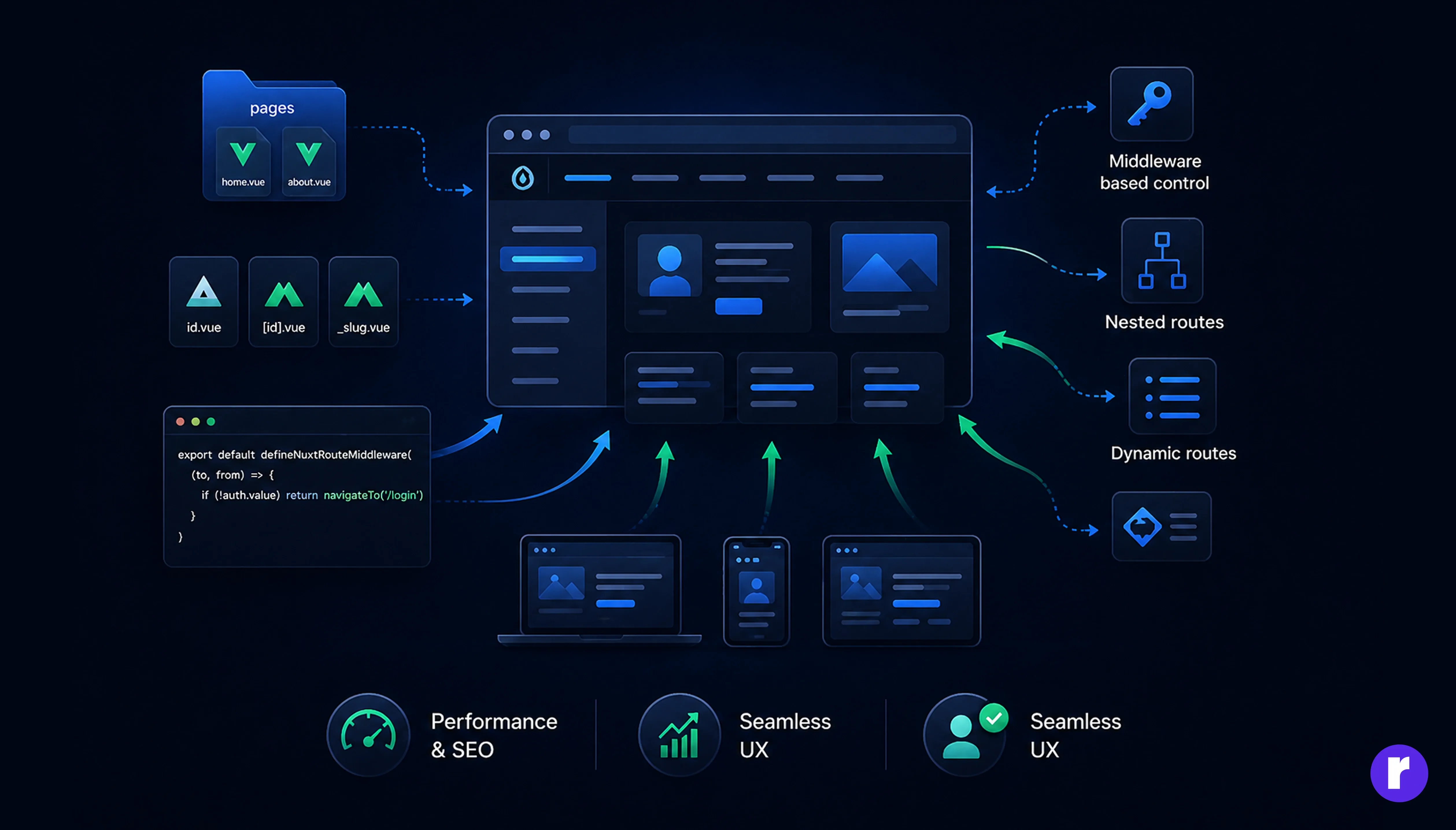
Vue Router is the official routing library for Vue applications and is used internally by Nuxt to power its routing system. In a standard Nuxt application, developers typically work with Nuxt's file-based routing rather than configuring Vue Router directly. Vue Router concepts become particularly relevant when working with Vue applications outside Nuxt or when understanding advanced routing behavior.
This approach improves developer experience and ensures consistent navigation patterns across the application. It also makes the codebase easier to understand and maintain, especially in large projects. When combined with ecosystem tools, routing in Nuxt becomes more flexible and powerful, supporting advanced use cases such as dynamic routes, nested layouts, and middleware-based navigation control.
Well-structured routing can contribute to a smoother user experience and, when combined with appropriate rendering and optimization strategies, can also support performance and SEO.
Data Fetching & API Management
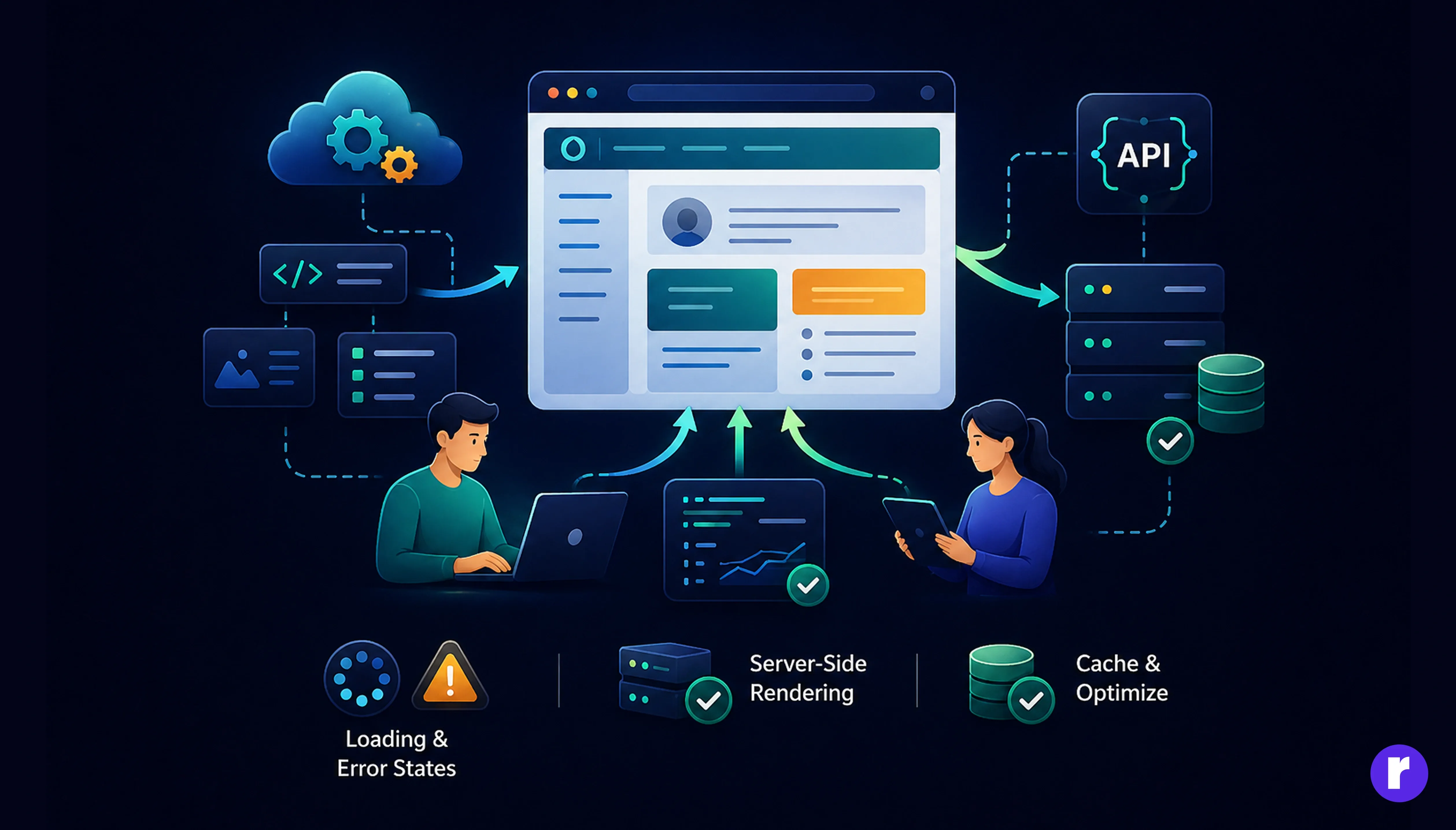
Modern web applications rely heavily on APIs and dynamic data. Handling asynchronous data efficiently is essential for performance, reliability, and user experience. Nuxt provides built-in data-fetching utilities such as $fetch, useFetch, and useAsyncData, which cover many common API and asynchronous data requirements without requiring an external library. $fetch is useful for making HTTP requests, while useFetch and useAsyncData provide Nuxt-aware approaches for handling asynchronous data and integrating it with server-side rendering. External data-fetching or server-state libraries are mainly useful when an application requires advanced caching, synchronization, or more complex server-state workflows.
They help developers:
- Manage loading and error states.
- Optimize server-side rendering.
- Cache API responses for performance.
In Nuxt applications, data-fetching libraries integrate closely with server-side rendering, allowing pages to be rendered with data already available. This approach can support efficient initial page rendering and make important content available to search engines, although overall performance and SEO depend on the application's implementation and optimization. Efficient data handling is especially important for content-heavy applications, such as blogs, news platforms, and dashboards, where performance directly impacts user engagement.
Animation & User Interaction Libraries
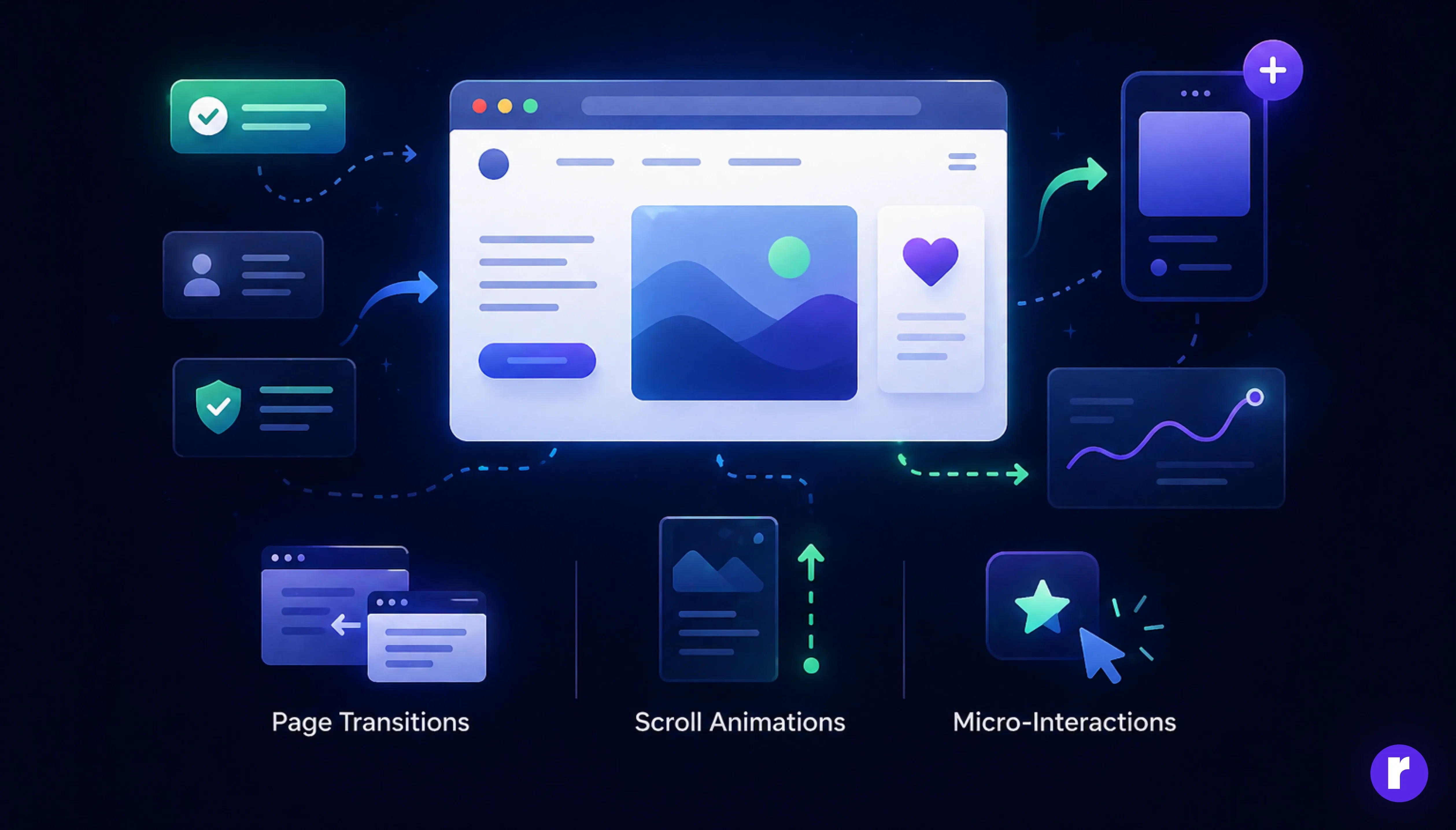
User experience goes beyond functionality. How an application feels plays a major role in user satisfaction. Animations and interactions help guide users, provide feedback, and make interfaces feel more intuitive and polished.
VueUse Motion is a Vue animation library that provides a declarative approach to creating transitions and UI animations. It is useful for component entrance effects, hover interactions, page transitions, and other lightweight motion requirements where developers want to add animation without building the animation system from scratch. When used thoughtfully, animations enhance usability rather than distract from it.
These libraries integrate well with Vue’s reactivity system, ensuring efficient updates and smooth performance even in animation-heavy interfaces. They are commonly used in marketing websites, portfolios, and interactive web applications where visual engagement is important.
Ready to start with Nuxt the right way? Explore Nuxt.js from Scratch: A Beginner’s Guide to Your First Project
Performance, SEO & Developer Productivity Tools
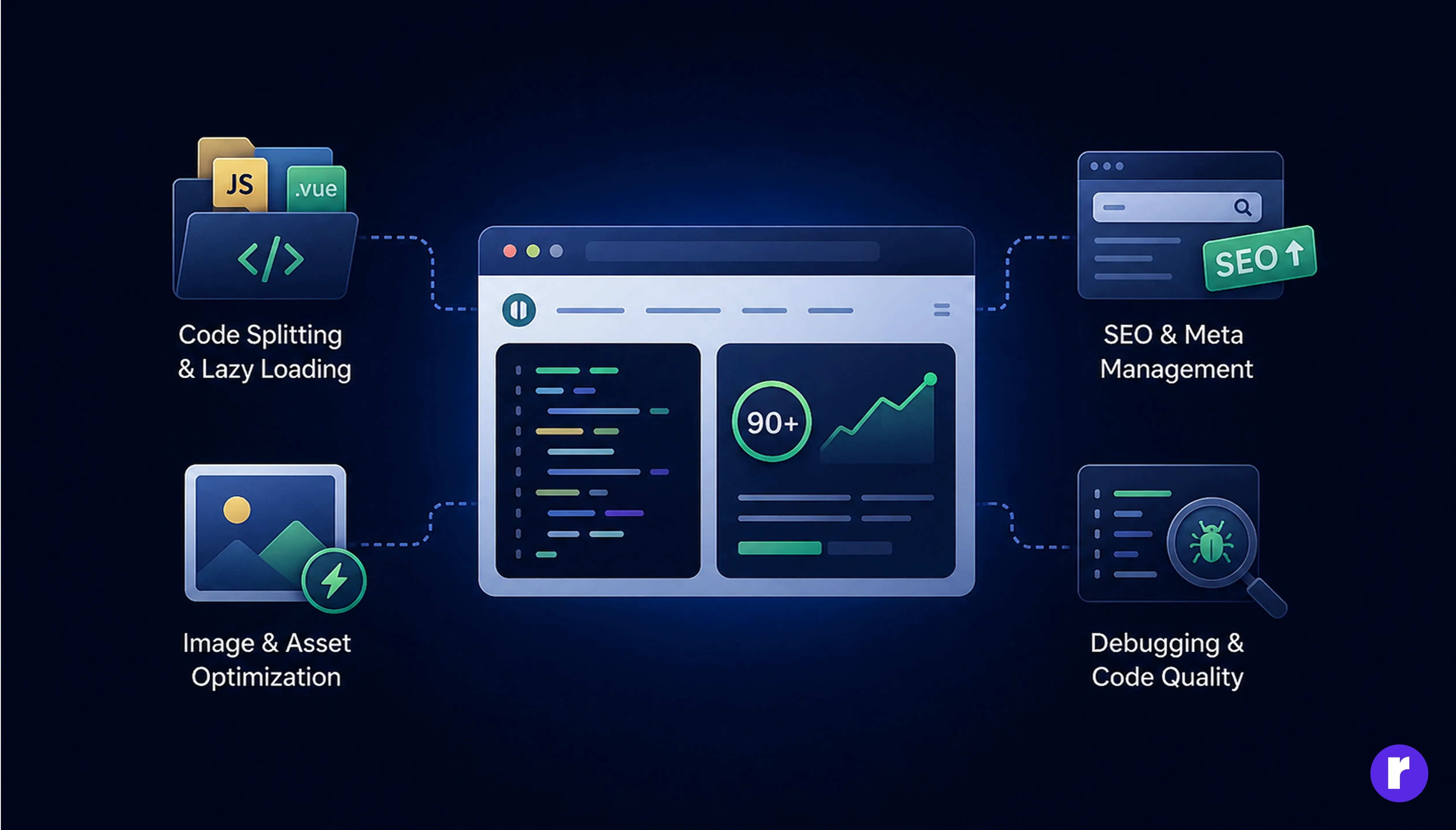
Performance and productivity are critical factors in modern web development. Slow-loading applications lead to poor user experience, while inefficient workflows reduce development speed and increase technical debt.
Nuxt’s ecosystem includes tools that focus on:
- Code splitting and lazy loading.
- SEO meta management.
- Image and asset optimization.
- Better debugging and code quality.
These tools can support better performance, SEO, and maintainable code when properly implemented. Developer productivity tools also play a vital role by improving code quality, enforcing best practices, and simplifying debugging. Together, they help teams deliver high-quality applications faster and with fewer bugs.
Build faster, smarter web apps with the Vue & Nuxt ecosystem. Visit Here
Conclusion
Vue and Nuxt provide a strong foundation for modern web development, but it is the ecosystem of libraries that truly shapes how applications are built. By carefully selecting the right tools for state management, UI design, routing, data handling, animations, performance, and productivity, developers can build scalable and production-ready applications with confidence.
As the Vue & Nuxt ecosystem continues to evolve, developers can choose from a growing range of tools and libraries based on their project requirements. Understanding when to use Nuxt’s built-in features and when to introduce third-party libraries can help developers build maintainable, reliable, and scalable applications more effectively.